



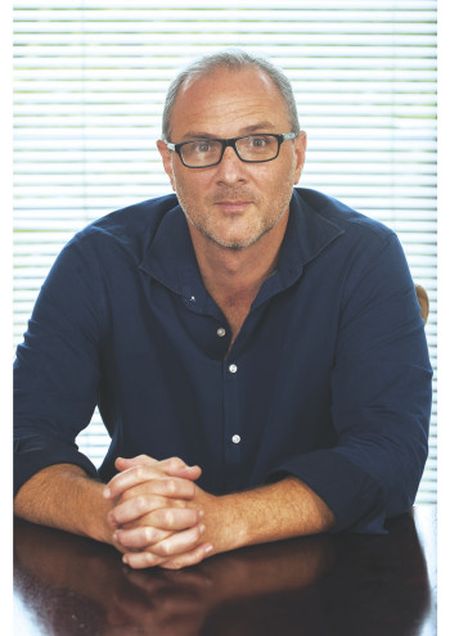
 Anti-foreigner movement leader Nkosikhona Ndabandaba spoke at an event with KwaZulu-Natal Premier Thami Ntuli on 25 June ahead of nationwide anti-foreigner protests on 30 June. (Photo: Supplied)
While the government prepares to spend R600-million on beefing up security ahead of planned protests against undocumented immigrants on 30 June, KwaZulu-Natal Premier Thami Ntuli shared a stage with protest organisers Jacinta Ngobese-Zuma and Nkosikhona “Phakel’umthakathi” Ndabandaba.
The March and March leaders were among diplomats, business representatives, government ministers and officials who met at a Durban hotel for a “Summit on Undocumented Foreign Nationals” on Thursday, 25 June.
It was part of the government’s Engangeni Ngesango Iyafohla operation, which loosely translates from isiZulu as a warning to “trespassers”.
The summit was intended to develop a response to undocumented migrants, border control, law enforcement and labour regulation. Delegates discussed immigration statistics, border security, illicit trade, crime and xenophobia.
The premier urged firms to stop employing foreigners at the expense of South Africans and for police to arrest anyone “looting or causing chaos, reminiscent of the July 2021 unrest”.
/file/attachments/orphans/Summit2_992784.jpeg "March and March leader Jacinta Ngobese-Zuma spoke at an event with KwaZulu-Natal Premier Thami Ntuli on 25 June. (Photo: Supplied)")
The gathering was slammed by some.
One attendee said, “It was a waste of time. The province has no mandate over most of the things discussed. It called to mind the Latin adage: Dum Romae consulitur, Saguntum expugnatur — the senate debates while the city burns.”
Ntuli said the summit was convened to develop solutions to migration and move beyond “slogans, stereotypes and political posturing”.
‘Legitimising hateful narratives’
Mametlwe Sebei is a spokesman for the Siyafana Sonke Action Campaign (a coalition of civil society organisations opposed to March and March).
He was scathing of the summit.
“The government is running with the hares and hunting with the hounds. At every turn, they have legitimised hateful narratives promoted by this lot, and they have legitimised their June 30 ‘deadline’.
“They should be denouncing them unequivocally. It is all a diversion from their own failures.”
Sebei was speaking ahead of an online meeting with the South African Presidency, where he said Siyafana Sonke would demand an operational plan to save lives and property during the 30 June protests.
“The strategy is to unleash bloody pogroms. The government must have an operational plan. We are mobilising communities to form defence groups.”
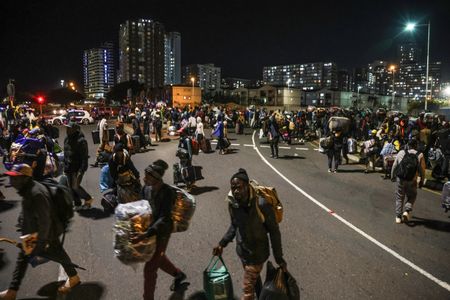
Sebei said tens of thousands of people had been displaced and were sleeping in makeshift shelters, on pavements and in churches because of a “fabricated migrant crisis” that had resulted in escalating xenophobic violence, forced removals, injury and death.
Vincent Magwenya, a spokesman for President Cyril Ramaphosa, said Siyafana Sonke representatives would not meet the President, but probably “senior Presidency officials”.
Meanwhile, Ngobese-Zuma has demanded that the eThekwini municipality give written reasons for blocking its planned 30 June protest march in the city.
She wants to see the security threat assessment and the legal grounds on which the city has denied the protest, saying the municipality was unlawfully attempting to prevent the gathering.
Her demands take place against the backdrop of heightened fears ahead of 30 June.
On Thursday night March and March vowed to proceed with its 30 June demonstrations in Durban, despite the city ban on its planned event.
The city’s promised response will be added when we receive it.

Desperation in Pietermaritzburg
In Durban, fears around an anti-immigrant protest in the suburb of Hillcrest on Thursday ended in a whimper when the demonstration attracted only about 100 people.
Hillcrest Community Policing Forum chair Tracey Lynch said: “It was a bit of a non-starter. I’m not sure if it was organised by March and March, but it was over in a few hours. There was a bit of traffic disruption, but there were more police and security than protesters.”
The Hillcrest protest had been advertised on social media beforehand.
“I suppose people are scared after July 2021.”
Meanwhile, thousands of Malawians chased out of their homes by xenophobes in KZN continued to flock to refugee centres in Durban and Pietermaritzburg.
/file/attachments/orphans/6I1A5540_310198.jpg "A man walks through the dilapidated interior of a condemned building in Mayor’s Walk, Pietermaritzburg, where Malawian nationals are being temporarily housed while awaiting repatriation. (Photo: Felix Dlangamandla")
/file/attachments/orphans/6I1A5576_906127.jpg "Malawian refugees outside a dilapidated building in Mayor’s Walk, Pietermaritzburg, on 25 June as they await processing and repatriation to their home country. (Photo: Felix Dlangamandla)")
Daily Maverick visited a condemned Public Works building in Mayor’s Walk in Pietermaritzburg, where more than 1,000 people took refuge last Friday after a Malawian man, Mishak Banda, was murdered.
Banda was killed moments after a March and March demonstration.
/file/attachments/orphans/WFD_7731_920079.jpg "Home Affairs officials assist Malawian nationals with documentation and processing at a temporary shelter in Mayor’s Walk, Pietermaritzburg, on 25 June. (Photo: Felix Dlangamandla)")
/file/attachments/orphans/6I1A5593_666460.jpg "A woman sits in a corridor of the dilapidated building in Mayor’s Walk on 25 June. (Photo: Felix Dlangamandla)")
/file/attachments/orphans/6I1A5562_999998.jpg "Refugees outside the dilapidated building in Mayor’s Walk await processing and repatriation to their home country. (Photo: Felix Dlangamandla)")
At the Mayor’s Walk building, Malawians clung to the fence waiting to be processed to catch a bus home.
Desperate to be repatriated, they queue to have a Home Affairs official write a number in black ink on their hands. Elias Amos was delighted to receive “A53” — his guaranteed ticket onto a bus.
“It’s terrible here. There are too many people,” he said, pointing to the derelict, litter-strewn building where he and his countrymen fled and found safety in numbers.
“We are dirty and hungry. I am happy to be going home.”
Smart Zacharia was in the queue, hoping to get a number soon.
“This place is worse than hell, but we had to come here. We saw people being killed. I want to go home. These people have no humanity,” he said. DM
Comments
Scroll down to load comments...