




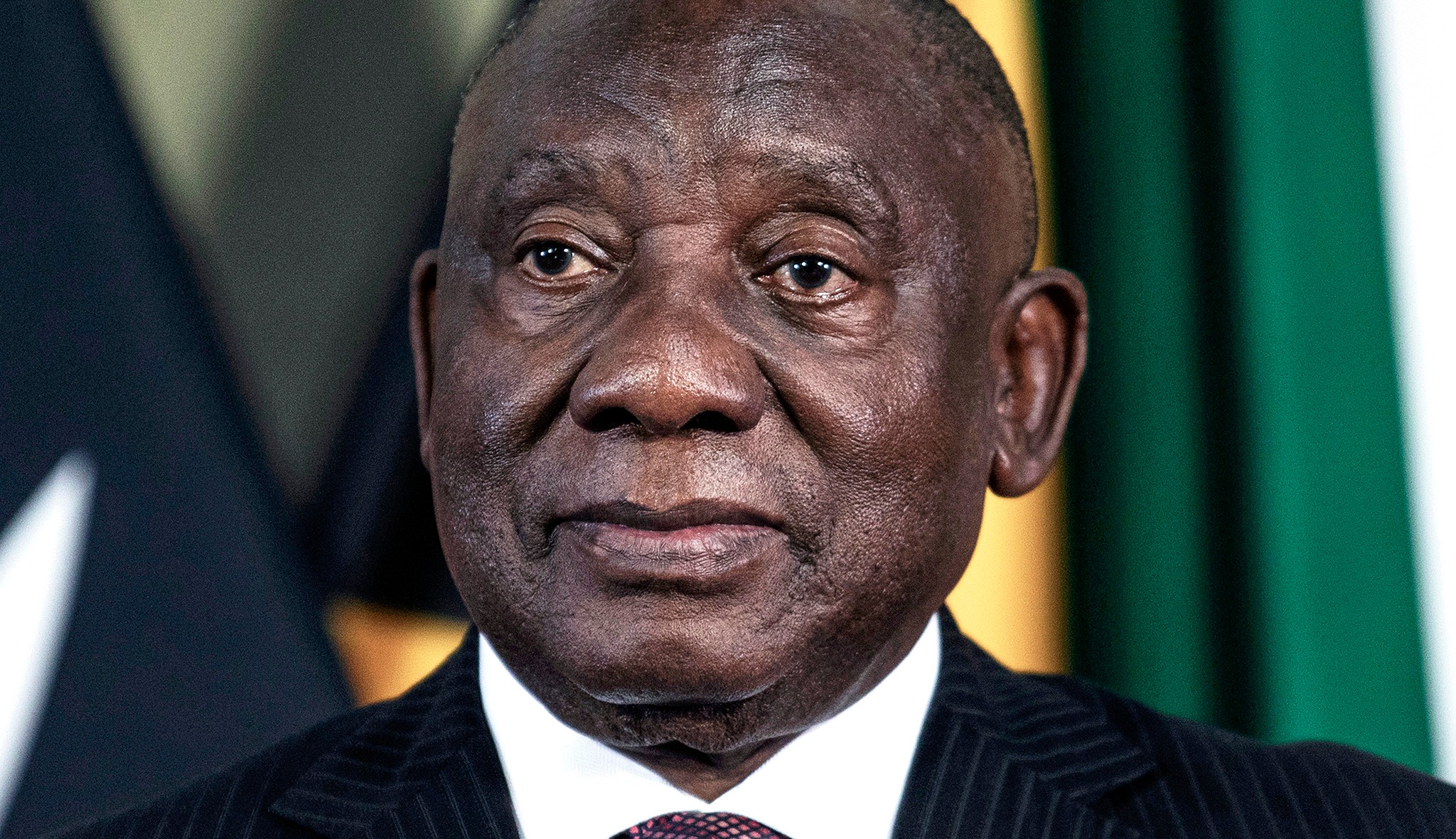
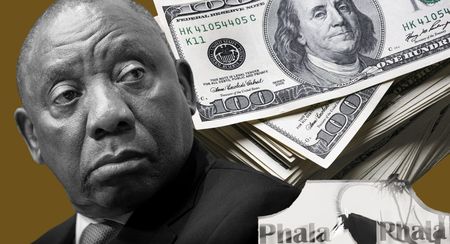
 President Cyril Ramaphosa has filed an application to interdict Parliament’s impeachment committee regarding his conduct over the Phala Phala theft. (Photo: Per-Anders Pettersson / Getty Images)
Nearly four years after Parliament appeared to bury the Section 89 panel report into the Phala Phala theft, President Cyril Ramaphosa says a Constitutional Court judgment has brought it back to life.
The President is seeking an urgent court order to stop Parliament’s impeachment committee from beginning its work, arguing that the court’s ruling transformed a politically dormant report into the trigger for a process that could ultimately end his presidency.
In papers filed in the Western Cape High Court on Friday, 12 June, Ramaphosa argues that the Constitutional Court’s May judgment fundamentally changed the legal status of the report compiled by a panel chaired by retired Chief Justice Sandile Ngcobo, which found prima facie evidence that he may have committed serious violations of the Constitution and the law in his handling of the theft of at least $580,000 in cash from his Phala Phala farm.
Those findings nearly cost Ramaphosa his presidency in 2022 before the National Assembly voted against establishing an impeachment committee.
/file/dailymaverick/wp-content/uploads/2022/12/Church-Cyril_2.jpg "Retired Chief Justice Sandile Ngcobo at the handover of the Section 89 report to the Speaker of Parliament, Nosiviwe Mapisa-Nqakula, and the secretary to Parliament, Xolile George, at Parliament in Cape Town, on 30 November 2022. (Photo: GCIS)")
How the report was revived
According to Ramaphosa, the Constitutional Court’s ruling has now revived the report’s significance and given it direct legal consequences.
The court found, in a case brought by the EFF, that Rule 129I of the Rules of the National Assembly was unconstitutional and set it aside. It also overturned the National Assembly vote in December 2022, in which MPs declined to refer the Ngcobo report to an impeachment committee.
“The Ngcobo report had no direct, external legal effect after the National Assembly rejected the recommendation that an impeachment committee be established,” Ramaphosa argues in his founding affidavit.
He argues that Parliament’s vote in December 2022 effectively neutralised the report and prevented it from producing any practical consequences.
That position changed, he says, when the Constitutional Court declared parts of Parliament’s impeachment rules unconstitutional and ordered the National Assembly to establish an impeachment committee.
The Constitutional Court found that Rule 129I was unconstitutional because it allowed MPs to reject a recommendation from an independent panel that sufficient evidence existed to warrant an impeachment inquiry. The effect of the ruling was to remove Parliament’s discretion at that stage of the process, according to Ramaphosa’s lawyers.
“The Ngcobo report has now become the trigger for the commencement of an impeachment enquiry,” the application states.
Race against the impeachment process
In practical terms, Ramaphosa argues that a report that had lain dormant for more than three years has suddenly acquired new legal force.
That is one reason he wants the impeachment process paused while the courts consider his separate review application seeking to set aside the Ngcobo panel’s findings.
According to the President, allowing Parliament to proceed before the review is finalised could create serious legal complications.
“There is a possibility, and in fact a likelihood, that the impeachment committee will begin the impeachment hearings before the court has made a decision on the review application.”
Ramaphosa argues that if he later succeeds in overturning the Ngcobo report, Parliament may already have undertaken months of work based on findings that were ultimately declared unlawful.
The impeachment committee is scheduled to convene on 24 June to deliberate on its terms of reference and the appointment of an evidence leader.
Committee chairperson Makashule Gana confirmed that he had received the papers from Ramaphosa’s lawyers.
“Our lawyers are studying the court papers. We will comment after,” said Gana.
/file/attachments/orphans/WhatsAppImage2026-06-01at145116_479555.jpeg "The chairperson of the impeachment committee, Makashule Gana. (Photo: Phando Jikelo / RSA Parliament)")
‘Irreparable harm’
Ramaphosa argues that the impeachment committee should not begin its work before the courts have ruled on his application to review and set aside the Ngcobo report.
“If there is a serious and substantive challenge to the validity of such a determination in the report, as there is in my case, it should be determined before the enquiry commences,” he says in his affidavit.
According to the President, allowing the impeachment process to proceed before the review application is decided could undermine the purpose of the court challenge and leave the courts unable to provide effective relief if they later rule in his favour.
He also argues that he would suffer irreparable harm if the inquiry proceeds.
“If the impeachment committee process continues without a resolution of the review application, I will personally suffer irreparable harm. The hearings will allow baseless and unfounded allegations, which may potentially be defamatory, to be made against me in front of the entire country and the international community.”
Ramaphosa says that even if he is ultimately cleared, allegations made during the hearings could cause lasting damage to his reputation and negatively affect the standing of the ANC.
EFF vows to oppose interdict
In a statement, the EFF said it would oppose the interdict, insisting that the President was seeking to avoid accountability.
“Instead of welcoming an opportunity to clear his name before the impeachment committee, he has chosen to wage an endless legal battle against the very process designed to establish the truth. Rather than resign and allow Parliament to perform its constitutional responsibilities without interference, President Ramaphosa has elected to fight the impeachment process at every turn,” said the party’s national spokesperson, Sinawo Tambo.
The African Transformation Movement also intends to oppose the President’s interdict application.
Ramaphosa’s papers argue that the Constitution and Parliament’s rules recognise that the consequences of an impeachment process against a sitting president are serious and far-reaching, which is why the process is subject to strict safeguards.
“The consequences of an impeachment enquiry extend far beyond my personal interests. They implicate the office of the President, and the stability and functioning of the National Executive.”
Ramaphosa argues that forcing him to participate in a lengthy impeachment inquiry before the review application is decided could unnecessarily disrupt the work of the Presidency if the Ngcobo report is later set aside. DM
Comments
Scroll down to load comments...