




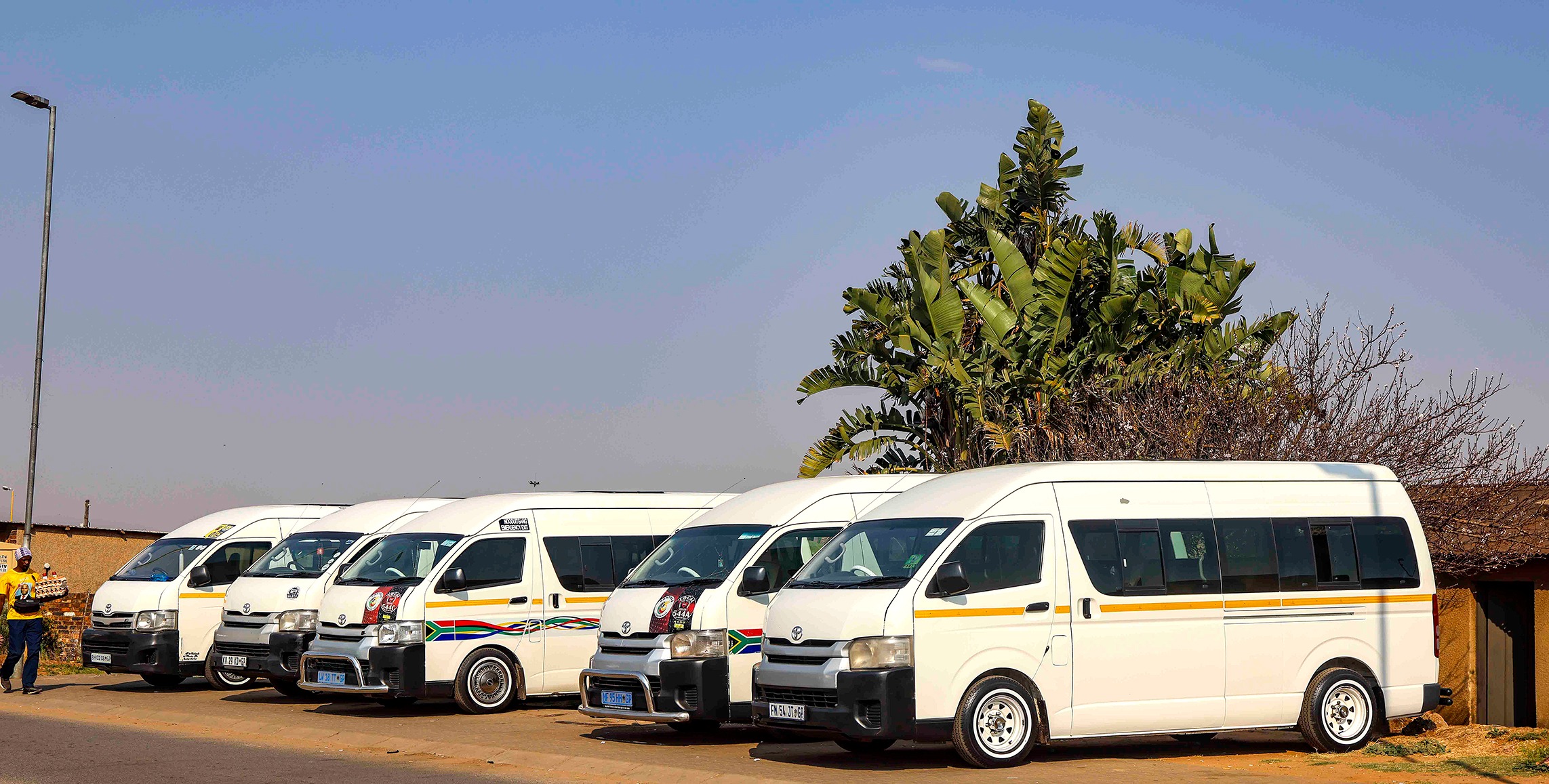
 The taxi industry and commuters say they’re both suffering from the spike in fuel prices. (Photo: Gallo Images / OJ Koloti)
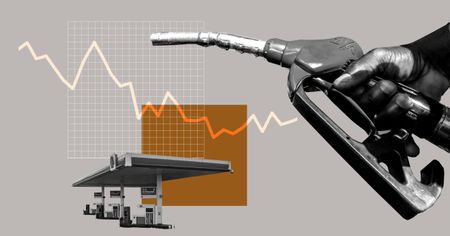
Fuel prices have spiked since the US and Israel’s war on Iran began in February 2026, with the price of 93 unleaded petrol increasing by R6.53 a litre, despite the government’s move to cut R3 from the fuel levy.
Taxi associations have passed on at least part of the increases to customers, meaning that the 15 million people who travel on taxis daily are using even more of their budget to cover transport costs. According to a 2025 report, the low-income residents in Gauteng’s metros were already spending an average of 29% of their incomes on transport.
In response to the fuel price increases, the South African National Taxi Council (Santaco) said local taxi fares would increase by between R2 and R6. Long-distance routes could rise by R10 to R30, depending on the route and operating costs.
Taxi associations argue that the increases are unavoidable. According to Santaco, fare adjustments are driven not only by fuel price hikes, but also by rising vehicle maintenance costs and administrative expenses. The organisation says fares are calculated in line with the association’s profit margins to ensure operators can continue running.
“Santaco urges commuters to understand that these increases are being implemented to avoid the industry operating without profits,” the organisation said.
However, whether fares will decrease if fuel prices drop remains uncertain. Industry representatives say it will depend on how severe the overall cost pressures have been, suggesting that once prices rise, they may not easily come down.
How taxi fares are calculated
The National Taxi Alliance (NTA) explained that fare increases were based on a range of variable input costs.
These include fuel prices, tyre costs, maintenance and the total distance travelled daily. These costs are then multiplied by a markup of around 30% to 33%, which the industry considers necessary to keep operations sustainable.
According to the NTA, local taxis typically travel between 300km and 500km per day, meaning even small fuel increases quickly add up. Long-distance taxis face even higher costs due to longer travel distances, which puts additional pressure on fares.
This model, the association says, is meant to produce a “fair price” that balances affordability for commuters with survival for operators.
‘It starts with petrol, ends with food’
On the ground, drivers say the pressure starts long before fares officially increase.
In Johannesburg, taxi driver Thabo Mokoena explained: “When petrol goes up, I do not think about profit. I think about how many trips I need just to break even. Some days I drive longer hours just to cover fuel, and that means going home late with very little left.”
For commuters, fare increases ripple through every part of life.
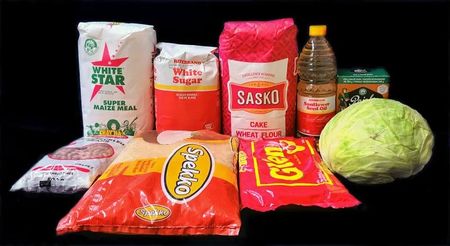
A commuter from Vosloorus, Njabulo Madonsela, said: “It starts with petrol, but it ends with food. When taxi fares go up, everything in my monthly budget changes. I end up buying fewer groceries or choosing cheaper options just to afford transport.”
Madonsela said he now has to plan his movements carefully: “Before, I could take taxis without thinking too much. Now I count every trip. If I go out twice in one day, that’s money I won’t have for groceries.”
Asked whether the increases were justified, Madonsela said: “I understand that fuel prices are going up and drivers are also struggling, but commuters are under pressure too. Salaries are not increasing the same way transport costs are.”
A worker in Boksburg, Ntokozo Majola, said rising fares affect her ability to keep her job: “I can’t be late, but sometimes I don’t have enough for two taxis. If I miss one shift, that’s money gone. And if it keeps happening, I could lose my job.”
Majola said the increases were already affecting her overall budget, “Transport already takes a big part of my salary. When fares increase, I have less money for groceries, electricity and other basic needs.”
She believes government intervention could help commuters manage the situation better.
“The government should find a way to reduce fuel prices or support public transport because ordinary people cannot keep up with these increases any more.”
Many commuters say they are walking further, combining trips or cutting back on essentials just to afford transport.
The authors of the 2025 report, prepared by the Gauteng City-Region Observatory, suggested that the government could increase subsidies for the taxi sector and promote the integration of various transport modes to reduce costs.
Calls for urgent help
Members of the taxi industry say they’re struggling and commuters are complaining.
Bheki Majola, from the Soweto Taxi Association (STS), said, “Petrol is really unaffordable. If there was ever a time for those in power and in government to help us in any way, now is that time.”
“Anyone who might come with a solution, it will really be welcome because it’s truly getting out of reach.”
When asked how much taxis now pay for a full tank, Majola responded: “We no longer fill the tank. We are unable to fill the tank. None of our drivers [is].”
/file/attachments/orphans/20260514_115753_107062.jpg "Soweto Taxi Association leader Bheki Majola, seated, with a colleague, decries the unaffordable price of petrol. (Photo: Bheki Simelane)")
An STS member who was with Majola said, “It’s too expensive, and people are not working. They are sitting at home, so why would you want to fill the tank?”
Majola said that in his many years in the industry, he had never experienced such dramatic increases in fuel. “This is exactly why we say we cannot bear the cross on our own. We desperately need the government to help us.”
Majola suggested that the fuel price could continue to increase, and taxi associations were considering raising fares again.
“It means when we raise the fares again, people will not use taxis. The government could help us by subsidising the price of petrol so that we can continue working. We are working for our children.”
“Children use transport to school, and it keeps going up. Commuters are complaining about money. We no longer know what is what, and we plead with the government to intervene,” Majola’s colleague said.
Lindelani Malinga, 42, also from STS, said, “It’s really hard on us, the petrol price. Everyone is crying, and we don’t know what we will do because [the] petrol price is set to increase again next week.
“The increases have been extraordinary and there is no money.”
/file/attachments/orphans/20260514_101502_169123.jpg "Soweto Taxi Association (STS) Induna, Lindelani Malinga speaks against the unaffordable fuel increases.
<br>(Photo: Bheki Simelane)")
(Photo: Bheki Simelane)
Malinga pointed out a taxi leaving the Protea Gardens Taxi Rank carrying two passengers.
“Only two people, and that time the taxi is using petrol. Drivers might end up getting stuck all over the place and end up losing their jobs.”
On the possibility of further fare increases, Malinga said, “It’s a conundrum. It will be very tough for everyone because if we increase the fares again when the petrol increases, jobs will also be lost.”
Yet, he said, if the fuel price went up, taxi fares would probably follow.
“We will have no choice. We know our customers might not understand, but we will have no choice.” DM
Comments
Scroll down to load comments...