




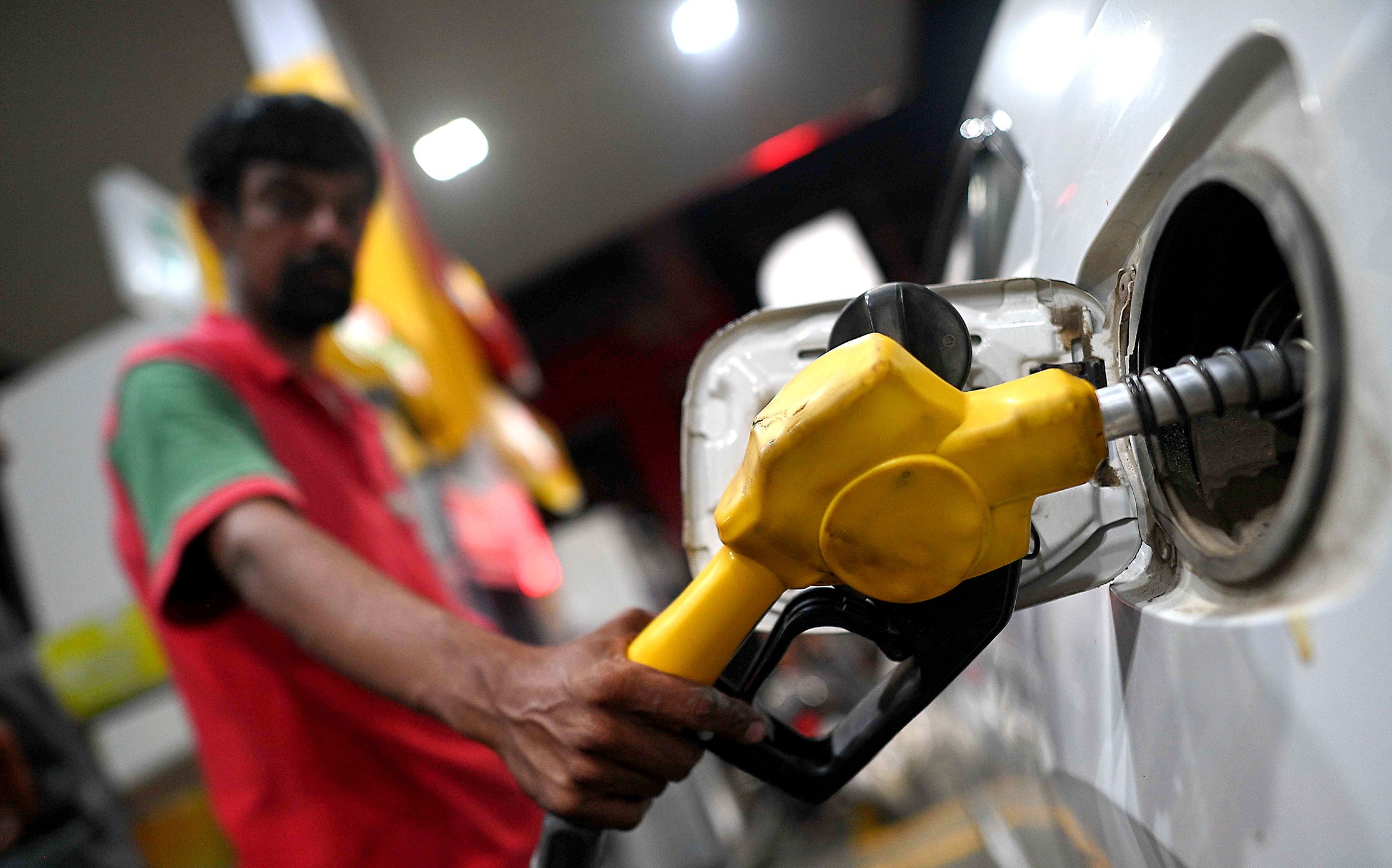
 Motorists face a staggering 14% increase in petrol prices starting Wednesday, signalling further economic strain. (Photo: EPA / Shahzaib Akber)
South African motorists will shell out 14% more for petrol from Wednesday and almost 24% more for diesel as the fallout from the Iran war continues to take a mounting toll on the domestic and wider global economy.
The rand remained relatively stable during April, but the average price for the global benchmark Brent crude oil rose to $101 from $93.67, a sharp upward turn that triggered the increase.
The Department of Mineral and Petroleum Resources (DMPR) said in a statement on Monday that petrol grades 93 and 95 would rise R3.27 per litre, which will take the price to R26.52 – just shy of the record peak scaled in July 2022 in the wake of the initial stages of Russia’s ongoing war in Ukraine.
The diesel price will rise R6.19 per litre, taking it to R32.09 per litre. The prices will come into effect at midnight on 6 May, so expect queues at petrol stations Monday and Tuesday.
Fuel levy relief
At least there is still some relief on the fuel levy front.
“Due to the ongoing US-Iran conflict which continues to affect fuel prices globally, the minister of finance in consultation with the minister of mineral and petroleum resources announced a further temporary reduction in the general fuel levy of 300.0 c/l to be implemented in the price structures of petrol and R393.0 c/l for diesel from 6 May 2026 to 2 June 2026,” the department said.
These additional costs will flow through the pumps of the economy and further fuel inflation, raising the prospects of the South African Reserve Bank hiking rates as early as its next scheduled Monetary Policy Committee meeting later this month.
None of this was on the cards at the start of the year, when inflation was generally ebbing and interest rates were seen falling further by most economists.
The US and Israeli attacks on Iran at the end of February and the subsequent conflict blew those assumptions out of the water, and South Africans will once again this week bear the costs of this war. DM
Comments
Scroll down to load comments...