



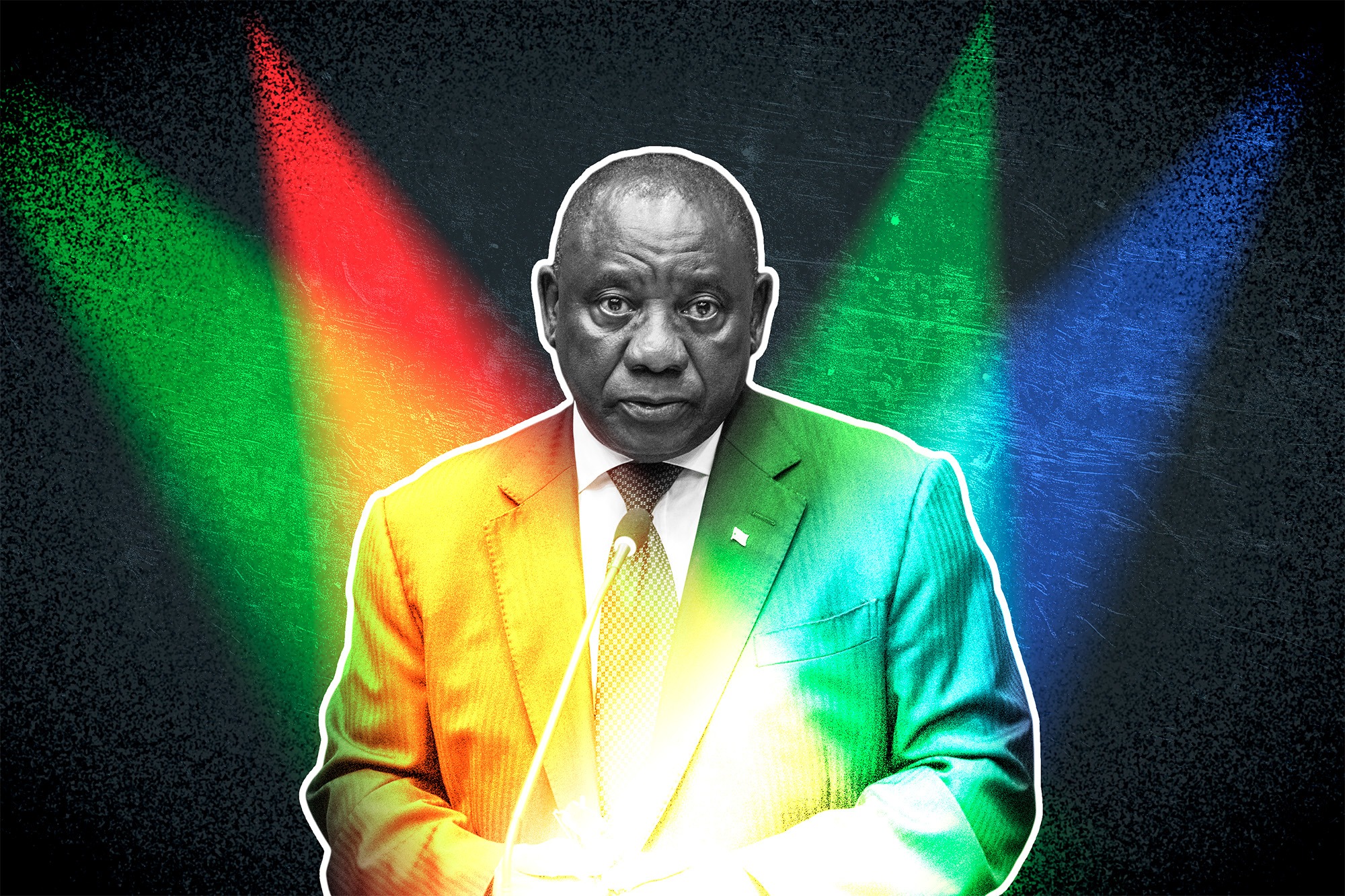
 Illustrative image: President Cyril Ramaphosa (Photo: Gallo Images / Netwerk24 / Jaco Marais)
As parties begin to consider who they want to represent them in the committee to consider the Phala Phala report that found prima facie evidence of wrongdoing against President Cyril Ramaphosa, it might be important to start with what the real aims of this committee should be.
Obviously, there will be legal terms of reference. But in practice, there are several obvious goals the committee should have.
The first is that it should get to the truth. Through a series of public hearings, it should seek to ask factual questions to get factual answers. It should speak to all the people who played a part in this, whether they be farm workers, the person who first made the claim of the theft, the person who did or did not “buy” the buffalo, or the President himself.
It should have a duty to help the nation at least agree on the facts of what happened at Phala Phala and what did not happen at Phala Phala.
This was the great success of the Zondo Commission. Even though many of its findings have not been implemented, there appears to be broad agreement about what happened during the State Capture era. This is because people actually saw the testimony and thus got a chance to view the process.
To achieve this, the process has to be totally transparent, everyone has to be able to see the testimony, the interchanges between questions and answers, the pauses, gaps and breaths that those being questioned take.
This is what the Madlanga Commission appears to be doing. It is getting closer to the truth about what has been happening in the police, and it is doing this in public.
This would then fulfil the second aim, that its findings must have legitimacy.
It is almost certain that a parliamentary committee will not be able to do this, and it is obvious why – because it is not in the interests of any of the parties for this to happen.
Party interests
The ANC’s main interest will be to defend its leader to ensure that he can survive and keep the damage to a minimum. This will override every other consideration.
This is likely to lead to its members ensuring they select a committee chair who treats that as the primary task.
As a result, that person might try to limit questions, protect some witnesses while being more aggressive with others and generally play a role in which they are less than neutral. This is likely to lead to huge conflict with other members of the panel.
Julius Malema, who displayed his full hypocrisy again on Friday while demanding Ramaphosa step down because he is “facing the equivalent of criminal charges”, while he himself has been convicted, has already said he will be on the committee.
His main interest will be to tarnish Ramaphosa as much as possible. He will claim, again and again, that Ramaphosa is a criminal. No matter that Malema himself is one, and has allegedly benefited from money stolen through VBS, On-Point Engineering and council tenders.
The MK party will have the same motivation. It will simply seek to use the opportunity to attack Ramaphosa, despite its leader being the main architect of State Capture.
The DA’s main interest might be slightly more complicated. It will both want to show its voters that it stands for the rule of law, but also may not want to create a situation that leads to more instability.
It is probably not in the party’s interests for Ramaphosa to leave office at this point, and this would put it in an uncomfortable position of deciding whether the current national coalition continues.
From Ramaphosa to Fraser
All this makes it impossible for Ramaphosa himself to appear before the committee under oath. Many parties would demand his appearance, but with 31 people on one committee, it’s unlikely they would agree – even on just whether they start by hearing his version or whether he only testifies at the end, which could be many months away.
Situations in which a head of state has to answer questions in public under oath are rare. A situation where they would have to take questions from the leaders of other political parties, even more so.
The same goes for the domestic staff of such a person. It is virtually unimaginable that one of Ramaphosa’s workers from Phala Phala could actually have to answer questions in public.
It would allow Malema to seek details about Ramaphosa’s domestic life, which would simply be untenable.
Every action the chair would take to prevent this would lead to the kind of tantrum we saw when the forensic investigator Paul O’Sullivan testified at the ad hoc committee into the SAPS.
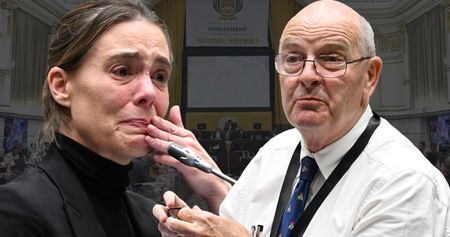
But the interests of the political parties are not the only reason that this approach is likely to fail. It is also because some of the witnesses may not be trusted to give truthful evidence, and while they will be under oath, it will not be easy for MPs to detect this.
While people like Ramaphosa and those who work for him will obviously seek to give a version that helps their cause, there are other interests at play.
For example, can such a process be said to have fully ventilated the truth without testimony from Arthur Fraser, the person who first laid a criminal charge about the money stolen from Phala Phala?
Fraser himself is not trustworthy. As Jacques Pauw outlined in The President’s Keepers, he set up a parallel spy network while at the State Security Agency and is alleged to have siphoned millions of rands from the government.
It is not even clear whether Fraser would agree to testify. Would he be prepared to take questions from a former prosecutor, in the form of the DA’s Glynnis Breytenbach, about his motivations and his history?
It seems unlikely, especially since Fraser did not spend the weekend in television studios gloating about the Constitutional Court ruling. Insofar as is known, he gave just one interview to a podcast that was then reported on by Sunday World.
In that interview, he claimed to have been offered R50-million to hush up the issue. Would he answer questions under oath about who made the offer? About where the money would have come from?
It would seem unlikely.
And yet, can the committee say it has got to the truth of the matter without answers from Fraser to those questions?
Wishful thinking
While it is correct to hope and dream for a parliamentary process that leads to an outcome that allows us to agree on the facts of what happened at Phala Phala, to believe that this will happen amounts to wishful thinking.
The Zondo and Madlanga commissions both show that they provide a better blueprint to get to the truth. But they are not legally available as options at this point.
Commissions chaired by judges at least appear to enjoy legitimacy in a way that parliamentary processes do not (consider the difference between the Madlanga Commission and Parliament’s ad hoc committee, which are both investigating the same facts concerning the SAPS).
None of this means that the Parliamentary process must not happen. It is probably the only legal option available.
But it does mean we should not get our hopes up that it will fulfil the function we really require of it. DM
Comments
Scroll down to load comments...