



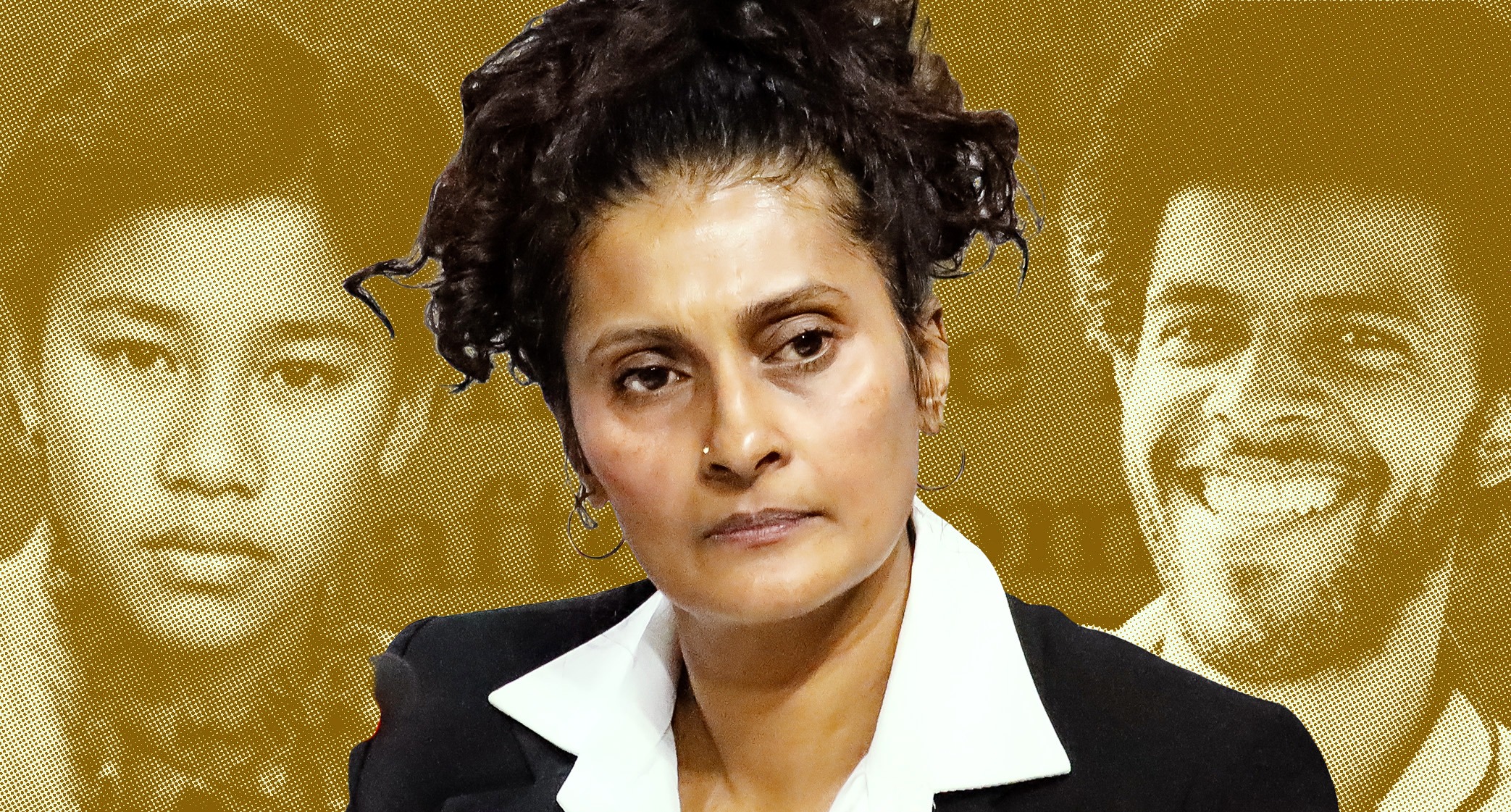
 Illustrative image (from left): Anti-apartheid activist Coline Williams (Source: Facebook) | Advocate Shubnum Singh testifies during the Khampepe Commission (Photo: Gallo Images / Fani Mahuntsi) | Anti-apartheid activist Robbie Waterwitch (Source: Facebook)
Investigators and prosecutors working on the unfinished business of the Truth and Reconciliation Commission faced direct threats, including phone hacks and organised counter-surveillance by “persons of interest” seeking to evade justice, the Khampepe Commission of Inquiry into delayed Truth and Reconciliation Commission (TRC) prosecutions has heard.
Testifying at the Khampepe inquiry on Thursday, head of the NPA’s TRC unit advocate Shubnum Singh listed some of the cases investigative teams across the country had grappled with, as well as the difficult task of reconstructing decades-old crimes with reluctant suspects and missing dockets.
/file/attachments/orphans/ED_604272_273556.jpg "Head of the NPA’s TRC unit advocate Shubnum Singh testifies at the Khampepe Commission in Johannesburg on 16 April 2026. (Photo: Gallo Images / Fani Mahuntsi)")
In January 2025, the families of 25 victims of apartheid-era crimes joined a major application for constitutional damages in an attempt to compel President Cyril Ramaphosa to establish a commission of inquiry.
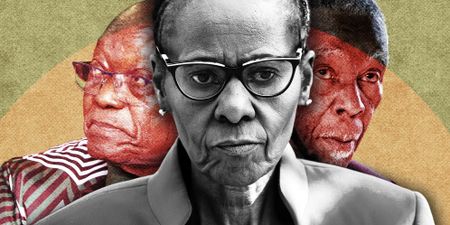
After much delay and objection from former presidents Thabo Mbeki, Jacob Zuma and inexplicably, Ramaphosa, the Khampepe Commission has got down to work.
Tick tock
Many who lived through the 1970s, 1980s and into the 1990s will recall newspaper headlines featuring Western Cape Umkhonto weSizwe (MK) activists, Robbie Waterwitch, Coline Williams, Ashley Kriel, Anton Fransch, as well as Dulcie September and Imam Haron, all killed by apartheid security police.
/file/attachments/orphans/AV_00014121_112406.jpg "Neil Aggett, a trade union leader and labour activist who died in detention after being arrested by the South African Security Police. (Photo: Gallo Images / Sunday Times)")
Then there was Neil Aggett, Ahmed Timol, David Webster, Chief Albert Luthuli, the Cradock Four, Nokuthula Simelane, the Pebco Three and the 25 families of other victims who embarked on a decades-long campaign for justice.
/file/dailymaverick/wp-content/uploads/2025/10/suttner-luthulis-subbedm.jpg "Chief Albert John Luthuli. (Photo: Supplied)")
/file/dailymaverick/wp-content/uploads/2021/07/Cradock-four.jpg "The Cradock Four. (Photo: Supplied)")
/file/dailymaverick/wp-content/uploads/Kevin-Bloom-An-apartheid-murder-reckoning-part-III.jpg "Student and Umkhonto weSizwe undercover courier, Nokuthula Simelane. (Photo: Supplied)")
/file/attachments/orphans/LA106-1-5-Imaam-Abdullah-Haroon-900x600-1_624506.jpg "Anti-apartheid activist Imam Abdullah Haron. (Photo: Supplied)")
Amid pressure from the families, advocate Shamila Bathoi, as the NPA head, and Singh, in her new job, were aware that the clock had ticked past midnight. Time had run out to prosecute persons of interest – those who had not applied for amnesty at the TRC for their crimes.
They let the dogs out
Singh told the commission that investigators and prosecutors working on TRC matters faced serious security risks, including “active interference” such as “communication hacking”, “organised counter-surveillance”, security leaks and direct threats.
“There was a person of interest who used his dogs to chase investigators who were attempting to carry out their duties,” she told the commission. She noted that persons of interest had formed a WhatsApp group to alert one another “to the imminent arrival of investigators”.
It was for this reason, Singh told the inquiry, that she would not reveal to the inquiry the fate of some of the 130 cases still on the boil. She said that sensitive internal discussions on some persons of interest “had occasionally leaked back to those same individuals”, and so caution was the watchword.
Singh quoted in her statement to the inquiry the words of the late judge Ismail Mohamed in the case of Azapo and others v the President of South Africa and others, “If the army and police have been the agencies of terror, the soldiers and the cops aren’t going to turn overnight into paragons of respect for human rights. Their numbers and expert management of deadly weapons remain significant facts of life”
The job at hand
While Singh’s formal leadership of the NPA’s TRC component began in 2021, she worked actively on TRC-related cases for several years before this appointment, serving as the advocate assisting the evidence leader in the reopening of the Ahmed Timol inquest in 2017.
/file/attachments/orphans/Shaun-apartheidCrimes-inset_538411.jpg "Ahmed Timol was a young schoolteacher in Roodepoort who opposed apartheid. He was arrested at a police roadblock on 22 October 1971, and died five days later. He was the 22nd political detainee to die in detention since 1960. (Photo: www.ahmedtimol.co.za)")
She also led evidence in the reopened Neil Aggett inquest, which sat between 2019 and 2020 before concluding with a judgment in March 2022.
Exercising the power of active citizenry, the families who had organised under the Apartheid Era Victims’ Families Group (AVFG), received support from the Foundation For Human Rights and were consulted by the NPA.
Robbie and Coline
In February 2023, the NPA, the Directorate for Priority Crime Investigation (DPCI, the Hawks) and members of the AVFG met to discuss the Robbie Waterwitch and Coline Williams cold case.
/file/attachments/orphans/516099706_10161658996691645_1984958708553270132_n_969011.jpg "On 23 July 1989, after a Sunday family lunch, Coline left her family home and never returned. (Photo: Cape Historical Society / Facebook)")
/file/attachments/orphans/f365fc09a3ebefccaa8940ea01c9553951039f93_885844.jpg "Robbie Waterwitch. (Photo: Captured from Oryxmedia tribute)")
Read more: The heroes ANC forgot to remember: Robbie Waterwitch and Coline Williams, 25 years later
These encounters provided a platform for families to “share their pain, their challenges and commitment to working towards justice while receiving updates on the status of the investigations”, Singh told the commission.
In July 1989, the same month that then president PW Botha and Nelson Mandela, then still imprisoned at Victor Verster Prison near Paarl, met secretly for the first time, Waterwitch and Williams were killed when a booby-trapped limpet mine they had planned to place at the Athlone Magistrates’ Court in the Western Cape exploded.
The activists were protesting against the “Tricameral Parliament” elections in 1984 for three separate, racially segregated parliamentary houses: Whites (Assembly), Coloureds (Representatives), and Indians (Delegates), excluding the black majority. Before this, a whites-only referendum had been held on the issue.
Waterwitch and Williams, both devout Catholics and members of MK’s Ashley Kriel Detachment, are remembered as heroes by those involved in the struggle in the region in the turbulent 1980s.
Kriel was one of the founders of the Bonteheuwel Military Wing (BMW) and was later trained by MK in exile. He was assassinated in 1987 in his safe house in Athlone by police Warrant Officer Jeff Benzien.
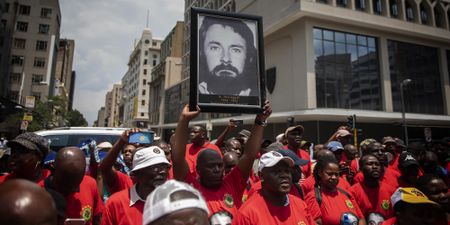
A crowd of more than 5,000 attended Coline and Robbie’s funeral, where a nasty standoff between law enforcement and mourners took place. A heavily armed police contingent circled the church and fired teargas into the crowd, which openly brandished ANC flags, which were still banned at the time.
The Waterwitch/Williams matter was listed by the TRC investigators alongside that of MK commander Anton Fransch, killed in a seven-hour standoff with security police in November 1989.
Challenges
Singh told the commission that the NPA faced a range of complex challenges prosecuting matters arising from the TRC, which were rooted in the passage of time, institutional capacity and legal-procedural obstacles.
The most significant had been the “extreme lapse of time” as many of the cases involved incidents which had occurred more than 40 years ago.
“A large number of key suspects, witnesses and family members are either deceased or too elderly and ailing to participate in legal proceedings,” she told the inquiry.
Destroyed files
Also, much of the relevant evidence had been destroyed by the apartheid state post-1994 to conceal criminal acts. Other papers were simply lost over the decades through standard records-destruction policies.
Investigating these matters had required a unique approach, since original dockets, post-mortem reports and crime scene photographs were often missing.
/file/attachments/orphans/MC-Turner-Foszia_2_449706.jpg "Philosopher, academic and anti-apartheid activist Rick Turner, who was assassinated in 1978. No one has been charged for his murder. (Photo: Jann Turner)")
Establishing the truth in such “cold cases” often relied on locating experts who were either retired or overwhelmed with current duties, she said. In the case of the Cradock Four, the entire docket had gone missing and had to be recreated.
Advocate Nomgcobo Jiba, who was acting National Director of Public Prosecutions when the docket was handed over, has denied playing a role in its disappearance. She alleged she was being “scapegoated”.
Singh said that for several years, dedicated TRC prosecutors had been employed on three-year contracts, which had led to uncertainty and a “drastic exodus” to the private sector. This turnover required new prosecutors to begin investigations from scratch, damaging the rapport with victims’ families.
While 19 permanent TRC posts had recently been created, the NPA and DPCI still faced capacity shortages, with 16 prosecutors managing around 126 active investigations.
Stones in the road
She said former apartheid officials who were now being called to account had been hung out to dry by the SAPS and the SANDF, which had repeatedly refused to fund their legal representation despite court rulings ordering them to do so. These disputes had caused years of delays, she said, and in some cases, suspects died before the resolution of the funding issue.
“TRC cases are often hampered by general judicial backlogs, long adjournments and delays by judges in finalising judgments,” she said. Accused people also frequently employed “11th-hour” applications and other delay tactics to keep matters languishing on the court roll.
She said it was “widely acknowledged that political interference suppressed the investigation and prosecution of TRC cases for over a decade” (2003-2017) and that this era of inaction had ended with “the permanent loss of evidence and the death of many perpetrators”.
Despite these challenges, she said, the NPA maintained that its recent establishment of dedicated TRC Components and joint accountability sessions with the DPCI represented a “multi-pronged approach” to finally achieving closure for victims’ families. DM
Comments
Scroll down to load comments...