



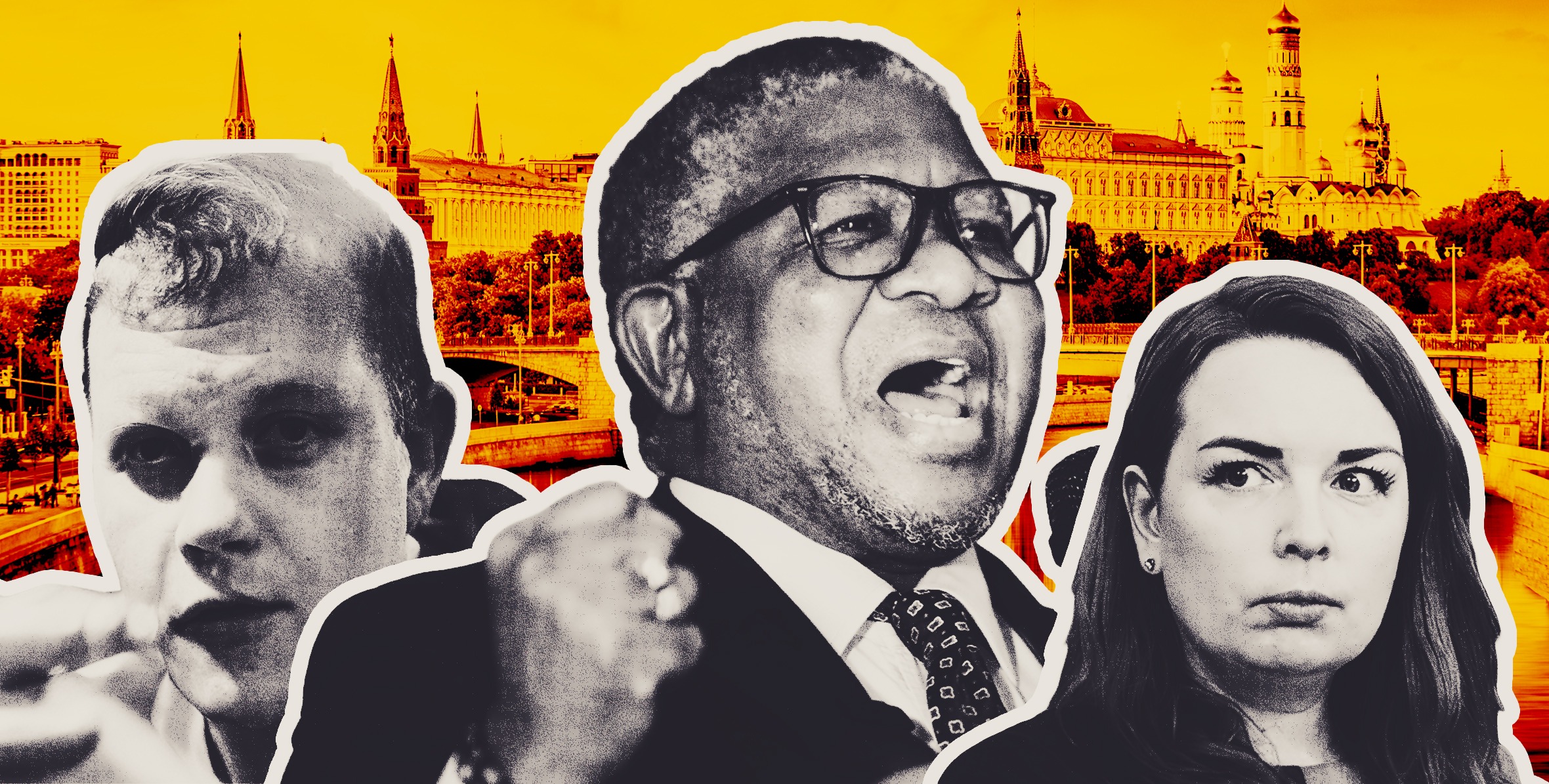
 Illustrative image: The Kremlin. (Photo: Contributor / Getty Images) | From left: Maksim Yurevich Sokolov, aka agent ‘9477’, reportedly met the ANC’s Fikile Mbalula in late 2024. (Photo: Sofia) | ANC secretary general Fikile Mbalula. (Photo: Gallo Images / Sharon Seretlo) | US-sanctioned Russian Yulia Afanasyeva Berg visited South Africa in 2024. (Photo: State Duma)
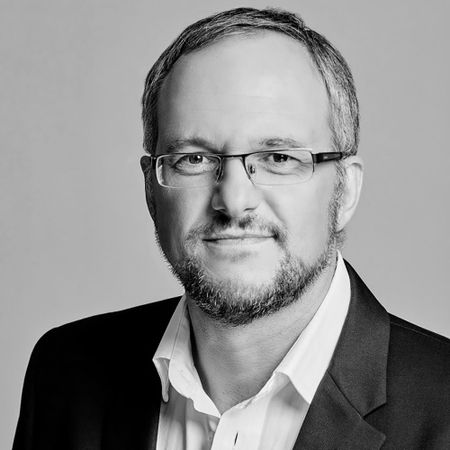
 On Wednesday, The Continent and Forbidden Stories published details about how Russian “agents” met ANC secretary general Fikile Mbalula and his adviser Bo Mbindwane in a private lounge at Joburg’s The African Pride Hotel in December 2024.
The meeting involved Mbalula, Mbindwane and a person known as “Agent 9477”. He has been identified as Maksim Sokolov, a person who has himself said in an interview that he “provided consultancy” in Africa.
As reported, the main subject was about the help the ANC could expect to receive for the local elections. But also discussed was the fact that the Russians had helped the ANC in the 2024 elections. Sokolov and Yulia Afanasyeva Berg, who was sanctioned by the US in 2021 and visited SA in March 2024, were reportedly responsible for the influence campaign.
/file/attachments/orphans/02copy_127714.jpg "Maksim Yurevich Sokolov, aka agent ‘9477’, reportedly met the ANC’s Fikile Mbalula in late 2024. (Photo: Sofia)")
/file/attachments/orphans/01copy_560494.jpg "US-sanctioned Yulia Afanasyeva Berg visited South Africa in March 2024. (Photo: State Duma)")
While there is no smoking gun that points to a direct link between these agents and the Kremlin, there can be no doubt that it would be in the interests of the Kremlin to help the ANC.
South Africa is one of those rare countries where political attitudes to Russia and its war in Ukraine can be changed. If the ANC were to lose control of our foreign policy, it is likely that the DA would be the party to control that ministry.
Close relationship
ANC Youth League leaders were involved in the obviously sham referendums that saw people living in formerly Ukrainian territory “voting” in favour of being governed by Russia in 2022.
And of course, the docking of the Lady R vessel at Simon’s Town has not been fully explained. That led to the Biden Administration claiming that South Africa was supplying Russia with weapons (an incident that also led to the then US ambassador being issued a démarche, something that has since become a trend).
The report of a judicial investigation set up to probe what happened in Simon’s Town was never released. Instead, as Rebecca Davis reported, the four-page summary that was published claimed, improbably, that goods were being transported from the UAE, but were being transported on a Russian ship under US sanctions.
The report claimed, surely implausibly, that unloading was done at night because it was “part of standard practice in regard to this equipment”.
All of this would strengthen the assumption that this new reporting is true. Obviously, the ANC and Russia’s government have a close relationship – they have helped each other in the past, so why not now?
There is also a question about whether the ANC did, or ever would, publicly acknowledge this support.
Considering that the reporting of the money that changed hands in the Russian influence campaign uses US dollars, in terms of the rand value, it moves into the millions.
Can you imagine what would happen if it emerged that agents of the Trump Administration had met a DA leader to discuss help during an election?
Also, people in the ANC have been accused of this kind of campaign before. In 2017, the ANC activist Shaka Sisulu was accused of running a “covert elections campaign” that would slander opponents.
It’s entirely possible that people in the party could do this again.
Mbaks and Bo
Obviously, the person with the most to lose from this revelation is Mbalula.
It could easily lead to questions being asked in the ANC about his closeness to agents of a foreign power. And, if he did receive gifts for himself and his family from those agents, perhaps he might be asked what their value was.
Considering that he is widely seen as having presidential aspirations of his own, this issue could well be used either by his opponents in the ANC’s internal election or by other parties.
Unfortunately for Mbalula, his denials that this meeting happened are unlikely to be universally accepted, primarily because he has a track record of lying.
/file/dailymaverick/wp-content/uploads/2024/10/ED_514448.jpg "ANC secretary general Fikile Mbalula. (Photo: Gallo Images / Sharon Seretlo)")
Three years ago, he claimed on Twitter (as it was then) that he had “Landed in Ukraine”. He then refused to discuss it.
In government, as a Cabinet Minister, he had a track record of interfering in SOEs, making decisions that were illegal and shooting his mouth off.
This is a man who allegedly ensured that a group of men were tied up and held on the ground for hours, so that he could post a picture of himself with them on social media.
In the end, after he left, they were processed and then simply released – because they had no link to the crime they were accused of.
The other figure of interest is Bo Mbwindane. He has been close to Mbalula for many years.
He is most famous for his involvement, with Mbalula, in trying to gain control of a cellphone “grabber”, a device that can tap into and redirect cellphone conversations.
In the end, the Zondo Commission found that the two were wrong to be involved in this (the consequences of this run deep. Among the people who tried to frustrate the Ipid investigation into this was then Deputy National Police Commissioner Francinah Vuma. A judge found she had breached her duty and placed the ANC above the SAPS, but she remained in office before retiring and recently testified in Parliament’s ad hoc committee hearing).
All this might make his denials equally hollow.
A failed affair
Two other aspects deserve examination.
The first is that when you seek to deceive people, as this operation undoubtedly did, you are automatically working with people who are not trustworthy.
This means that the people who gave these agents the money they spent probably had no way of knowing for sure that they spent it on the ANC’s election campaign and on discrediting their opponents.
And the agents who may have passed money to Mbalula and Mbindwane probably have no certainty of what that money may have been used for, either.
The point is that during elections, there are many opportunities for party members and leaders to steal from their own parties. And if that money is being given in secret anyway, well, it is all just so much easier.
Finally, there is something encouraging about our democracy to be drawn from this affair.
It is that despite the active involvement of another country, despite attempts to mislead and lie to our voters, it was staggeringly ineffective.
The support the Russians gave the ANC presumably had zero impact on the final result. As Forbidden Stories details, Russian agents were involved in similar efforts in other places. They appear to have failed there, too.
This shows how difficult it is to change voter behaviour.
Ask any politician, from Gwede Mantashe to Julius Malema to Helen Zille. They are likely to tell you exactly how difficult it is to influence what voters do.
This will not be the last time that other powers will try to influence the outcome of our elections. The Trump Administration might well make public comments against the ANC at some point.
But, if it is difficult enough for South African politicians to change voter behaviour, it will be even more difficult for people from other countries. DM