



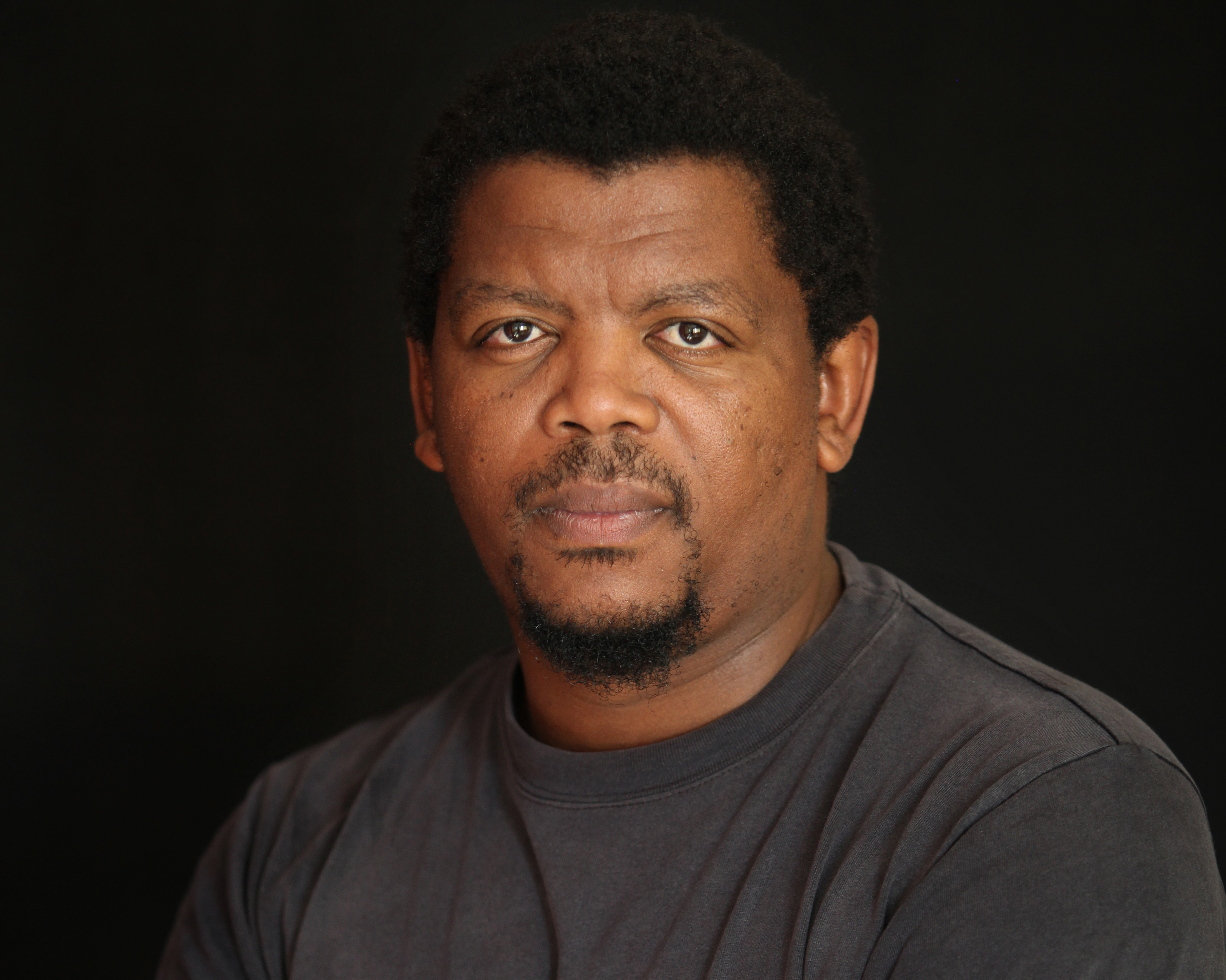
 Lukhanyo Calata has accused the ANC of betraying victims’ families by halting prosecutions due to a ‘secret agreement’ with apartheid-era leaders. (Photo: Supplied)
/file/dailymaverick/wp-content/uploads/2025/10/label-analysis-2.jpg)
On Friday, as President Cyril Ramaphosa’s State of the Nation (Sona) speech dominated South African headlines, Lukhanyo Calata delivered devastating testimony to the Khampepe Inquiry into delayed apartheid-era prosecutions.
Calata has fought a long, hard and relentless battle for more than a quarter of a century, demanding transparency from the National Prosecuting Authority (NPA) about a behind-the-scenes “secret agreement” between the newly elected ANC government and old apartheid generals that halted prosecutions.
Thirty years into the country’s democracy, the wounds of the past are being reopened at the inquiry, with former presidents Thabo Mbeki and Jacob Zuma set to be compelled to testify after three unsuccessful attempts to derail proceedings.
On Friday, Calata (44), a former SABC journalist, unpacked his struggle to excavate the truth from the ashes of the bones of the murdered activists in this emblematic case.
His father, Fort Calata, and fellow Cradock activists Matthew Goniwe, Sicelo Mhlauli and Sparrow Mkonto were murdered by a security police hit squad on 27 June 1985, after which their bodies were set alight.
Betrayal
Calata, who was three when his father was assassinated by the state, did not hold back on Friday, excoriating the ANC post-apartheid leadership for “betraying” the families of victims and South Africans whose human rights had been violated.
His mother, Nomonde, and sisters, Dorothy and Thumani, were left without their primary breadwinner. As their only son, he had taken on the gargantuan task of seeking justice for his father and many others.
“Our father”, he said, had been “betrayed by his own state — the apartheid state — and then the ANC comes to power and betrays them again. So two times. And it is not just my father and his comrades, it is all of those who fought for freedom.”
Calata recounted how he was angered when told that the delays appeared to be part of a secretly negotiated quid pro quo.
“We were told that it was the price we had to pay,” Calata on Friday told the panel chaired by former constitutional court judge Sisi Khampepe, assisted by retired judge Frans Kgomo and human rights lawyer Andrea Gabriel.
Calata said he had come to “despise” politicians who “say one thing, and then they do a complete about-face because for them it is about playing to the public. It is the worst form of betrayal.”
The families of victims and survivors had not expected any better from the apartheid government, he said. However, they, as well as the rest of the country, had “expected a lot better, a lot, lot better from the ANC”.
Missing docket sent to Jiba
In 2013, an investigation docket into the killing of the Cradock Four, which implicated former minster of police Adriaan Vlok, former president FW de Klerk, and former South African Police commissioner Johannes van der Merwe, went “missing”.
The original case, Swartskop CR 13/07/1985 (note the date), was uplifted from the Priority Crimes Litigation Unit (PCLU) to the office of the then acting National Director of Public Prosecutions, Nomgcobo Jiba.
/file/dailymaverick/wp-content/uploads/karabo-Jibafightback-copy.jpg "Nomgcobo Jiba during a media briefing on 18 August 2015. (Photo: Cornel van Heerden / Gallo Images / Beeld)")
Jiba’s personal assistant, a Ms Lepinka, had requested the docket from the PCLU’s advocate, Raymond Macadam. When the PCLU leadership later attempted to retrieve the file, they were told it was “missing”.
This resulted in a six-year hiatus between 2013 and 2019, when very little was done to solve the case. Calata told the inquiry that several “persons of interest” had died. They included Eric Winter, the Cradock security branch commander (he died in 2021) and former president De Klerk, who had headed the Security Council when the decision to kill the Cradock Four was taken (he died in 2012).
The former director of the National Intelligence Service, Niel Barnard, died in 2025, and former police minister Vlok died in 2023. However, it was the death in 2023 of Hermanus Barend du Plessis, the former head of the security branch’s “black affairs” in Port Elizabeth, that shook him to the core, said Calata.
/file/dailymaverick/wp-content/uploads/2025/01/0000223943xxxxxxx.jpg "South Africa’s former intelligence chief Dr Niel Barnard. (Photo: Nasief Manie / Gallo Images / Foto24)")
Calata explained that he had been at work the morning the news of Du Plessis’ death broke, and then realised that the last person “tied to the physical act of having killed my father and his comrades had died”.
After each of these perpetrators died, Calata felt that “we were getting further and further from the truth”.
/file/dailymaverick/wp-content/uploads/2025/06/DSC_0739-copy.jpg "Nomonde Calata, Fort Calata's widow. (Photo: Deon Ferreira)")
Deep ANC roots
Calata’s lineage in Cradock dates back to 1930, and his great-grandfather, grandfather, and murdered father were all political activists with the ANC.
His great-grandfather, the Rev James Calata, joined the liberation movement in 1930, and in 1936, was elected secretary-general.
“He served under three ANC presidents, Pixley Ka Seme, AB Xuma and Zaccheus Mahabane,” said Calata, adding that his great-grandfather was also one of the Treason Trialists.
“It was his work which had led to the establishment of the ANC Youth League, where Anton Lembede became its first president. The likes of Nelson Mandela were part of the first executive”.
He told the inquiry that former deputy minister of justice John Jeffery had explained to him that a political decision had been made to halt certain apartheid-era prosecutions.
As Daily Maverick’s Estelle Ellis reported, eight former police and SA Defence Force officials applied for amnesty to the Truth and Reconciliation Commission (TRC) for their roles in the Cradock Four killings:
- The “masterminds”: Hermanus Barend du Plessis, Nicolaas Jacobus Janse van Rensburg and Harold Snyman.
- Three of the killers on the scene: Johan Martin “Sakkie” van Zyl, Eric Alexander Taylor and Gerhardus Johannes Lotz.
- Two others who played peripheral roles: Jacob Jan Hendrick (Jaap) van Jaarsveld and Eugene de Kock.
/file/dailymaverick/wp-content/uploads/David-TRCfailures1.jpg "Former police colonel and apartheid assassin Eugene de Kock. (Photo: Leon Botha)")
All of the men were denied amnesty. However, the Vlakplaas commander, De Kock, and Van Jaarsveld were granted amnesty for related offences and not the direct murder of the four men.
“They were never prosecuted for what they had done. So a smoking gun was right there. If only the NPA had the guts to prosecute, I would not be sitting here today,” said Calata.
He said the ANC and various governments and administrations that it had led for 31 years “have failed us in ways that we can't even begin to articulate”.
Attempts by Zuma and Mbeki to delay the inquiry by seeking recusals of the chair and now a further court attempt by Zuma to halt his appearance indicated how little they cared.
“They tell you that they understand the plight of the victims and the families and all those kinds of things, but yet they fight tooth and nail to stop the proceedings of this commission.”
Advocate Howard Varney, representing the Calata family and other applicants, earlier in the week told the inquiry that both former presidents had a “moral obligation” to appear. DM