



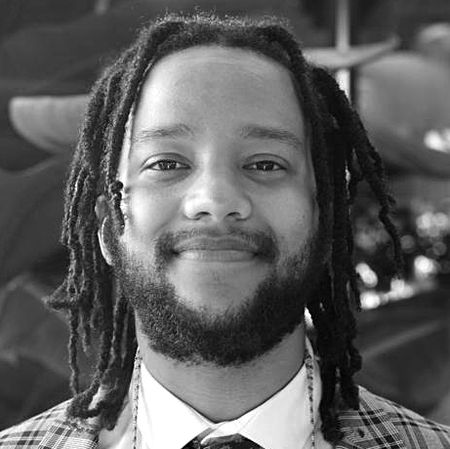
 Nic Dlamini. (Photo: Team Qhubeka ASSOS)
 Nicholas Dlamini hasn’t quite hung up his cycling shoes yet. Despite admitting that he’ll never reach the heights of 2021, when he became the first black cyclist from South Africa to ride the Tour de France, the 30-year-old will be competing sporadically again next year.
There have been a few life-altering events across the latter parts of Dlamini’s journey at the pinnacle of cycling. Towards the end of 2019, the then 24-year-old suffered a broken arm after an altercation with rangers on Table Mountain.
Six years later, the matter is still playing out in court, with trial dates pending.
“It’s crazy to think about. It’s actually almost six years or something. It is South Africa; everything takes quite a bit of time.”
He battled through that setback, and now that he has started his own family, he is reassessing his priorities in life.
“The older you get, and obviously once you start having a family, kids, you tend to be a lot more cautious,” he explained. “You don’t take the risks that you once took when you were a lot younger, taking corners that are very high speed.
“That braveness basically leaves you. In situations like that, you’re just happy to sort of hold back because you don’t want to break your collarbone and now you’re not able to do much at home with your kids.”
So although he still rides regularly, it’s recreational for now, with his two- and four-year-old sons at home taking priority.
Although a comeback isn’t totally out of the question, fans of his shouldn’t expect first-place finishes.
“I haven’t really retired… I don’t know, I could come back to racing next year,” he said.
Pitching in
Although Dlamini’s competitive edge has left him, his rise to the top is nevertheless remarkable. He was born and raised in Capricorn, an informal settlement near Muizenberg in the Western Cape. When he was 12, he hopped on a bicycle for the first time and hasn’t stopped pedalling.
He started riding at Ben Bicycles, a cycling club near his home, and moved to the Velokhaya Life Cycling Academy in Khayelitsha shortly after that, where he stayed for two years. Soon he became part of the amateur arm of Qhubeka’s cycling team because they “had the funding and resources to take riders to races”.
/file/dailymaverick/wp-content/uploads/2025/08/Songezo_s-Cycling-Academy-6.jpeg "Songezo’s Cycling Academy from Masiphumelele is looking to upgrade its indoor cycling space to ensure year-round training. (Photo: Supplied)")
With his own cycling career now largely an afterthought, Dlamini is looking to give back to the community that helped him.
Velokhaya Life Cycling Academy and Songezo Cycling Academy, in Masiphumelele, will both be the recipients of upgraded indoor cycling facilities worth R1.2 million with a spinathon arranged at the V&A Waterfront on September 13 to raise the funds for it. The event is organised by Matrix Fitness, whose indoor cycles will be placed inside the renovated buildings.
“When I started cycling on rainy days when you’re writing exams or even when there was a lot of shooting in the community happening – as we see pretty much every day, there’s sometimes like weeks where they’re just shooting, where it’s not safe to even leave the community to go ride your bike – these indoor studios will basically close that gap,’ Dlamini said. “You can now just go to the studios and basically still get your training in.”
Young riders
Dlamini’s decision to temporarily step away from the cycling lane and “hold on to the brakes a little bit”, as he put it, was also motivated by a desire to work on his businesses, which mainly involve renting out properties, some of which were distressed before purchase.
He started doing it while riding professionally, but has taken a more hands-on approach since stepping back from riding.
With a return to racing on the cards later this year, he is still young enough to make a serious comeback in the sport, despite being hesitant to do so because of his family.
But Dlamini sees the sport differently, having noticed a changing trend in the ages of the past few Tour de France champions.
“It’s all the younger guys, 22 years old, 23. The sport has definitely changed… Back in the day you sort of matured around 30, then you’d basically be [in peak form] to win races like the Tour de France, where you almost had to be around 35 to win the Tour,” Dlamini said.
“But now that has changed… It’s all the younger guys, but also because of how the studies have basically moved, everything now is based on numbers and the science behind cycling, not really on training any more.
/file/dailymaverick/wp-content/uploads/2025/08/Songezo_s-Cycling-Academy-4.jpeg "Members of Songezo’s Cycling Academy. (Photo: Supplied)")
/file/dailymaverick/wp-content/uploads/2025/08/Songezo_s-Cycling-Academy-3.jpg "Songezo’s Cycling Academy is based in Masiphumelele, a township on the Cape Peninsula. (Photo: Supplied)")
“This is why we see the younger guys now, who are actually able to perform at a high level, even though we still don’t know how long they can actually go for.”
The last time a cyclist older than 30 won the Tour de France was in 2o18, when Welshman Geraint Thomas claimed the yellow jacket as a 32-year-old.
Since then Tadej Pogačar (currently 26) has won the Tour four times, Jonas Vingegaard (currently 28) has won it twice and Egan Bernal was 22 when he won it in 2019.
Few local elites
There are few South Africans riding at the elite level. Currently only Louis Meintjes, who competed at the Giro d’Italia this year and rides for Belgian team Intermarché-Wanty, is on the Grand Tour circuit.
“A lot needs to be done,” Dlamini said.
“The local level of racing isn’t super high but that’s also because there’s not enough racing on the local calendar to begin with.”
/file/dailymaverick/wp-content/uploads/2025/08/IMG_7885-Enhanced-NR.jpeg "Members of Songezo’s Cycling Academy in action (Photo: Supplied)")
As part of his business ventures, he’s planning on launching an annual race in KwaZulu-Natal next year to help fill the gaps in the cycling calendar in the country.
“There are small races and then the [Cape Town] Cycle Tour, then everything dies down,” he said. “So, even the guys who want to pursue this cycling thing as a career in SA, they almost have to have a second job because there aren’t enough sponsors…
“Having more races and having them well planned would… grow [the sport] but also better structure, better support… maybe also government doing a lot around cycling would help because then the more racing there is, the more guys have to train. Obviously that increases the level automatically.”
Despite mostly stepping away from cycling to be present with his young family, Dlamini’s heart is still with the sport that gave him so much. DM
This story first appeared in our weekly Daily Maverick 168 newspaper, which is available countrywide for R35.
