




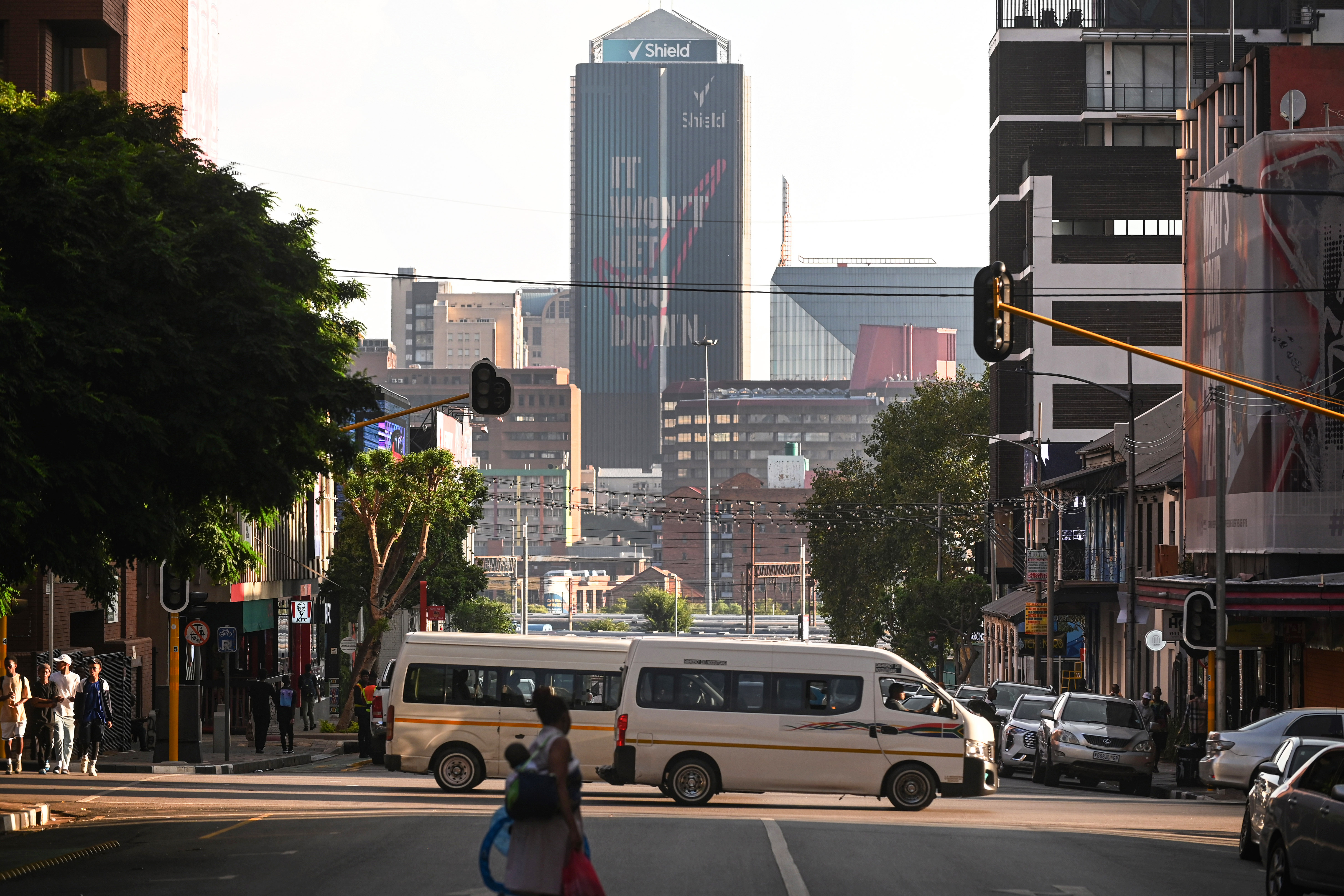
 Rush hour in the Braamfontein district of Johannesburg, South Africa. Photographer: Leon Sadiki/Bloomberg
 Africa’s most industrialized economy has been hamstrung by almost daily power cuts, crime and fraying transport networks. To try combat these challenges, the authorities have instituted a number of reforms.
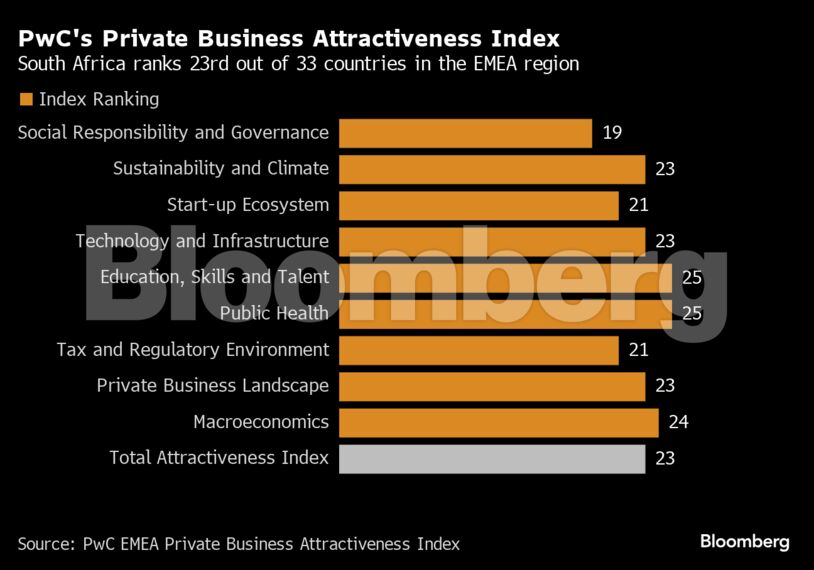
Data from PWC’s Private Business Attractiveness Index suggests that the reforms are showing signs of paying off. Despite its operational challenges, South Africa is becoming a more attractive location for private business, compared to countries in the Europe, Middle East and Africa region, PwC said.
South Africa ranked 23rd out of 33 countries in the 2023 index, compared with 31st in 2021. Peers Kenya ranked 32nd and Nigeria last.
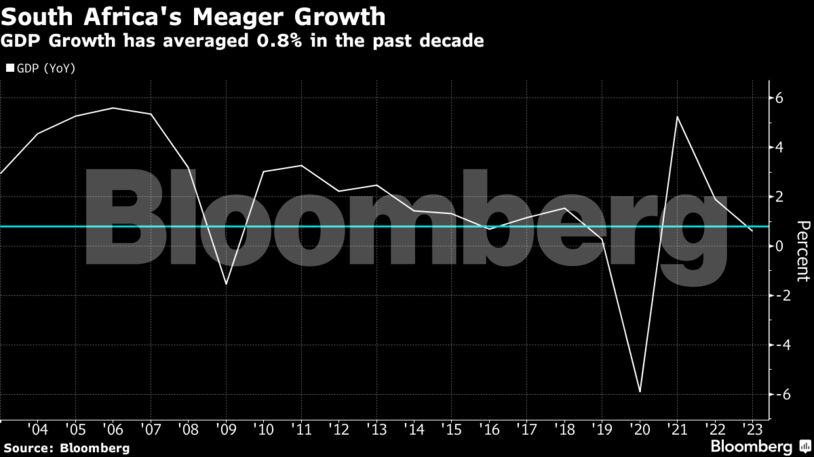
Still, without the growth push, South Africa’s economy is expected to lag other big regional economies that are also implementing reforms. The International Monetary Fund expects its economy to expand 0.9% this year, Nigeria’s 3.3% and Egypt’s 3%.
Read More: Nigeria’s Economy, Once Africa’s Biggest, Slips to Fourth Place
“South Africa doesn’t have that natural lever to pull that is suddenly going to shoot the lights out from a growth perspective, and this is where the country does need to try a lot harder, having seen over a decade of growth underperformance,” Khan said.
Its gains and those of Egypt and Nigeria are going to become more critical if the continent wants to reset the Africa growth story, as some of its former superstars flounder, she said. Among them are Ethiopia that’s lost luster after its recent civil conflict and Mozambique, which is battling an insurgency that is impairing its ability to explore its resource wealth.
“It’s really up to the more established, bigger African economies to reset the growth narrative,” she said.