
Space race
India announces four-member crew for ‘Gaganyaan’ space mission
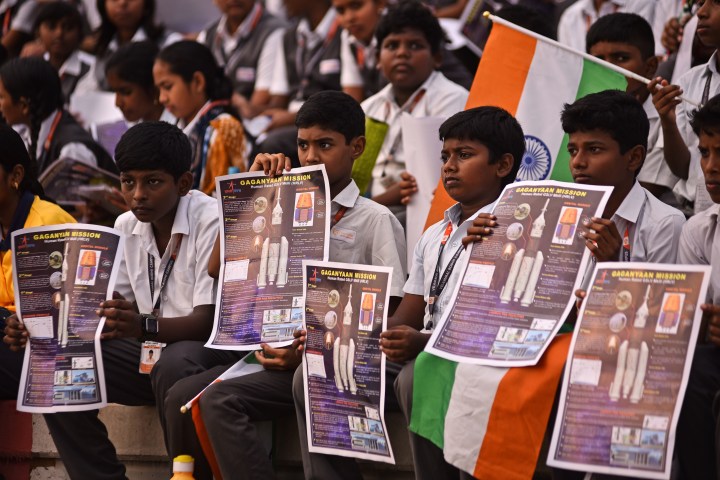

NEW DELHI, Feb 27 (Reuters) - India on Tuesday introduced four crew members for its maiden 'Gaganyaan' space voyage, as it aims to become the world's fourth country to send a crewed mission into space just months after a historic landing on the south pole of the moon.
Gaganyaan, or “sky craft” in Hindi, is the first mission of its kind for India and will cost about 90.23 billion rupees ($1.1 billion). It involves the launch of a habitable space capsule over the next year to an orbit of 400 km (250 miles) and its return via a landing in the Indian Ocean.
Prime Minister Narendra Modi awarded the four crew members, all of them air force officers, “astronaut wings” at a space centre in Thiruvananthapuram in Kerala state on Tuesday, in their first public appearance after months of rigorous training.
The four officers are Prashanth Balakrishnan Nair, Ajit Krishnan, Angad Pratap and Shubhanshu Shukla, a government statement said.
It was not clear if all four astronauts would be on board the mission.
Gaganyaan is a “historic” achievement for India, Modi said on X and in a statement, coming four decades after air force officer, Rakesh Sharma, became the first Indian to travel to space – with a Soviet mission.
“Time is ours, countdown is ours and so is the rocket,” Modi told space scientists.
Only the United States, Russia, and China have sent their own crewed missions into space.
Astronauts from more than three dozen other countries have made space trips aboard either U.S. or Russian missions.
(Reporting by Tanvi Mehta; Editing by YP Rajesh and Bernadette Baum)



















 Become an Insider
Comments - Please login in order to comment.