




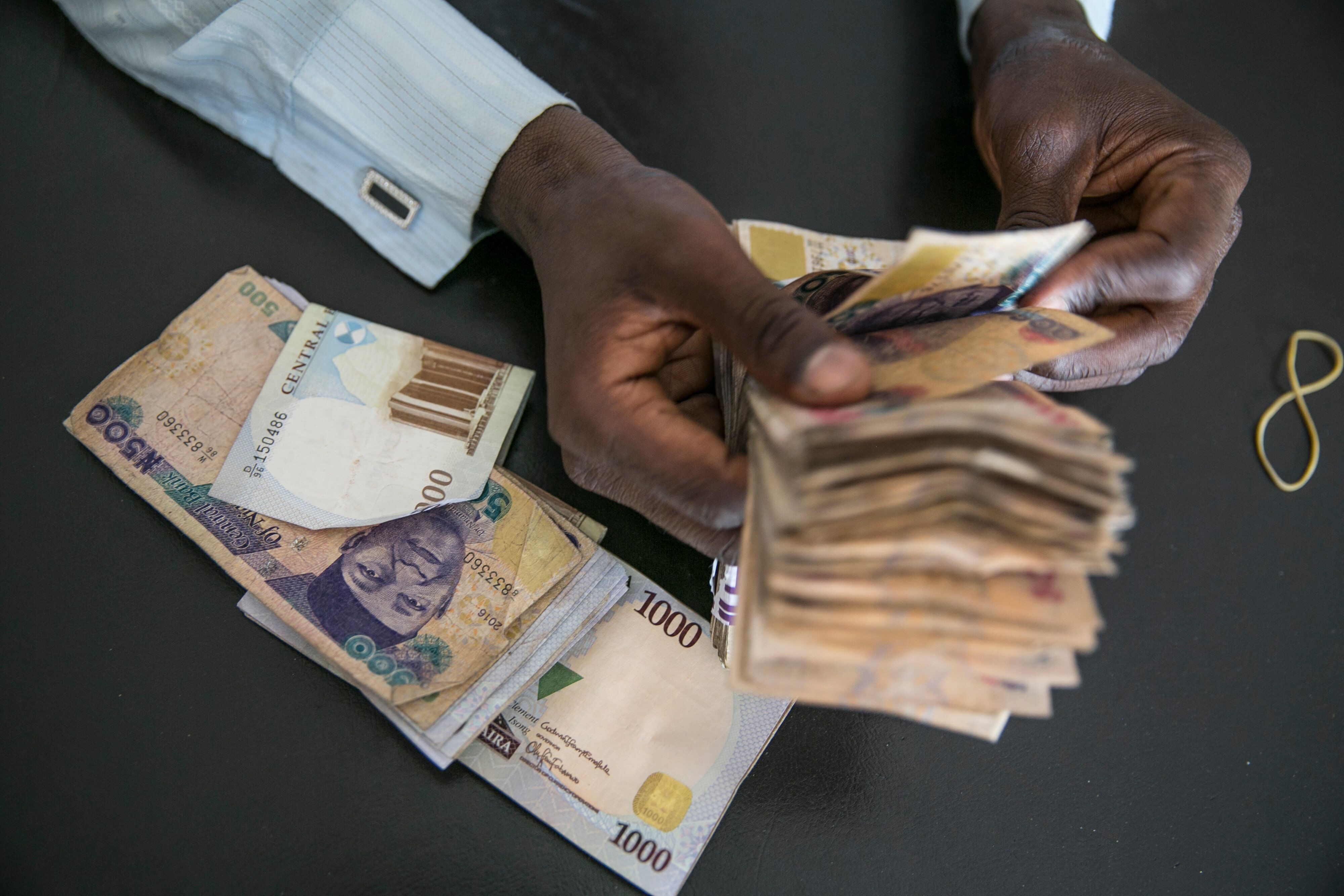
 A clerk at a currency exchange bureau counts Nigerian naira banknotes in Maiduguri, Nigeria, on Wednesday, May 1, 2019. Nigeria will propose a supplementary budget later this year to boost capital spending and fund a 67 percent increase in the minimum wage as government revenues improve, Budget Minister Udo Udoma said. Photographer: Jean Chung/Bloomberg
“While the Central Bank of Nigeria strongly supports the need for international oil companies to have easy access to their export proceeds, particularly to meet their offshore obligations, this must be done with minimal negative impact on liquidity,” it said. “All banks are required to comply with this circular.”
The requirement is the latest of several steps taken by the central bank since January to boost market liquidity, pricing and investor confidence, after the naira lost about 50% of its value last year. While the measures have moderated volatility and increased foreign-exchange inflows into Nigeria, the currency has continued to depreciate.
Read More: After Week of Upheaval, Nigeria’s Naira Is on Path to Stability
Dollar sales at the official foreign currency market declined by more than a half on Wednesday to $117.9 million, bringing pressure to bear on the naira, which weakened 1.5% to 1,503 per dollar, according to FMDQ, which compiles the data for the West African nation.
On the parallel market — where most Nigerians who can’t access the official market are forced to obtain dollars at a premium — it changed hands on Thursday at 1,615 per dollar from 1,605 the previous day, according to Abubakar Mohammed, chief executive of Forward Marketing Bureau de Change Ltd. in Lagos.
Comments
Scroll down to load comments...