



It feels as if I’ve been on the move for nearly a month – on the move through many worlds, a mosaic of conversations, experiences, insights and emotions, from giddy highs to deep lows.
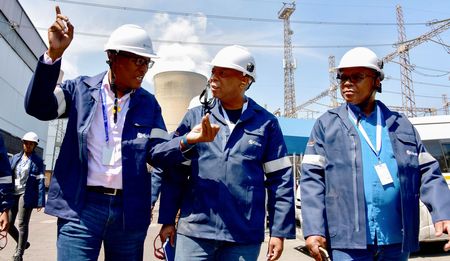
I’m on a plane now from Johannesburg after a three-day strategy session of the board of the National Transmission Company of South Africa (NTCSA) where we debated what it will take to build 14,400km of powerlines and install 271 transformers by spending R440-billion over the next 10 years.
This is the end of a journey that began at the end of August when my colleagues Merin Jacob and Tokoloko Bathupetsane travelled with me to Zürich to attend the annual International Sustainability Transitions (ISTRN) Conference attended by 600 scholars from around the world, but mostly from Europe.
The massive growth of this annual conference over the years reflects the rising level of interest in the dynamics of transition to a more sustainable world, and what will prevent this.
Shift to a sustainable — and more equitable — world
In recent years there has been a shift in emphasis from transition to a sustainable world to transition to a sustainable and more equitable world.
Global South scholars especially have contributed to this shift, in particular the groups from my own organisation, the Centre for Sustainability Transitions (CST). They have not only participated, but there has also always been a CST representative on the ISTRN steering committee.
In late 2022, the CST co-hosted a hybrid version of the conference with Georgetown University in Washington DC and Monash University in Melbourne. In 2023 I delivered the keynote address when the annual conference was hosted by Utrecht University – the title of my talk was Reflections of an Enraged Incrementalist.
What was most interesting about the Zürich Conference was the large number of younger people doing PhDs and post-docs using the “sustainability transitions” framework to make sense of a vast range of mainly local case studies.
What I found interesting is that most were overwhelmingly critical of capitalist norms, with a strong “degrowth” perspective among the European contributors.
What was missing was a framework of understanding that was more systemic comprising a multiplicity of cases adding up to a more transformative social movement. Of the 400 or so papers delivered, I counted only one that addressed questions of financing transitions – this was about the dominance of BlackRock in the US food system as an explanation for why a more sustainable food system is unlikely.
My colleague Tokoloko delivered a paper on decarbonising the SA steel industry, and Merin presented her work on re-imagining the future of African cities through the lens of African science fiction.
I delivered two papers: one on the financial dynamics of post-oil transitions using Colombia as a case study, and the other was based on Chapter 2 of the second edition of my book The Age of Sustainability (published by Routledge).
Bringing the notion of Ukama to Zürich
The title of the paper I presented was Decoloniality, Relationality and Sustainability: Emerging metatheories for the 21st century. It was essentially about the African notion of Ukama – the Shona word for “relationality”. Both papers were well attended and generated a lot of interest.
By the end of the conference, I had discussed with Merin and Tokoloko that CST would propose that the next year’s conference in Brazil have a special track on financing the transition.
After Zürich, Merin and I travelled to Bangalore, India. We were hosted by our long-time partner there, the Indian Institute for Human Settlements (IIHS) led by Aromar Revi.
It was a great time to be there, because in 2025 the IIHS realised its 20-year dream of becoming a fully fledged degree-granting university. The institute has 400 staff and delivers various masters programmes plus a PhD. It is also building the first large-scale sustainably designed university campus on the outskirts of Bangalore that will eventually be able to host 1,500 students and 500 staff.
Located on a slope alongside a river and adjacent to a forest, the IIHS aims to demonstrate in practice an alternative, more sustainable urbanism. Students not only study, they also work in the gardens and learn practical skills such as more sustainable food preparation. It reminded me of the many years we were able to afford the same privilege to our students at the Sustainability Institute. In fact, the IIHS people visited the Sustainability Institute about 15 years ago, and were inspired by what we were able to achieve until our access to the Sustainability Institute campus was terminated. This is why the invitation to Merin and me to come teach a module every year was so exciting – once again I will be able to “walk the talk” by teaching sustainability within a sustainable context. I could easily envisage spending a whole year there to immerse myself in an entire annual cycle.
I delivered a lecture to a master’s class on infrastructure. I was asked to present my work on SA’s monetary architecture that was published in a report for the National Planning Commission. I was at first reluctant because I could not imagine how I could present this to an Indian audience. However, I plunged in and tried to relate the approach to their reality – it worked very well.
Like many people in the sustainability world, there is limited understanding of the financing dimension of the sustainability transition – the closest they come is the “green economy” thinking, but that is very different from understanding the need for redirecting the flows of finance away from investments in unsustainable modes of production and consumption.
Merin and I were invited to visit and deliver lectures at another large private university in Bangalore called Manipal University – a huge, beautiful, well-funded campus. We were hosted by a fascinating group of transition researchers led by an artist and including a neuroscientist, architect, biologist and cultural theorist.
I was asked to talk about the African Ukamian perspective on relationality and what this means for sustainability transitions – similar to my talk in Zürich. A large group of students and staff attended.
I must admit, I had no idea how this would work. I had no sense of their theoretical frameworks. To my surprise, I soon detected that they could relate to my story – I only had a few notes and decided to rather follow the dynamic in the room. It worked very well. Merin’s workshop on re-imagining also went extremely well. Afterwards there were requests to continue to work together.
The Auroville experiment in India
The final weekend was a journey to Auroville, the most famous of all eco-villages located on the outskirts of Pondicherry, a coastal city on the Bay of Bengal (three hours drive from Chennai). Started in the late 1960s by followers of the former freedom fighter-turned-guru Sri Aurobindo, this remarkable experiment in living and learning is now home to 3,500 people.
When a motley group of idealists from around the world arrived in the late 1960s, deforestation had turned it into a desert – except for a gigantic banyan tree, which remains at the centre of the settlement to this day.
They planted 3 million trees, and now it is a beautiful forest that shades the vast constellation of social and economic activities. It is a cashless local economy sustained by around 1,500 businesses, ranging from making spirulina and textiles, through to food, tourism, forestry, education and construction. The Auroville story has inspired much of my local-level work over the years, including the 20-year project to build the Lynedoch EcoVillage in Stellenbosch.
Nothing prepares you for India, in particular India’s streets. So, inspired by a passage in Ben Okri’s Dangerous Love describing a Lagos street, herewith my version of India’s streets:
“Rusted sub-stations. Queues. Endless hooting. 4 on a bike – youngest in front, father driving, another child, mother in her sari sitting side saddle at the back – no helmets. Street kiosks for anything – food, textiles, juice, bike repairs, medicines, fertility, flowers, electrics and a prayer. Many police booths. No police. Pimped-up bsses. Drinking from pines. Garage for “Indian oil”. More hooting, no agro. Coca-Cola ads – macho man with a big beard drinking his Coke. Street dogs on a mission. Pot bellies. Flowing edge of a sari. Billboards that promise the world. Smiling moustached men in gold frames you can trust. Bollywood film stars – dainty or fierce, faraways from now. Clapped-out scooters. Shiny Royal Enfields. Barber shops promising a “Hollywood look”. And standing proud and in silence, the banyan trees. Ancient trucks piled high. Metal monsters in the polluted mist. She’s on the back of a scooter – no helmet, immaculately dressed, talking on her phone as he weaves through the traffic. Always congested. Always moving. Speed bumps. Temples. Yellow tuk-tuks croak and cough. Old rusted ones, speedier new ones. More hooting. Like a trumpet. No pavements. Dodge the cars. Driving on the wrong side of the road. Scum pools. Bold crows scavenging. Lumbering oxen. More temples, even more garish. Lovers in a tuk-tuk. Giant new apartment blocks. Posh hotels – “rooms available”. More scooters. Incomplete concrete highways. Decrepit buses. Always a buzz – never silence. Endless chorus of hooters. Reinforced steel. Exhaust fumes. Polluted humidity. Sweat. Blocked nose. Gold for sale. Everything works, somehow. Very little crime. Billboards – futures in the sky. Roads out, past the banyan tree. Fresh breeze, clears the mind and chest.”
I travelled back to Stellenbosch in time to host a UN meeting at our centre in Stellenbosch. On the way I wrote an op-ed for Daily Maverick reflecting on the BRICS summit that took place in Delhi while we were in Bangalore and contrasted the outcome with the pathbreaking Global Justice Report published a few months ago. I reflected on the Thucydides Gap and what this could mean for geo-political dynamics and Africa.
Trip to ‘ground zero of inequality’
Convened by the UN-affiliated International Resource Panel (IRP), the group gathered in Stellenbosch from many parts of the world to write the IRP’s Global Resource Outlook (GRO), the flagship report published by the IRP every four years. I have been a member of the IRP since 2007 – nearly 20 years. For the first time, the co-ordinator of the GRO is an African, Elias Ayuk from Cameroon, my fellow IRP panel member and a CST research fellow. The CST will host the secretariat (headed by Estelle Razanatsoa) for the next GRO, hence the meeting in Stellenbosch.
It was a remarkable writing workshop that brought together many leading scientists in their respective fields, such as global material flows, trade in material resources, and governance of global resources and critical minerals, and the modellers who will build the model that will inform the chapter on future scenarios.
We showed them around Stellenbosch, and also took them to Enkanini, an informal settlement close to the centre of town. Witnessing the most unequal place in one of the most unequal countries in the world was quite an eye opener for them – after all, Stellenbosch is the ground zero of global inequality.
The day after the IRP workshop, I travelled up to Johannesburg to attend the NTCSA strategy session that began on Monday, 21 September. A big contrast to all my experiences in Zürich where mainly Europeans talked about transition from a Global North perspective to our Indian experience where Indians talked about transition and inequality in the largest democracy in the world and, most likely, the largest economy within the next two to three decades.
The contrast could not be more extreme – for the former, inequality is an abstraction, for the latter it is a daily reality. And then coming back to global inequality’s ground zero to discuss an African-convened version of the GRO, followed by the NTCSA strategy session, which is about the hard-core technical and financial realities of building out South Africa’s electricity to support the energy transition in a way that ensures that electricity remains affordable for all.
This is my life: traversing the antinomies of Global North-Global South contradictions; connecting academic reflections and activist interventions; writing; teaching; and convening knowledge networks that bring forth into the world an African voice. Being part of the NTCSA is what keeps me firmly bolted to the harsh realities of making South Africa work as it goes through its energy transition.
It is an immense privilege to live a life filled with such rich experiences across such a diversity of environments.
To make it work means taking seriously what I have written about so often, namely the evolutionary potential of the present. Sustainable futures won’t make themselves; they are rooted in what happens now and our everyday actions. DM
Comments
Scroll down to load comments...