




Howard Hendricks and Sam Ferreira are undoubtedly correct in observing that elephant management is among the most demanding responsibilities confronting conservation authorities. Few people with any familiarity with African protected areas would deny that managers are frequently required to navigate extraordinarily difficult circumstances in which ecological integrity, human safety, biodiversity conservation and animal welfare do not always point towards the same outcome. Conservation, particularly in a landscape as vast and socially complex as the Kruger National Park, is rarely an exercise in certainty or simple moral choices.
Yet complexity, important though it is, cannot become a substitute for accountability.
My previous article did not question whether conservation managers occasionally encounter situations in which the destruction of an elephant may be unavoidable. Nor did it suggest that every one of the 207 elephants recorded in SANParks’ mortality database as “Management” deaths was necessarily killed without justification. Such a conclusion would itself be irresponsible because the evidence required to make that judgement has not been placed in the public domain.
That, however, is precisely the point.
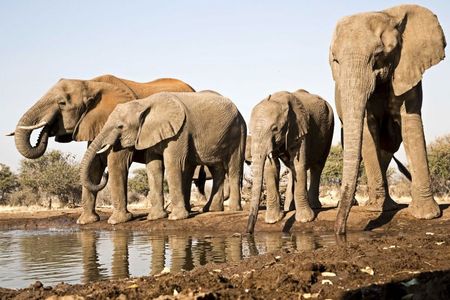
The question I asked was not whether elephant management is difficult. It was whether a public institution exercising lethal authority over protected wildlife has adequately explained why it deliberately killed each one of those 207 elephants. Four months after a formal request submitted under the Promotion of Access to Information Act (Paia), the answer remains no. SANParks has disclosed the mortality database, but not the evidential basis upon which each of those decisions rested.
That distinction goes to the heart of what conservation means in a constitutional democracy.
The burden of justification
Much of the public discussion has proceeded from an assumption that I regard as deeply problematic: that deliberately killing a wild elephant is simply one management option among many, to be weighed against contraception, translocation, fencing, behavioural deterrence or habitat manipulation according to prevailing scientific circumstances.
Philosophically, ethically and, increasingly, jurisprudentially, I reject that premise.
Repairing a fence, relocating an elephant, administering immunocontraception or restoring habitat are interventions directed towards enabling coexistence between people and wildlife. Deliberately taking the life of a healthy, sentient elephant is categorically different because it extinguishes the very subject whose interests conservation exists to protect. The moral distinction is not one of degree but of kind. Once the life of an autonomous wild animal is intentionally ended, every other possible future for that individual disappears with it.
For that reason, I do not regard lethal management as an ethically equivalent conservation tool. Except where an elephant’s own welfare demands euthanasia because of catastrophic injury, terminal disease or irremediable suffering, the deliberate killing of a wild elephant should never be regarded as a routine management response. Conservation exists to secure the conditions under which wild animals can continue living as wild animals. It should not resolve ecological, administrative or political challenges by extinguishing the lives of those very animals whenever doing so becomes expedient.
If that position appears demanding, it should be.
The deliberate destruction of a sentient being should always carry an exceptional burden of justification.
What the public is entitled to know
The mortality database records 951 elephant deaths in the Kruger Park between January 2020 and December 2025, comprising 535 natural mortalities, 179 illegal killings and 207 deaths classified under the administrative heading “Management”.
What those figures, as informative as they are, do not provide is the information that matters most.
The public is entitled to know, not simply that 207 elephants were deliberately killed, but the full evidential, legal and ethical basis upon which each individual decision was reached: whether the elephant was suffering beyond recovery; whether it posed an immediate and unavoidable threat to human life; whether repeated conflict mitigation measures had failed; whether translocation, contraception or behavioural interventions had been considered and rejected; who authorised the killing; what statutory authority was relied upon; what veterinary advice was obtained; whether independent ethical oversight was exercised; and why, after every reasonable alternative had been exhausted, the intentional taking of that elephant’s life was judged to be both necessary and proportionate.
General explanations about adaptive management, conflict mitigation or elephant ecology cannot answer them because they concern the justification of management in the abstract rather than the justification of individual acts of killing. One is a discussion about conservation philosophy; the other concerns the exercise of public power over particular animals whose lives were intentionally ended by the state.
Public trust requires public reasons
There is another aspect of this debate that deserves equal attention.
These records did not enter the public domain because SANParks regarded them as information that citizens ought routinely to have. They emerged only because a formal Paia request was lodged in March this year and, four months later, that request remains only partially fulfilled.
This should concern us irrespective of where we stand on elephant management.
The Kruger National Park is not a private estate. Its elephants are not the property of SANParks. They are held in trust on behalf of the people of South Africa. Decisions concerning their lives are therefore exercises of public authority and ought, by default rather than exception, to be capable of public scrutiny.
What is troubling is not merely the delay, but what the delay appears to reveal about institutional culture. If SANParks is satisfied that each of these 207 decisions was scientifically rigorous, ethically defensible and legally authorised, why should the public have to resort to access-to-information legislation before even a partial account becomes available? Why should explanations emerge only after journalists begin asking questions? And why, despite months of engagement, are the records capable of demonstrating the necessity of each killing still absent?
Those questions remain unanswered.
Science cannot replace accountability
None of this reflects hostility towards science. On the contrary, good science depends upon openness, critical scrutiny and the willingness to expose both methods and conclusions to public examination. Conservation science should be no different.
The difficulty arises only when scientific authority is invited to substitute for public accountability.
Expertise undoubtedly informs difficult conservation decisions, but expertise alone cannot legitimise them. In a constitutional democracy, legitimacy arises not only from technical competence but from the willingness of public institutions to explain how they have exercised the powers entrusted to them. Scientific authority strengthens decision-making; transparency renders those decisions democratically legitimate. Neither principle can substitute for the other.
The response by Hendricks and Ferreira explains why conservation managers sometimes conclude that elephants must be killed. It does not explain why these 207 elephants were killed. That distinction remains as important today as it was before their article was published.
The conversation we should be having
The debate should never have centred on whether elephant management is difficult or whether conservation managers occasionally confront tragic choices. Few people seriously contest either proposition.
The real question is whether the intentional killing of a wild elephant should ever be regarded as merely another management decision, requiring no greater justification than any other administrative act, or whether it should instead be recognised for what it is: the deliberate ending of the life of a sentient individual held in public trust, demanding the highest possible standard of scientific, legal and ethical justification.
That is why I continue to ask the same question. Not why conservation authorities sometimes kill elephants. But why every one of those 207 elephants had to die.
Until SANParks is prepared to answer that question with the documentary evidence supporting each individual decision, rather than with general explanations about elephant management, the central issue will remain unresolved. In a society that increasingly recognises both the intrinsic value of wild animals and the constitutional obligation of public institutions to account for the exercise of their powers, it is difficult to see how it could be otherwise. DM


Comments
Scroll down to load comments...