



There are now at least 10 parties with a named candidate for the mayorship of Johannesburg, and the crowd on that list tells its own story about why this single municipal contest has become the most closely watched race in the country.
Helen Zille for the DA. Herman Mashaba for ActionSA. Kenny Kunene for the Patriotic Alliance. Lukhona Mnguni for Rise Mzansi. Nobuntu Hlazo-Webster for Bosa. Shireen Ebrahim for Al Jama-ah. Mlungisi Mabaso for the IFP. Ntsiki Mazwai for the Land Party. Mo-Afrika Mandla Mokoena for the APC. Dr Tlaleng Mofokeng for the EFF.
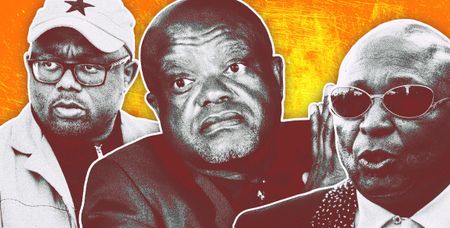
The ANC alone has yet to formally confirm its choice, with Reverend Frank Chikane widely reported as the frontrunner after a long and unusually public selection process, though nothing is official until Luthuli House says so.
Whoever eventually takes the chain of office will do so only after the new council convenes and negotiates a majority, since Johannesburg’s mayor is elected by councillors rather than directly by voters, a detail that matters enormously given how fractured this field already is.
The engine room
The reason so many parties want a piece of this particular city is not sentimental. Johannesburg alone generates roughly 16.5% of South Africa’s national GDP, edging out the entire province of KwaZulu-Natal, and sits inside a Gauteng economy that accounts for around a third of the country’s total output.
It hosts the large majority of South Africa’s corporate headquarters and functions as the country’s principal node for finance, trade and business services. A deputy minister in the Department of Cooperative Governance put the stakes plainly earlier this year, noting that the city’s performance had direct implications for national economic stability, and that Johannesburg’s success or failure strengthened or weakened the country as a whole.
For every party contesting this election, control of Johannesburg is not simply about winning a metro; it is about being seen to run the engine room of the national economy, with all the credibility that confers, heading into the 2029 general election.
National colleagues, local rivals
That stakes-raising is what makes the current arrangement so uncomfortable for the Government of National Unity. The DA and the Patriotic Alliance sit together in the GNU at national level, alongside the ANC, yet in Johannesburg they are direct rivals, with Zille and Kunene both chasing the same office.
It is not an isolated case: in the Western Cape, the DA and the PA were coalition partners in George Municipality until the relationship broke down, and the PA has since defeated the DA twice in a run of tightly contested by-elections there.
When a party that governs beside you nationally is actively campaigning against you locally, voters are left to work out what the coalition actually stands for, a question that becomes harder to answer credibly, the closer campaigning gets to a specific ward.
The long campaign
Zille, for her part, entered this race months before anyone else.
The DA confirmed her candidacy in September 2025 at a launch event in Soweto, and she has spent the months since building what analysts describe as a genuinely unconventional campaign, canoeing down flooded streets, swimming in polluted reservoirs, filing a formal Public Protector complaint on behalf of residents in Eldorado Park and Kliptown, and turning suburban WhatsApp groups into an extension of her campaign machinery.

Some analysts have called the early announcement a calculated masterstroke, giving her a run of uncontested media attention while every other party was still deciding whether to enter the race at all.
But nine months on, that early start looks less like an unqualified advantage than a gamble whose second half is now playing out. Commentators covering the campaign have openly warned that the novelty of her stunts may wear thin well before voters reach the ballot box in November, and that what read as fresh and energetic in the campaign’s first weeks risks curdling into fatigue by its final ones.
A candidate who peaks in April is not necessarily a candidate who peaks in November, and the DA’s decision to hand Zille such a long runway may yet prove to be less a stroke of genius than a miscalculation of when momentum is actually needed most.
ANC’s all-in nomination wrestle
The ANC’s own process has moved in almost the opposite direction, and just as visibly. Traditionally, the party has waited until after an election to select mayors, precisely to avoid inflaming internal contests before voters have even gone to the polls.
This year, under pressure to match the head start opposition parties had already built, it broke with that practice and opened a public nomination process instead, only to watch that process drag on for months amid competing lists, procedural disputes and leaked letters.
Johannesburg’s regional structures first backed Deputy Mayor Loyiso Masuku, then submitted a shortlist that excluded incumbent Mayor Dada Morero entirely, prompting Motlanthe-led scrutiny of the process for being inconsistent with the party’s constitution and a reported instruction that it be redone.
Several credible candidates are understood to have turned down the job outright, with one veteran political journalist describing the Johannesburg mayoralty as close to “a hospital pass” given the scale of the city’s dysfunction and the certainty that whoever takes it will govern in coalition rather than with any real mandate of their own.
That delay has not gone unnoticed by the public. With the DA and ActionSA campaigning hard for the better part of a year, the ANC’s continued silence on its own candidate has fed a growing perception, echoed by analysts and ordinary residents alike, that the party is more consumed by managing its own internal rivalries than by presenting a credible plan to fix the city it has governed for three decades.
Mashaba’s burdensome advantage
Mashaba arrives at this election with the advantage and the burden of experience.
ActionSA has already run Johannesburg once, in coalition, and Mashaba’s pitch rests on positioning the party as the clean-governance alternative to both the ANC’s patronage politics and what he casts as a bloated DA establishment. The party has also expanded its footprint beyond its Gauteng base ahead of this vote, a sign it is trying to build a credible national profile rather than remain a single-city protest vehicle.
Kunene — the inside outsider
Kunene’s candidacy is a different proposition altogether: the PA deputy president currently serves as the city’s MMC for transport, meaning he is campaigning simultaneously as an insider defending his own recent record and as a populist outsider promising to fix a city he is already, in part, responsible for governing.
Beneath the headline contenders, the smaller parties on the ballot are not simply making up the numbers. Rise Mzansi’s Lukhona Mnguni, a political analyst and commentator by background, gives the young party an intellectual, governance-focused pitch. The EFF’s Dr Tlaleng Mofokeng, a medical doctor and former UN special rapporteur, offers the party a credentialed face after years of being defined largely by its parliamentary theatrics.
The Land Party’s Ntsiki Mazwai, a well-known poet and cultural commentator, brings a very different kind of public recognition into a race otherwise dominated by career politicians and technocrats.
Horse-trading to coalition instability
None of these candidates is likely to win outright, but in a council this fragmented, even a handful of seats can become decisive in the coalition bargaining that follows.
And that bargaining is really where this race will be decided. The city’s recent history offers little reassurance: Johannesburg has cycled through repeated coalition instability, and the underlying administrative rot that any incoming mayor inherits is severe by any measure, with the city losing close to R4-billion worth of electricity annually to theft and billing errors and roughly a quarter of its water supply to leaks and burst pipes, at a cost north of R2-billion a year.
Whichever party wins the largest share of the vote on 4 November, the mayorship itself will be settled afterwards, in negotiations between councillors rather than at the ballot box, meaning the campaign promises now being made by Zille, Mashaba, Kunene and whoever the ANC ultimately confirms may matter less than the coalition arithmetic that follows.
For a city that generates a sixth of the country’s economic output, that is a precarious way to choose a government, and it is precisely the kind of post-election horse-trading that has left Johannesburg’s residents living with the consequences of unstable coalitions for the better part of a decade. DM
Comments
Scroll down to load comments...