



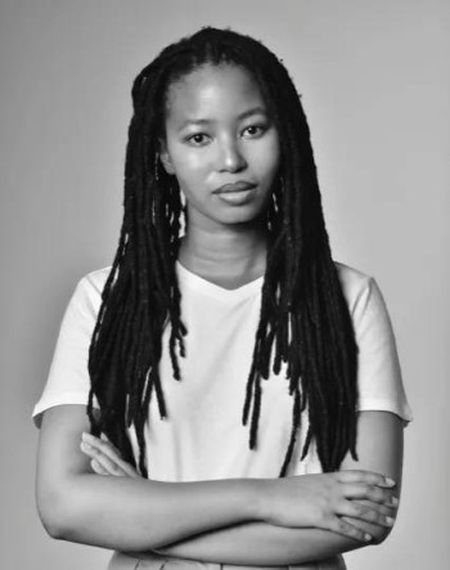
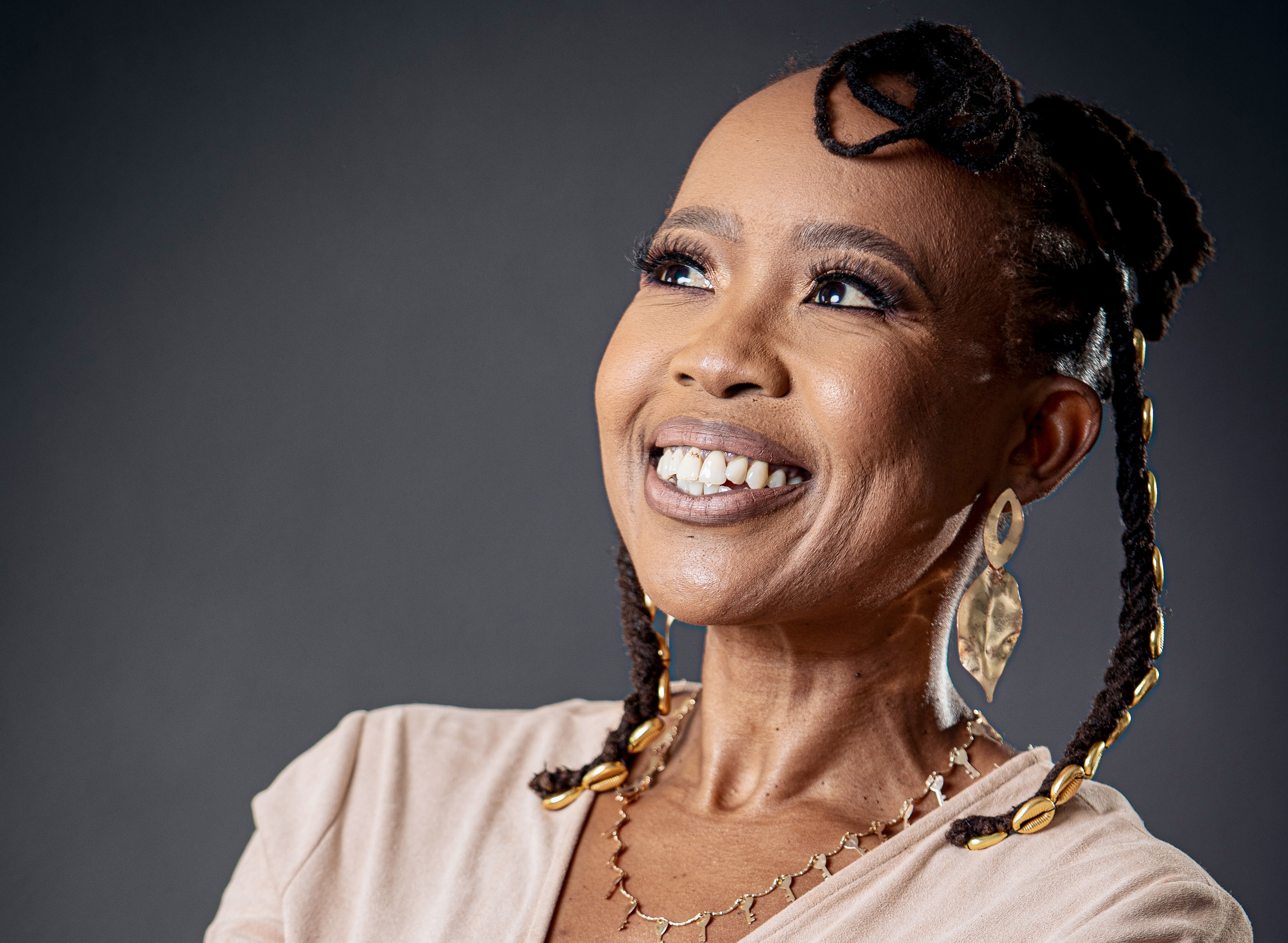
 Controversial media personality and artist Ntsiki Mazwai has announced her bid to become Johannesburg’s new mayor under the Land Party. (Photo: Supplied/ Ntsiki Mazwai)
/file/attachments/orphans/Election2026LogoInarticle_260133.jpg)
A new player has entered Johannesburg’s mayoral race. Media personality, poet, podcaster and artist Ntsiki Mazwai has thrown her hat in the ring as a mayoral candidate for the Land Party ahead of the upcoming local government elections scheduled for 4 November.
She took to social media on Wednesday, 8 July, announcing in an an X post that her days as a “keyboard warrior” are over . “Today I refuse to remain an armchair critic. I have decided to act,” she posted as part of her announcement.
Mazwai has courted controversy on social media over the years, including being sued for defamation in 2022 by local musician Themba “DJ Euphonik” Nkosi after he alleged she called him a rapist on social media. Although Nkosi won his court case, Mazwai has maintained that she never called him a rapist directly.
Mazwai has no formal experience in politics. Her qualifications include a diploma in marketing management from the IMM Graduate School and a Master of Arts in Creative Writing from Rhodes University. But rather than seeing her background as a deterrent, she told Daily Maverick that she believed voters should see it as an inspiration.
“My background should inspire confidence among South Africans, because many have lost trust and become frustrated with traditional politics as politicians have failed them,” Mazwai said.
“I am establishing a very strong team, and I challenge professionals in the City of Johannesburg to join me in rebuilding our Jozi.”
‘A Jozi that works 24/7’
A relatively small party, the Land Party was founded in 2019 by Gcobani Ndzongana and uses China as a model for its economic policies. Despite its hammer-and-sickle emblem hinting at Communist-leaning policies, the party’s manifesto shows a far more mixed picture. For instance, it aims to strengthen public property rights, abolish all taxes on capital, such as capital gains taxes and estate taxes, abolish the minimum wage and the Unemployment Insurance Fund, and ban trade unions in the education sector.
More creative policy choices include building police stations out of glass because “the people must SEE that the police is working and the police must be held accountable by the people they are serving”.
During the 2021 local government elections, the party attracted just 9,493 votes in total, amounting to 0.03% of the voter share.
Nonetheless, Mazwai said she was attracted to the party because she believed it was “the only political home with a consistent track record of fighting for the poor, the destitute, the working class and ordinary South Africans”.
/file/attachments/2994/NtsikiMazwai_661754.jpg "Land Party leader Gcobani Ndzongana (left) and Johannesburg mayoral candidate Ntsiki Mazwai (right). (Photo: X / Ntsiki Mazwai)")
For Johannesburg, Mazwai’s plans include turning the city into “a real economic hub” through targeted incentives, improving infrastructure, investing in high-quality, innovative projects to drive employment, and prioritising cleanliness through creating green zones and tackling littering.
Other policies include: preserving 90% of jobs in the City for locals and 10% for foreign nationals; reclaiming buildings in Johannesburg CBD to turn them into affordable housing; reliable, free public transport; and a two-year rate break for ratepayers until they see an improvement in service delivery.
Further, new businesses will receive free water and electricity for the first two years while they establish themselves. (These last two policies may prove particularly challenging in a context where Johannesburg is heavily in debt and has a reported water infrastructure backlog of R32-billion, and had R8.5-billion in water and electricity losses during the 2024/2025 financial year).
When asked how she would tackle the city’s water and electricity crises, Mazwai said she would hire professional companies and provide them with security so they can work uninterrupted to replace old water infrastructure.
“We will also invest in solar panels across all communities and reform the system to open up opportunities for foreign investment through incentives. We want a Jozi that works 24/7,” she said.
‘Mayor Yama2k’
Mazwai was a strategic choice for the party. In an interview with the Sowetan, Ndzongana explained that the party chose her as its mayoral candidate because they believed her large social media following and public persona could resonate with the “Ama2k” generation – voters born after 2000.
“Our slogan is ‘Mayor Yama2k’. We want young people to become interested in politics and participate in elections,” he said.
At 45 years old, Mazwai isn’t a 2k herself, but she is one of the younger candidates in the race, particularly compared to her counterparts. For example, the DA’s Helen Zille is 75 years old, and ActionSA’s Herman Mashaba is 66. Given the historically low voter turnout among the youth, a younger candidate who is engaged on social media may convince some to vote.
However, on social media her announcement was received with mixed response, many indicating they did not to take her candidacy seriously.
When asked how she would persuade those who may feel alienated by her controversial social media posts, Mazwai responded: “Voters must now know they are dealing with Ntsiki Mazwai as the executive mayor of Johannesburg. Therefore, as their mayor, the people are my people, and I appeal to them to join me because we share a common goal: rebuilding the city.” DM
Comments
Scroll down to load comments...