



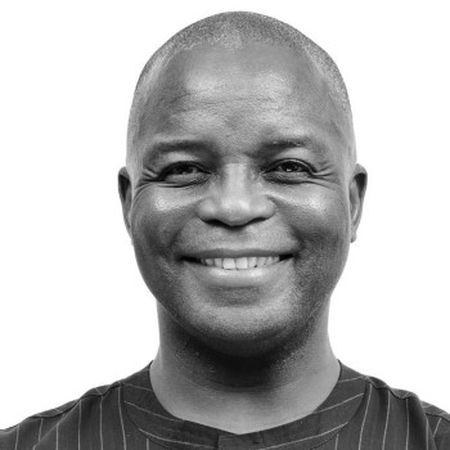
I still remember the silence.
It was in the middle of the xenophobic attacks in South Africa on fellow Africans, which started on 11 April 2015 and were flooding global screens. I was travelling to Ghana, the first sub-Saharan nation to gain independence, whose liberation and leadership under pan-African luminary Kwame Nkrumah had inspired South Africa’s own freedom movement.
South Africa’s liberation movement, the ANC, had kept offices here in exile, and Oliver Tambo had walked Ghana’s streets freely. I had been through these borders umpteen times.
This time, as I approached the immigration officer and handed him my South African passport, he paused, looked up and asked, “Why are you doing this to us after everything we did for your freedom?”
My blood froze, and follicles pierced through my bald scalp. Only shame, and the painful awareness that my country, once celebrated as Africa’s moral beacon, was now associated with Africans attacking fellow Africans.
It happened again in 2017. In 2019. And in April 2026, with two Nigerian nationals killed in incidents reportedly involving the security forces, 130 citizens repatriated and six African governments issuing formal travel warnings about South Africa.
Ghana petitioned the African Union to place the crisis on the agenda of its June summit in El Alamein, Egypt, and authorised the emergency repatriation of 300 of its citizens. What had always been Africa’s wound was now formally on the continental agenda.
This is not xenophobia
Nigeria’s Minister of State for Foreign Affairs, Bianca Odumegwu-Ojukwu, said it plainly in her 7 May 2026 call with her South African counterpart, Ronald Lamola: “We will not stand by and watch the systematic harassment and humiliation of our nationals resident in South Africa.” That what was happening should more accurately be called Afrophobia, not xenophobia. The distinction matters.
This is Africa turning on itself. Tribalism at a continental scale, with passports replacing ethnic markers.
But the pattern is not new and not uniquely South African.
Ghana expelled 200,000 Nigerian migrants in 1969 under its Aliens Compliance Order. Facing economic collapse, Nigeria expelled two million undocumented workers, more than half of them Ghanaian, in 1983.
In Côte d’Ivoire, the concept of ivoirité, a codified definition of citizenship designed to exclude immigrants from political life, culminated in civil war.
In Kenya, following its Somalia incursion against al-Shabaab, Somali migrants and Kenyan citizens of Somali origin alike were rounded up, subjected to mass police raids and collectivised as a security threat.
In 1994, in just three months, about one million Tutsis in Rwanda were slaughtered by their countrymen on the basis of tribalism and manufactured fear.
History is unambiguous: it never works.
Nigeria’s expulsions did not create jobs. Ghana’s deportations did not generate prosperity. The real crisis is always deeper: a failure of governance and the failure of leadership to convert political freedom into economic dignity.
The last frontier — and its broken promise
There is no question that citizens of many countries that achieved independence decades before South Africa, watched as their governments failed to deliver on their promises and looked south.
For millions of them, post-apartheid South Africa became the last frontier of opportunity – a country whose freedom had been realised through continental solidarity, whose Constitution was among the most progressive on earth, and whose economy was the continent’s largest. Pretoria today hosts more than 130 resident embassies and high commissions – more than any other African city – a footprint that reflects that collective investment.
But South Africa built the conditions for its own migration crisis. Western and Asian nations received generous visa arrangements, while African neighbours faced barriers that forced many into an alternate illegal route into South Africa.
Home Affairs became, in the words of the Special Investigating Unit’s February 2026 findings, “a marketplace where permits and visas were sold to the highest bidder”. With its porous and poorly manned borders and some corrupt officials, the state did not merely fail to manage migration; it actively facilitated the irregularity it was mandated to prevent.
But here is the truth. The rage targeting African migrants does not touch the underlying commanding heights of the South African economy, which remain, 30 years after liberation, stubbornly untransformed.
White South Africans, 7.3% of the population, still own about 72% of agricultural land and economy – a direct consequence of the 1913 Natives Land Act. The result is the most unequal society in the world by the Gini coefficient.
The Somali shopkeeper does not own the malls. The Mozambican miner does not own the mines. The Zimbabwean waiter does not own the restaurant. The Malawian farmworker does not hold JSE stock exchange equity. In fact, the African migrant is not the architect of South Africa’s structural inequality — he is, in many respects, its fellow victim. Just like the black South African.
‘The people shall govern’
One of the defining slogans of South Africa’s liberation struggle was a promise and a demand: “The people shall govern.” In the absence of a state that actually governs, that manages borders, enforces laws, delivers services, holds officials to account, a dangerous inversion has taken hold.
Those who loot a migrant’s shop or redistribute a business’s keys at an official’s instruction – as was the case in Estcourt in April 2026, when the mayor confiscated the keys of Ghanaian shopkeepers and handed their businesses to locals – believe they are not violating the promise of liberation. They believe they are fulfilling it.
In July 2025, a one-year-old Malawian boy died after being denied treatment after members of Operation Dudula, an anti immigration organisation, allegedly prevented him and his mother from accessing two Alexandra clinics.
What makes things worse is that often, opportunistic politicians have found in the migrant a convenient scapegoat, a manufactured crisis that keeps citizens looking sideways at each other rather than upward at those responsible. It has become easier to blame the foreign shopkeeper for unemployment than to account for the billions looted through State Capture, the collapsed public health system or ineffective economic policies.
This is Afrophobia at its worst and tribalism in its most cynical form.
But an honest account also demands a balanced perspective. Some foreign nationals have committed serious crimes on South African soil: the robbery, in front of TV cameras, of SABC journalist Vuyo Mvoko by undocumented Zimbabweans, the Hillbrow drug and prostitution rings linked to foreign, allegedly Nigerian, syndicates; the young Nigerian model Chidimma Adetshina’s identity-theft case; the Lesotho and Mozambican “zama zamas” (illegal miners); the deaths of children from contaminated Somali and Ethiopian spaza shops’ alleged expired or counterfeit food.
These are real grievances. But the crimes of a few do not define the millions who came in search of a better life. The legitimate grievance is with the state that corrupted its own systems.
But redirecting it at the nearest African face has never, in any country, at any point in history, solved the problem it claims to address.
I have travelled to every country and island surrounding Africa. In each one, I have had to abide by the rules:
📌no photos allowed of the statue in Juba of John Garang, the icon of the struggle in South Sudan;
📌held up for three hours in Comoros by immigration police because the hotel I stated on my arrival forms didn’t match what they knew [it had long changed its name, but the officials weren’t aware and thought I was making it up];
📌being held up at Carbo Verde immigration because I had three South African passports on hand [a valid passport and expired others with visas for the different countries I was transiting on this journey] because ‘it’s illegal to have more than one travel document here’ [I got off because they all had the same personal information and I was not a local citizen]; and
📌 detained for 12 hours in transit in Morocco because I arrived 24 hours before my visa was valid.
The laws are the laws, irrespective of how I felt about their triviality. Every visitor or citizen must abide by them, and every official and citizen must apply them without fear or favour and with equal humanity, in South Africa and everywhere.
A debt not taught, a promise not kept
South Africa entered a specific moral contract at liberation. Tanzania, Zambia, Nigeria, Botswana and Mozambique hosted ANC camps, absorbed South African Defence Force bombs, led divestment campaigns and sheltered operatives along their borders.
Africa did not merely sympathise with South Africa’s struggle. It paid for it in blood, in economies disrupted, in soil violated.
The late Kenneth Kaunda once reminded me over dinner at his residence that he was constantly challenged in his parliament for the support he gave South Africa at the expense of his own country’s citizens. Yet most South African learners or graduates today cannot tell you which country hosted the ANC headquarters in exile.
That is the consequence of a failure to use education as a vehicle for the solidarity consciousness on which liberation was built. Unemployed and young South Africans, shaped by economic despair and a collapsed public service, reach for the nearest explanation for their dire circumstances. But it’s the wrong target. The wrong enemy. The wrong answer.
What kind of Africa are we building?
When the AU convenes in El Alamein in June, the agenda cannot just be about South Africa’s crisis. Migration remains one of the continent’s most debilitating crises and emergencies, with millions displaced by conflict, drought and state failure.
The dire circumstances of the affected in parts of Somalia, Sudan, Libya, Mali, Ethiopia, Rwanda and the DRC, among other countries, like South Africa’s problem, demand urgent continental leadership and attention.
The summit should not merely focus its energies on censuring South Africa. It should produce a continent-wide migration framework that addresses root causes and holds every member state accountable. The continental body cannot merely be a bystander or rely on outsiders to resolve its most urgent crisis if we are to achieve the 2063 ideals of a peaceful, prosperous and integrated Africa.
Among the causes for the continent’s migration crisis, there’s another legitimate question: The reality of an external hand in Africa’s instability. The continent’s history of manufactured conflict and deliberate destabilisation is well documented. When Africans are pitted against each other, someone else’s interests are served.
And for its part, South Africa must honestly deal with the root cause of its economic inequality time bomb, and not just shuffle economic transformation blueprints which have only lined the pockets of a few politically associated elites and the corrupt, as the Madlanga Commission and others have shown, and worse still, protected and enriched the previously empowered minority.
Everyone must be held accountable and equal under South African laws.
Before there were borders, before there were passports, before there were immigration departments, there was African hospitality and humanity. The understanding that a stranger at the threshold is not a threat to be expelled, but a human being to be received.
Afrophobia is not in our culture. It is not African. And it is emphatically not South African. This is a country freed by the continent whose own people were once the refugees, the exiles, the strangers at other nations’ thresholds. When we attack a fellow African, we are not expressing South African identity. We are betraying it.
The purpose of freedom was never merely to replace rulers. It was to reclaim our story and land, to improve lives, restore harmony and set the continent on the path to civilisational flourishing — an Africa where African life is sacred. Including the lives of those who crossed their borders so that ours might one day be free.
What we cannot afford is the failure that Kofi Annan, the first African UN Secretary General, observed after the Rwandan genocide: “When Rwanda needed us most, we turned away.” Africa cannot turn away from Africa again. DM
Comments
Scroll down to load comments...