



/file/dailymaverick/wp-content/uploads/2025/09/label-Opinion.jpg)
South Africans tuned in to the commission of inquiry chaired by Justice Mbuyiseli Madlanga expecting revelations about criminal syndicates operating inside the country’s justice system.
Instead, much of the national conversation has revolved around medical certificates, camera angles and procedural postponements.
The question increasingly being asked is a simple one: What exactly is this process now about?
Is it about uncovering the alleged infiltration of criminal networks into institutions such as the Hawks, Crime Intelligence and the National Prosecuting Authority? Or has the inquiry begun drifting into a procedural maze where the real issues risk being buried beneath arguments about whether testimony should be heard in camera, whether a witness is too ill to appear, and whether yet another delay is justified?
This commission was established after explosive allegations by KwaZulu-Natal police commissioner Nhlanhla Mkhwanazi that criminal syndicates may have penetrated parts of the criminal justice system. Those claims are serious enough to demand urgent and credible scrutiny.
Yet what should be a focused search for truth has, at moments, begun to resemble something else entirely.
None of the procedural questions now dominating the headlines is trivial. Commissions must treat claims of illness with care. Witnesses may legitimately fear for their safety. Procedural fairness is not optional in a democratic society.
But when these issues begin to overshadow the substance of the inquiry, public confidence inevitably starts to erode.
/file/attachments/orphans/ED_597419_502240.jpg "Justice Mbuyiseni Madlanga presides over the commission of inquiry at Pretoria’s Brigette Mabandla Judicial College on 24 February. (Photo: Frennie Shivambu / Gallo Images)")
The medical certificate debate
Medical certificates carry real weight in legal proceedings. When a witness produces a doctor’s note stating they are unable to appear, a commission has a duty to consider it seriously.
Yet the controversy surrounding North-West businessman Brown Mogotsi illustrates the difficulty of maintaining that balance.
The certificate submitted on his behalf referred only to a vague “medical condition”. Justice Madlanga’s reaction was blunt: he described the note as “useless”. The commission has since indicated it may refer such certificates to the Health Professions Council of South Africa (HPCSA) for verification, and doctors themselves could be called to explain the basis for their assessments.
These are extraordinary steps, but they reflect a deeper concern.
If vague or insufficient medical claims can indefinitely delay testimony, the entire process becomes vulnerable to manipulation. Yet if genuine illness is dismissed too casually, the commission risks undermining fairness.
Finding the balance is not easy. But it is essential.
The in camera question
Equally contentious is the recurring request that parts of the proceedings be heard in camera, away from public view.
Closed hearings are sometimes justified. Intelligence matters, national security concerns, or credible threats to a witness’s life can require confidentiality.
But secrecy also carries risks. When testimony is shielded from public scrutiny without compelling and clearly articulated reasons, suspicion inevitably grows.
In one striking exchange, Justice Madlanga voiced a question many observers were already asking. How, he wondered, could someone who has previously operated in extremely dangerous environments now claim that appearing on camera presented an unacceptable risk to their life?
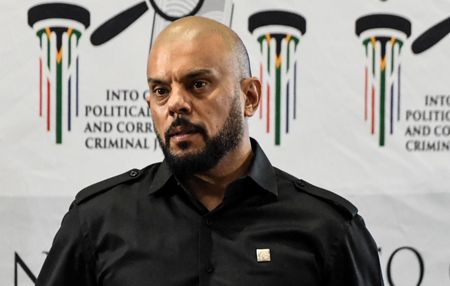
The remark captured the tension at the heart of the debate. Transparency is not merely a procedural preference. It is the foundation upon which public trust in commissions of inquiry is built.
Without it, even legitimate decisions can begin to look like concealment.
The politics of postponement
Postponements are a familiar feature of major inquiries. Legal teams need time to prepare. Witnesses require adequate notice. Unexpected emergencies arise.
But when delays accumulate, they begin to produce a different effect. The process slows. Momentum fades. Public attention drifts elsewhere.
South Africans have seen this pattern before in high-profile inquiries stretching back to the years of State Capture. As proceedings drag on, an uncomfortable question starts to surface: is the delay itself becoming part of the strategy?
Whether intentional or not, the result is the same. The longer the process drifts into procedural disputes, the further it moves from its core purpose.
What is really at stake
Lost in the fog of medical debates and secrecy requests is the commission’s actual mandate.
It was established to determine whether criminal syndicates have infiltrated key institutions of South Africa’s criminal justice system, to identify those responsible, and to recommend reforms that can restore integrity.
That is what the public wants to understand.
South Africans are not tuning in to watch arguments about the wording of sick notes or the placement of cameras. They want answers to far more consequential questions. Who protected whom? How deep does the alleged criminal infiltration go? And will those responsible ever face consequences?
If procedural battles continue to dominate the proceedings, the risk is not merely delay. It is that the public begins to disengage entirely.
The moment of decision
Justice Madlanga’s firm stance recently, rejecting vague medical certificates, warning of possible referrals to the HPCSA, and demanding credible justification for secrecy, offered a rare moment of clarity.
Credibility matters.
If illness prevents participation, the evidence must be specific and convincing. If threats to life are claimed, they must be real and demonstrable. And if postponements are sought, they must serve justice rather than undermine it.
Ultimately, the legitimacy of the commission will not be judged by how many procedural debates it entertained. It will be judged by whether it succeeds in uncovering the truth.
Because every day spent debating medical certificates and camera angles is a day not spent confronting the deeper question the inquiry was meant to answer, how far criminal networks may have burrowed into the institutions meant to uphold the law.
South Africans deserve urgency, transparency, and integrity.
If the commission cannot cut through the procedural theatre soon, the country may begin to suspect that the delays are no longer just incidental to the story.
They are becoming the story. DM
Nyaniso Qwesha holds an MBA. He has a strong interest in risk management, governance, public accountability and development, with a focus on analysing systems, decision-making and their impact on society.