



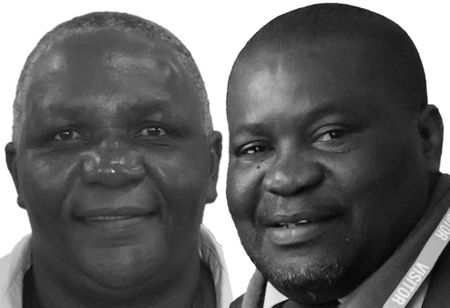
We, the Community Leaders Network (CLN) and the Community Association of South Africans in Natural Resources (Casa), are deeply concerned by the article by Adam Cruise published in Daily Maverick on 28 July 2025, titled “Communities near Kruger Park reject trophy hunting, embrace ethical alternatives — study”.
While the study cited may reflect the views of some communities near Kruger National Park, it does not reflect the perspectives of thousands of communities across southern Africa — including others around Kruger — who actively support sustainable use, including regulated trophy hunting, to support local economies and fund conservation.
The framing presented in Cruise’s article is misleading and does not reflect the lived realities of many communities in and around conservation areas.
Misrepresenting community voices
We are concerned when community perspectives are selectively used to support outside agendas — especially when those agendas are shaped more by ideology than by evidence or lived experience.
The communities that make up CLN and Casa — including those in South Africa, Namibia, Zimbabwe, Zambia, Botswana and Mozambique — have consistently and clearly expressed support for the sustainable use of wildlife, including trophy hunting, when it is well managed and community driven.
These are not abstract concepts. Revenues from trophy hunting in community conservancies are used to pay for schools, clinics, water infrastructure, community guards and other essential services.
These investments contribute directly to the sustenance of community livelihoods, ensuring that conservation efforts generate real, tangible benefits for local people.
Hunting quotas are set through strict biological assessments and permit systems. Nothing is random or reckless about this process. These are established systems that reflect decades of community stewardship.
A heritage of stewardship and use
Hunting has always been part of our way of life. In fact, modern trophy hunting as practised in many parts of southern Africa is an evolution of traditional practices — one that recognises and rewards the conservation role communities play.
For many of us, it is one of the few forms of land use that works in our landscapes, especially in areas where agriculture is limited by soil, water or conflict with wildlife.
This is not a debate between conservation and hunting. For us, they go hand in hand.
The real agenda
Let’s be honest about what is really happening here. Animal rights groups — often backed by foreign donors — are working to undermine legal, regulated hunting, in particular trophy hunting.
But they are not offering real alternatives. Worse, they are doing so with the support of certain corrupt government actors who want to profit from conservation through exclusionary models such as high-end nature credits schemes that cut communities out of decision-making and benefits.
We see this clearly in the areas surrounding the Kruger National Park, where some are trying to take land and lock it up in the name of “protection”, all while ignoring the very people who have lived with and conserved wildlife for generations.
These efforts are not only disrespectful — they are dangerous. Excluding communities from conservation decisions erodes trust, undermines wildlife conservation and destabilises rural livelihoods. We will not accept this.
Our position
We commend the South African government for continuing to implement its National Biodiversity Economy Strategy (NBES), which rightly recognises the importance of consumptive use, including trophy hunting, as a legitimate and culturally rooted economic activity.
However, we also call for stronger safeguards to ensure that communities are not merely consulted, but are full owners, managers and beneficiaries of this economy.
We are working closely with government and other partners to expand access to conservation-linked livelihoods. Where these efforts are being undermined by ideological campaigns, misleading media narratives or corrupt actors, we will speak out and, if necessary, seek redress in the courts.
Our message
To those who seek to dismantle our way of life: we say, enough.
Respect our rights. Respect our traditions. Respect our voice.
We are not just caretakers of wildlife — we are also custodians of culture, providers for our families and proud contributors to global conservation. Our heritage, or traditions, our economies and our future are not yours to rewrite.
We reject the idea that sustainable harvesting of wildlife is something to be ashamed of. For many communities, it is a vital source of food, income and cultural identity.
We reject narratives that paint us as victims or bystanders. We are neither.
We are organised. We are united. And we will defend our rights. DM
The Community Association of South Africans in Natural Resources (Casa) is a nonprofit organisation that serves as the national and international voice of community associations directly or indirectly affected by natural resource governance. Casa defends the rights and interests of Indigenous Peoples and Local Communities through a people-centred approach that links power, economics and nature.
The Community Leaders Network of Southern Africa (CLN) is a regional platform of indigenous peoples and local community representatives from across southern Africa who are actively involved in the management and conservation of wildlife and natural resources. The network works to ensure that community voices are heard in national and international conservation policy debates and that local people benefit fairly from the sustainable use of biodiversity.
Comments
Scroll down to load comments...