




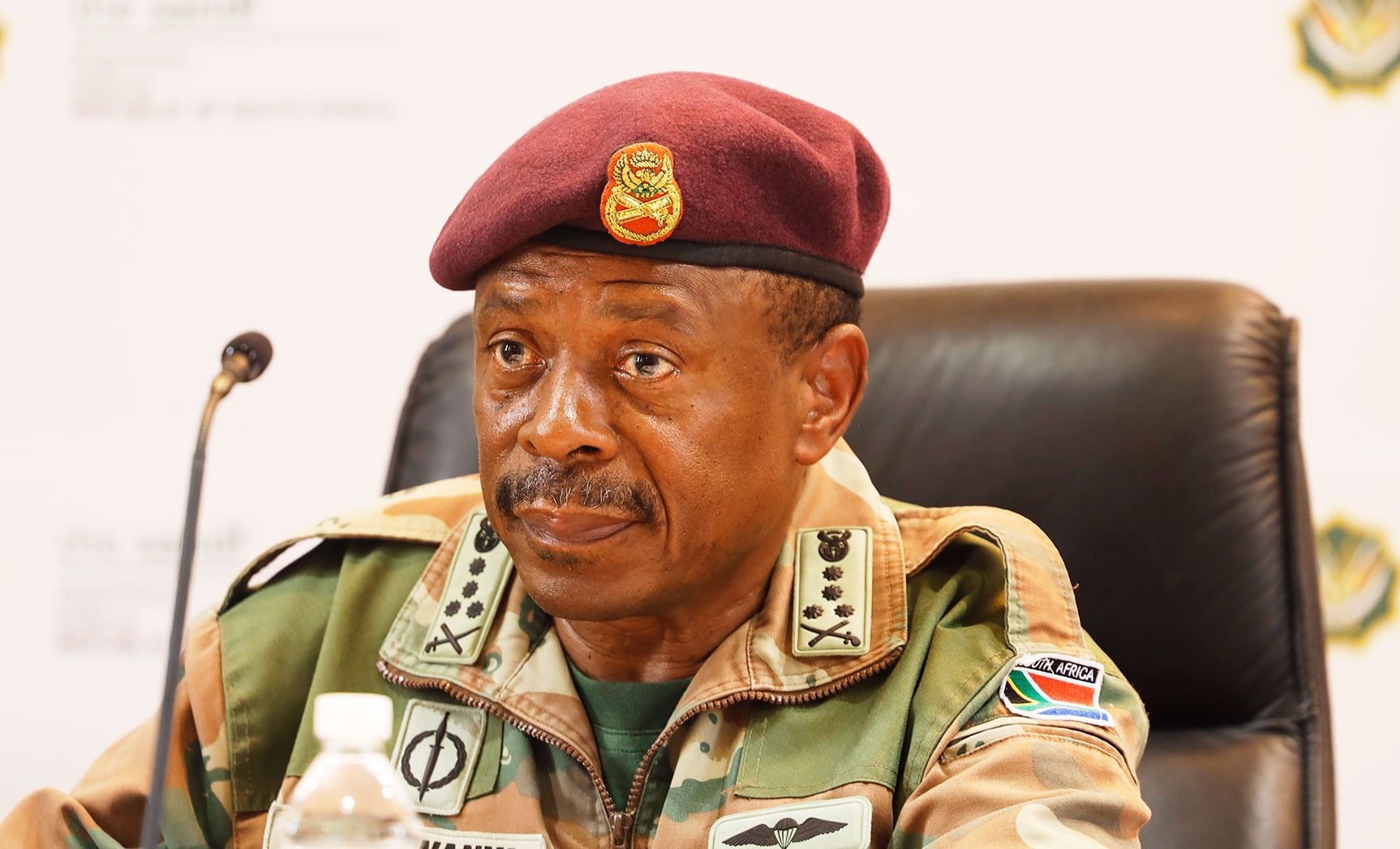
 General Rudzani Maphwanya, chief of the South African National Defence Force. (Photo: Gallo Images / Sharon Seretlo)
 The latest iteration of Operation Prosper, the deployment of South African National Defence Force (SANDF) personnel to support the South African Police Service (SAPS) to combat organised crime, including illegal mining and gangsterism, is set to run for 13 months with more than 2,000 members of the SANDF posted across the country.
Fannie Masemola, national commissioner of the SAPS, noted that the intervention would focus on “hotspot areas”, including the Free State, Gauteng, North West, Western Cape and Eastern Cape, that are “significantly affected by criminal activity”.
/file/attachments/orphans/WFD_4163_369351.jpg "Soldiers search a resident during a patrol in Riverlea as part of a crime prevention operation aimed at tackling gang-related violence in the area on 11 March 2026. (Photo: Felix Dlangamandla)")
He was speaking at a National Joint Operational and Intelligence Structure (NatJoints) briefing with representatives of the SAPS and SANDF on Sunday, 15 March.
The operational coordination of the SANDF deployment will be managed through NatJoints, with joint operational centres already established to facilitate cooperation between the SAPS, SANDF and other law enforcement agencies, according to Masemola.
“We meet here not merely to announce an operational deployment, but to reaffirm a fundamental principle, that the authority of the state will always prevail over criminality, intimidation and lawlessness,” he said.
/file/attachments/orphans/ED_597053_367350.jpg "National Police Commissioner General Fannie Masemola. (Photo: Frennie Shivambu / Gallo Images)")
The joint briefing follows on from President Cyril Ramaphosa’s announcement in his State of the Nation Address in February that he was deploying the SANDF to support the police and strengthen the fight against gang violence.
General Rudzani Maphwanya, chief of the SANDF, said South Africa had seen too many lives lost to criminality and that the joint operation would give criminal elements “no quarter”.
“We will work jointly with our counterparts in the police service and ensure that the state apparatus is empowered to have the monopoly of force. And if you challenge us, we will show those criminal elements by any means,” he said.
/file/attachments/orphans/WFD_4214_441340.jpg "Children playfully jump off an army vehicle while soldiers patrol the streets of Riverlea during a crime prevention operation on 11 March 2026. (Photo: Felix Dlangamandla)")
On the ground
Ramaphosa’s decision to deploy the SANDF in support of the SAPS has received a mixed response in the public sphere. Some have raised concerns that the move will place additional strain on an already underfunded and overstretched military apparatus, while doing little to address the root causes of gangsterism, like weak governance and social dysfunction.
Read more in Daily Maverick:
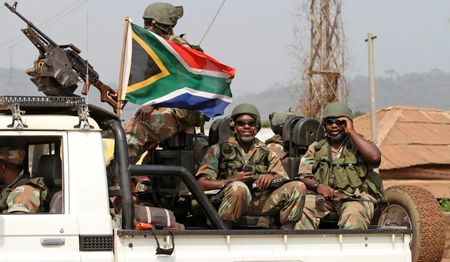
In some communities, however, the deployment has been welcomed as a sign that residents’ concerns about high crime levels are finally being heard. Daily Maverick reported that when army vehicles drove through Riverlea in Johannesburg on Wednesday, 11 March, many locals were excited, with one even calling for the military to be stationed there permanently.
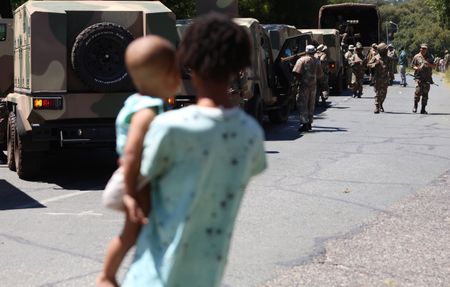
Masemola noted that initial deployments in certain parts of the country had already commenced and were “progressing well”.
“You might have seen in Gauteng, there have been deployments. There have been some 10 people arrested. A lot of confiscations of illegal mining equipment have been done, with joint operational teams already working together on targeting, enforcement and operations, and area stabilisation activities,” he said.
/file/attachments/orphans/WFD_4131_307515.jpg "A soldier engages in conversation with a resident during a patrol in Riverlea on 11 March 2026. (Photo: Felix Dlangamandla)")
The stated objectives of the joint deployment under Operation Prosper are:
- Stabilising priority crime hotspots where organised criminal networks have entrenched themselves;
- Disrupting and dismantling syndicates like those involved in illicit mining and gang violence;
- Restoring law, order and peace in affected communities;
- Reclaiming territory that has been controlled or influenced by criminal networks and firmly reasserting “the authority of the state”; and
- Reducing serious and violent crime levels through sustained enforcement and intelligence-driven operations.
Hotspots
Masemola identified the Free State, Gauteng and North West as areas where “sophisticated illicit mining criminal groups” continued to exploit abandoned and active mining infrastructure. These activities generated illicit financial flows, fuelled violence between gangs and rival groups, damaged essential infrastructure and contributed to environmental degradation.
“At the same time, gang-related violence in the Western Cape, Eastern Cape and Gauteng continues to drive high levels of murder, extortion, drug trafficking and illegal firearm proliferation, devastating communities and trapping many young people in cycles of violence,” he said.
/file/attachments/orphans/WFD_4122_910177.jpg "A resident holding a child looks on as soldiers arrive to patrol the streets of Riverlea during a crime prevention operation on 11 March 2026. (Photo: Felix Dlangamandla)")
These criminal dynamics often interact with other factors such as illegal migration, illicit firearms trafficking, corruption networks and attacks on essential infrastructure, said Masemola.
“The SANDF will cooperate with the SAPS through coordinated operational deployments, enhanced visibility and stabilisation measures in identified hotspots. Importantly, these operations will remain intelligence-led, constitutionally compliant and conducted under established command structures,” he said.
The final phase of the joint mission readiness training was ongoing, said Masemola, after which the deployment of the SANDF would be expanded.
“During this [training] phase, operational matters such as rules of engagement, communication procedures and base standing orders are finalised. This preparation ensures that members are equipped to operate effectively within a cooperative operational framework,” he said.
Masemola emphasised that the deployment was not only about enforcement, but also restoring stability, rebuilding trust between communities and law enforcement, and creating safer conditions for social and economic development.
/file/attachments/orphans/WFD_4105_212201.jpg "A resident holding a child looks on as soldiers arrive to patrol the streets of Riverlea during a crime prevention operation on 11 March 2026. (Photo: Felix Dlangamandla)")
/file/attachments/orphans/6I1A5073_990594.jpg "Authorities conduct a search on a block of flats in Riverlea as part of a crime prevention operation on 11 March 2026. (Photo: Felix Dlangamandla)")
He said public safety was a “shared national priority”.
“The fight against crime cannot be won by law enforcement alone. It requires partnership with communities, cooperation across government institutions, and sustained national commitment,” he said.
In light of his statement about giving criminal elements “no quarter”, Maphwanya was asked about how the show of force on the part of the military would be managed in line with the rights of accused persons.
/file/attachments/orphans/6I1A5064_347591.jpg "Rubia Williams and Mfede Louis celebrate the deployment of soldiers in Riverlea as part of a crime prevention operation on 11 March 2026. (Photo: Felix Dlangamandla)")
“We have got strategic guidelines that we have put together, that will regulate the deployment of the National Defence Force in … cooperation with the SAPS. Those strategic guidelines and directions will be to our commanders to be able to know what needs to be done, and to those youngsters that will be deployed, the troops on the ground,” responded Maphwanya.
“We are going out there in defence of our people, to protect our people, and to prevent and combat crime. We’re not going there to harass our people. Any people that will feel harassed are the criminal elements.” DM
Comments
Scroll down to load comments...