




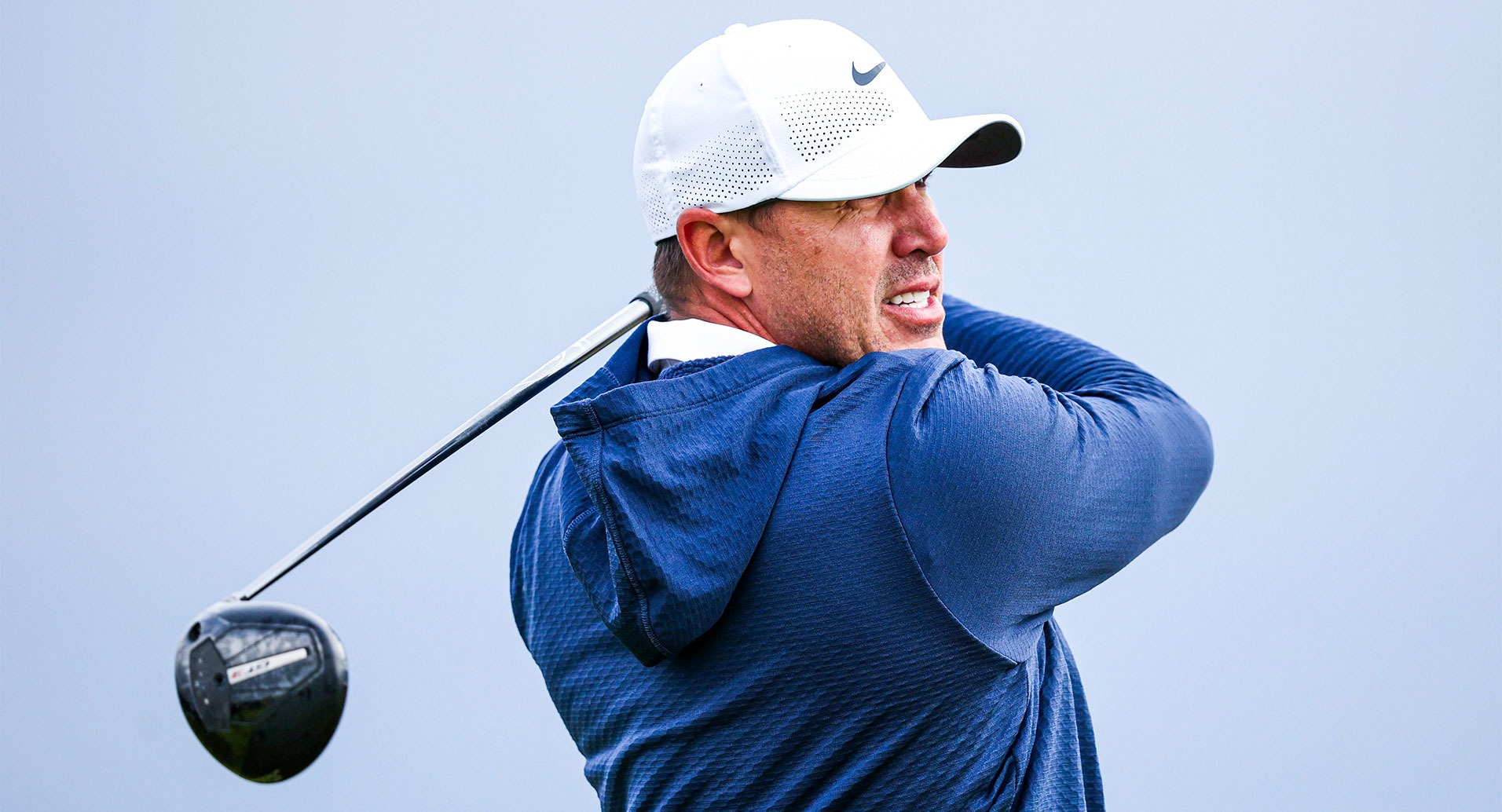
 Brooks Koepka has defected from LIV Golf back to the PGA Tour. (Photo: Ross Parker / SNS Group via Getty Images)
 Nearly five years after rocketing on to the men’s professional golf landscape with the velocity of a Bryson DeChambeau tee shot, the LIV Golf League now faces a significant push back from the old order – the PGA Tour.
Emerging as a disruptor to the established professional golfing status quo in 2021, before playing its first official events in 2022, LIV Golf poached star players with huge signing-on fees. The Saudi Public Investment Fund (PIF), worth about $500-billion when it launched in 2021, underpinned LIV’s financial might.
Koepka was reportedly lured with a $100-million (R1.64-billion) signing-on fee in 2022, while Spanish star Jon Rahm was paid more than $300-million (R4.9-billion) to join in 2023.
/file/attachments/2986/2231898196_589454.jpg "Jon Rahm (with trophy) captains Legion XIII in the LIV Golf League. The PGA has opened the door for him to return. (Photo: Raj Mehta / Getty Images)")
But Koepka turned his back on LIV in December last year, and although all players who joined LIV have been banned by the PGA, on 12 January the US-based tour confirmed that Koepka had been given status for this season.
Under the “Returning Member Programme”, one of the changes the PGA made in reaction to LIV, Koepka can rejoin.
The programme is a limited time offer to players who defected to LIV to return. It is open to players who have won a major or The Players Championship since 2022 (Koepka won the 2023 PGA Championship) and comes as “one of the largest financial repercussions in professional sports history,” according to PGA Commissioner Brian Rolapp.
“This is a one-time, defined window and does not set a precedent for future situations. Once the door closes, there is no promise that this path will be available again,” Rolapp said.
/file/attachments/orphans/2231143461_737952.jpg "Brian Rolapp, CEO of the PGA Tour. (Photo: Kevin C Cox / Getty Images)")
The announcement of this initiative was a robust step by the PGA to regain the services of top players and make a return to the PGA a viable option.
Essentially, the PGA has opened the door for Rahm and DeChambeau, as well as 2022 Open Champion Cameron Smith, to return too if they meet the 2 February deadline for the Returning Member Programme. If two of those three rejoined the PGA, it would be a huge blow to LIV’s future.
Equity scheme
Koepka’s return comes at a financial cost, as he will lose out on earnings under the PGA’s Player Equity Programme.
The Equity Programme, established in 2024, is the “ultimate weapon” the PGA Tour developed to stabilise its membership. It essentially tells the players: “You don’t just work for the Tour; you own the Tour.”
By tying the players’ net worth to the Tour’s media deals and sponsorship growth, it makes the opportunity cost of leaving for LIV much higher than just a simple fine.
Under the Equity Programme, players who remained loyal to the PGA Tour would share in a $1.5-billion (R24.6-billion) fund based on four “tiers” covering more than 200 players.
Had Koepka not defected to LIV, he might have been a tier one player on the scheme, reserved for the likes of Tiger Woods, Rory McIlroy, Scottie Scheffler and a handful of others.
/file/attachments/orphans/2250430019_692895.jpg "Northern Ireland’s Rory McIlroy is one of the PGA Tour’s most important players. (Photo: Josh Chadwick / Getty Images)")
Koepka faces a five-year “forfeiture” of benefits from the scheme, which could cost him up to $85-million (R1.4-billion) in bonus earnings, according to the PGA.
Koepka also committed to making a $5-million charitable donation to reclaim his playing privileges on the PGA Tour.
It certainly points to someone desperate to give up his LIV life.
“Being closer to home and spending more time with my family makes this opportunity especially meaningful to me,” Koepka said on social media.
“I believe in where the PGA Tour is headed with new leadership, new investors, and an equity programme that gives players a meaningful ownership stake. I also understand there are financial penalties associated with this decision, and I accept those.”
Despite the financial implications, which might include paying back a portion of his LIV signing-on bonus in 2022, Koepka is still a very rich man, having earned $46-million in prize money on LIV in addition to the tens of millions he made on the PGA Tour prior to his initial defection.
LIV strong?
Despite these recent developments against the backdrop of stalled talks to merge the tours that were announced in mid-2023, LIV claims to be on a solid footing.
“From the outset, LIV Golf has championed an open ecosystem and freedom, for all, not just for a limited few,” LIV said in a statement after the Koepka defection.
“One that supports players’ rights to compete across various platforms, reinforcing the belief that the growth of the game is best served when the game’s best players are empowered to seek the most competitive environments around the world.
/file/attachments/orphans/2237955708_342106.jpg "Bryson DeChambeau represented Team United States in the 2025 Ryder Cup, but he is a vital player on the LIV Golf Tour. (Photo: Mateo Villalba / Getty Images)")
“LIV Golf’s vision remains unchanged – to grow the game of golf globally – and that vision gains momentum across the broader golf landscape, the capacity to deliver on it continues to strengthen by expanding pathways and opportunity beyond any single institution or interest.
“As the world’s golf league, LIV Golf continues to offer the best professional golfers the most competitive, challenging and lucrative environment in which to pursue greatness on a global scale.”
Besides altering its original 54-hole format, with no cut and shotgun starts, LIV Golf has also been forced to adapt due to lukewarm viewership figures.
Team play was always part of the original concept, but in the 2023 LIV season (when the series became the “LIV Golf League”), team rosters became fixed, permanent franchises with their own logos, sponsors and equity value for the captains.
Stingers rebranded
South Africa’s participants formed Stinger Golf Club, but has just rebranded itself as the Southern Guards GC. It’s all to do with dull copyright laws in various territories where LIV Golf is played (and probably others where it is not) and the fact that the South African team couldn’t “own” its name in those parts.
/file/attachments/orphans/2231905523_442577.jpg "Louis Oosthuizen of Stinger GC (now rebranded Southern Guards GC), playing in the LIV Golf League. (Photo: Raj Mehta / Getty Images)")
If you’re still awake after that sentence, the team will not only start the 2026 LIV Golf season with a new name, but a new emblem – a rhino. That, at least, is much more closely linked to Africa than the generic “stinger” golf term they carried for more than two years.
The Southern Guards – represented by Louis Oosthuizen, Charl Schwartzel, Branden Grace and Dean Burmeister – will fly SA’s flag (and a rhino flag) on the fairways of the world.
The former Stingers have worked hard on creating an identity with a good social media offering and a recently released five-part Chasing the Sun-style documentary, called Greens and Gold, which aired on SuperSport.
It’s well made and slick, but the fundamental shortfall is that it’s difficult as a viewer to feel invested. It’s hard to care for four highly paid golfers playing in tournaments with no history or legacy, in a league that has questionable support. But they are at least working hard to create a team and gain a following.
Ticket sales for the inaugural LIV Golf South Africa leg at Steyn City in March have topped 70,000 for the week. The Southern Guards will certainly grow their brand around that event.
/file/attachments/2986/MSA_3756_703043.jpg "The LIV Golf SA team, formerly known as Stinger GC, has been rebranded as the Southern Guards. They are (from left) Branden Grace, Louis Oosthuizen, Dean Burmeister and Charl Schwartzel. (Photo: LIV Golf)")
The team format was LIV’s attempt to move golf toward a “franchise model.” By creating teams such as 4Aces, Crushers, Stingers and Fireballs, LIV aimed to create intellectual property that could eventually be sold to private investors – similar to an F1 team or a rugby club.
This was a direct shot at the PGA Tour, where a player’s “brand” is solely individual and ends when they retire.
/file/attachments/2986/Code_Generated_Image9_466479.png "Graphic: Daily Maverick")
But in the viewership game, LIV is still lagging behind the PGA by a significant margin and has failed to close the gap.
The PGA Tour saw a 22% rise in viewership in 2025. This is attributed to the “Signature Events” model, which guarantees that stars such as McIlroy and Scheffler are competing against each other almost every month. The PGA averages 2.8 million final round viewers per tournament.
LIV’s numbers stayed flat despite moving to a more “prestigious” broadcast deal with Fox Sports. LIV’s 2025 season average on Fox was just 338,000 viewers. DM