



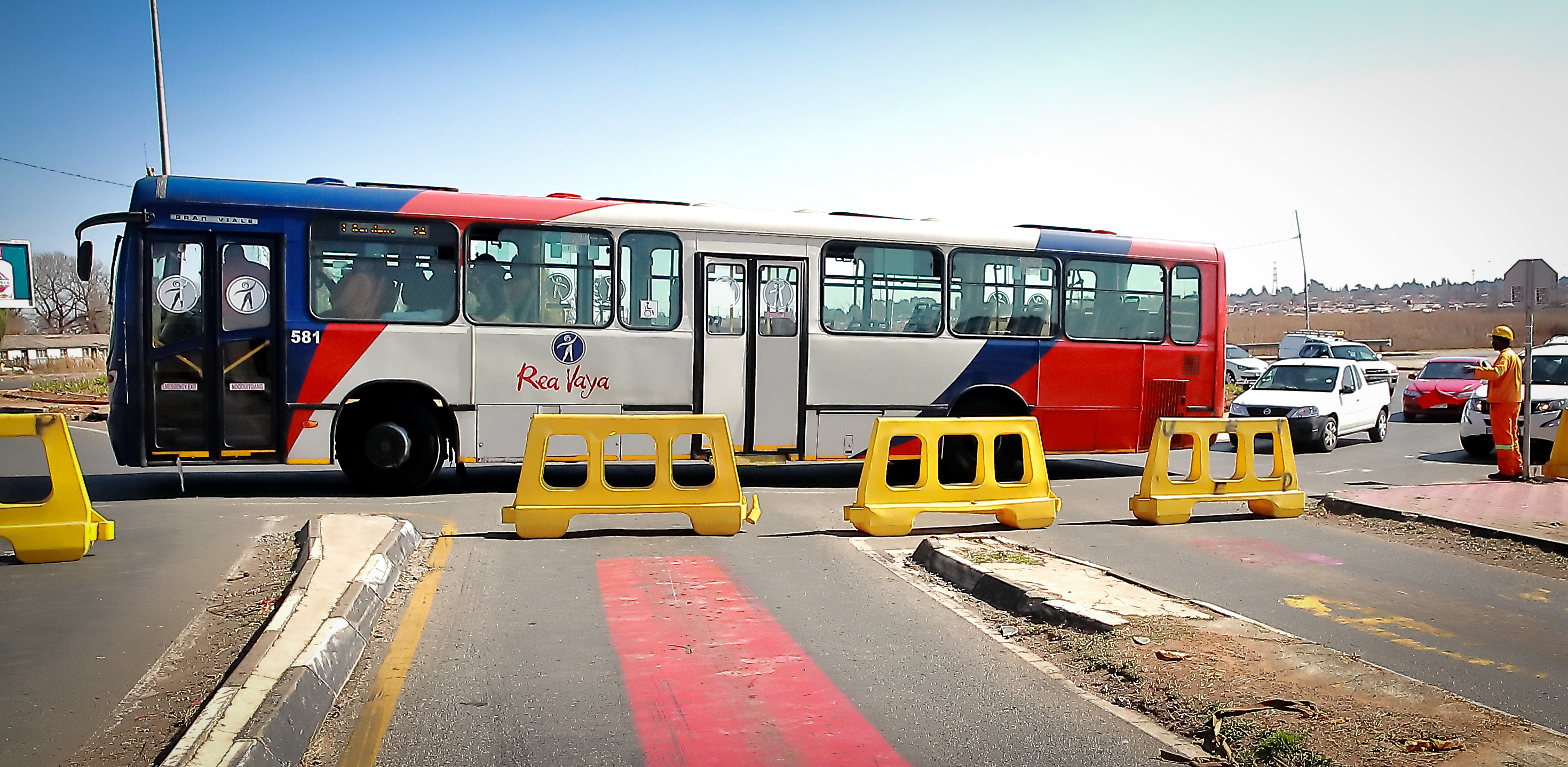
 On Monday, 16 November, the City of Johannesburg announced that Rea Vaya bus services would be suspended. Later, the municipality did not disclose the amount paid, which operator received the money or whether all outstanding amounts had been settled. (Photo: Fani Mahuntsi / Gallo Images)
Johannesburg has invested billions of rands in infrastructure for Rea Vaya – the City’s Bus Rapid Transit System – much of which remains unused, while repeated payment delays to bus operators have disrupted services for thousands of commuters.
On Monday, 16 November, as political parties negotiated the City’s next governing coalition, the municipality announced that all Rea Vaya services would be suspended from Tuesday after failing to pay the operating companies on time.
Hours later, it retracted the announcement after receiving confirmation that payment had been made.
The municipality did not disclose the amount paid, which operator received the money or whether all outstanding amounts had been settled.
The incident follows a Daily Maverick investigation in July that revealed the Johannesburg Art Gallery Rea Vaya station, completed in October 2017, had never opened, while 12 other stations remained at 99% completion.
The investigation also found buses awaiting reconfiguration, passenger numbers substantially below target and fare revenue falling far short of projections.
The payment crisis comes as Johannesburg’s other municipal services face financial pressures.

All the municipal swimming pools were ordered closed by Monday, 16 November, because of a chlorine shortage caused by non-payment to suppliers.
During the year, the City has also experienced disruptions to road maintenance, telecommunications and refuse collection, alongside payment disputes involving municipal police vehicles.
Rea Vaya passenger figures have fallen far short of the City’s targets.
According to figures cited in Daily Maverick’s July investigation, Rea Vaya recorded just 12,147 passenger trips against a target of 49,099, while fare revenue amounted to R25.3-million – only 11.4% of the target.
The City had also forfeited R313-million in Public Transport Network Grant funding because of non-compliance and delays affecting Phase 1C(a) of the system.
The unused infrastructure and revenue shortfalls form part of the wider challenges confronting Johannesburg’s bus rapid transit network, which remains dependent on public funding to operate.

Repeated Rea Vaya payment crises
Rea Vaya is owned and overseen by the City but operated by private bus companies, including PioTrans and Litsamaiso, under contracts with the municipality.
The City pays operators to provide scheduled services, covering costs such as drivers’ salaries, fuel and maintenance. Passenger fares cover only part of the operating costs.
PioTrans entered business rescue in December 2023 amid financial and administrative difficulties.
In January, Transport MMC Kenny Kunene questioned the continued suspension of Soweto feeder buses, claiming the municipality was paying approximately R9.2-million a month to operators despite the services not running.

In April, Rea Vaya services were suspended after operators complained that the City owed them about R30-million.
Business rescue practitioner Mahier Tayob said delayed payments had made it impossible for operators to cover fuel, maintenance and wages.
Services resumed after an agreement was reached with the municipality.
Further suspensions followed in July, when Phase 1B services were interrupted because of delayed payments to Litsamaiso, affecting around 15,000 passenger trips daily.
The City attributed those delays to financial year-end budget adjustments and allocations, compounded by rising fuel costs.
Monday’s near-shutdown followed the same pattern, before the City’s last-minute U-turn.
Earlier this year, Rea Vaya spokesperson Benny Makgoga said the network carried about 15,000 to 20,000 commuters daily, using more than 200 buses and 63 stations.
Cash-flow warnings
The recurring service interruptions come against a background of warnings about Johannesburg’s financial position.
In April, Finance Minister Enoch Godongwana raised concerns about the City’s finances, including its substantial outstanding obligations and failure to pay creditors within the prescribed 30-day period.
At the time, Johannesburg’s debt obligations were reported at approximately R25.2-billion, against available cash of about R3.9-billion.
The warning raised the possibility that National Treasury could withhold the City’s equitable share allocation if financial management problems were not addressed.

Mayor Dada Morero rejected suggestions that Johannesburg was bankrupt, maintaining that the municipality remained financially viable and was taking steps to improve revenue collection and meet its obligations.
In July, Gauteng Cooperative Governance MEC Jacob Mamabolo announced a five-month support intervention under Section 154 of the Constitution to assist the municipality.
The City has also faced disputes over substantial payments owed to Eskom and Rand Water.
Billions in alleged financial misconduct
The financial pressures are unfolding while the City continues to face questions about its handling of billions of rands in alleged financial misconduct.
On 3 August, Daily Maverick submitted an application under the Promotion of Access to Information Act (Paia), seeking records relating to 13 financial misconduct matters involving approximately R4.07-billion, which had been tabled before the council in July.
The application sought forensic investigation reports, disciplinary records and details of action taken against officials implicated in the matters.
It also requested unredacted records relating to unauthorised, irregular, fruitless and wasteful expenditure totalling approximately R45.16-billion over five years.

The City failed to provide the requested documents within the original statutory period and subsequently acknowledged that the application had become a deemed refusal under Paia.
An internal appeal was lodged on 15 October, but the City failed to respond within the statutory period. Under Section 77(7) of Paia, the failure to decide an internal appeal within the prescribed period constitutes a deemed dismissal.
Daily Maverick is preparing to lodge a complaint with the Information Regulator, which is empowered to investigate complaints concerning refusals to grant access to public records.
The R4.07-billion represents the combined value of matters under investigation or disciplinary consideration, not an established amount stolen or lost through fraud. No direct connection has been established between these matters and the service disruptions. DM
Daily Maverick’s Joburg Bureau is for people who love this city. Get the latest Joburg news, events and conversations sent straight to your phone every Friday. Join the WhatsApp Community.
Comments
Scroll down to load comments...