



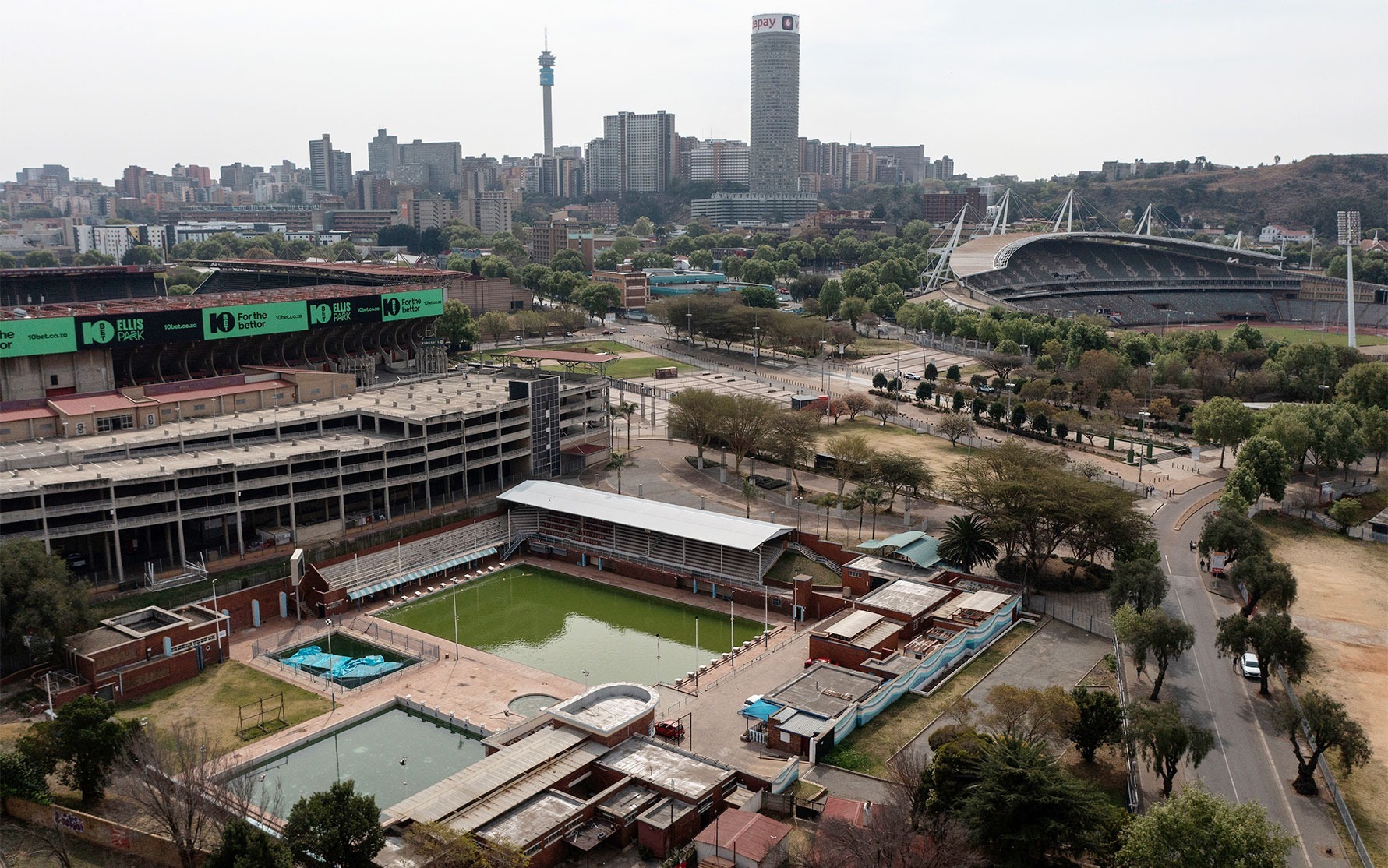
 An aerial view of the Ellis Park swimming pool in Johannesburg on 31 August 2026. All 57 Johannesburg municipal swimming pools will be closed by Monday after the City ran out of chlorine. (Photo: Our City News / James Oatway)
All Johannesburg’s municipal pools will close on Monday, 16 November, because the City has run out of chlorine to keep the water clean.
In a statement on Thursday afternoon, the Department of Community Development said it was “gradually closing” municipal pools across the city due to a critical shortage of chlorine supplies. It said that by Monday, 16 November, all City pools would be closed until further notice.
This latest news is yet another setback in the City’s attempt to open the 57 pools it manages. First the swimming season was delayed by a month from 1 September to 1 October because of “compliance and maintenance issues”.
This delay was due to a late tender process for chemicals, and there being too few lifeguards and cashiers to serve all the pools. MMC for Community Development, Thapelo Amad, said at the time that the City had received a bulk supply of chemicals on 13 October and that 140 lifeguards and 40 cashiers had already been deployed.
Eventually by mid-October 33 pools were opened and staffed. Now barely a month later, there are not enough chemicals to keep the pools clean. And the City is in the middle of a hot summer, with temperatures expected to reach the high 20s next week.

Searing temperatures
While the City acknowledged that the searing temperatures in the city would cause immense frustration because the pools were closed, it said it could not keep the pools open because “without proper chemical treatment” the water posed a severe health risk to swimmers.
The department’s Acting Director Mbulelo Bezu said they had activated emergency procurement protocols to secure new chlorine stock. Once supplies arrived, technical teams would immediately begin treating and testing the water to ensure it met strict public health standards.
“We know how vital our public pools are to families and young people trying to beat the heat right now, and we share the community’s disappointment,” Bezu said. “However, the health and safety of our residents must always come first. Operating unchlorinated pools is unsafe, so we made the difficult decision to close the facilities while we urgently resolve this supply chain disruption. We anticipate reopening pools once the process is complete, and will provide daily progress updates until doors open.”

Lyrics Mazibuko, shadow MMC for Community Development, who has constantly been asking questions of the department and its failure to properly open the swimming pools, said the shortage of essential pool chemicals again raised serious questions about the City’s planning, procurement management and commitment to providing reliable recreational services to residents.
“What makes this development particularly disturbing is that it comes after an already delayed start to the 2026/27 swimming season, which was itself affected by operational and maintenance challenges. When the swimming season was initially delayed, the City issued a communication to residents assuring them that the season would be extended to compensate for the time lost as a result of the late opening of swimming facilities,” he said.
“How can the administration expect communities to have confidence in its commitments when assurances are made publicly, only for subsequent decisions to undermine those very assurances?” he asked.
A ‘failure of planning, institutional coordination and accountability’
Mazibuko said this was not simply an inconvenience; it was a failure of planning, institutional coordination and accountability.
He said the reported chemical shortage raised serious procurement questions because swimming pool chemicals were not unexpected or extraordinary operational requirements. They were fundamental necessities for maintaining safe and hygienic swimming facilities.
“The City must therefore explain why adequate procurement and stock-management arrangements were not put in place to prevent this situation. They need to answer for their failure to secure sufficient chemicals to sustain the operation of their swimming pools; explain how much money was allocated for the maintenance and operation of the City’s 57 pools, and how much of that has been spent.”
Mazibuko is demanding accountability for the operational failures and concrete measures to be implemented to ensure that the pools reopen and remain operational for the remainder of the summer season.
“This situation also highlights a broader structural problem in the management of the City’s recreational infrastructure. Municipal swimming pools, libraries, recreation centres and sporting facilities cannot be managed through crisis response and short-term interventions. They require predictable budgets, preventive maintenance, effective procurement and sustainable operational models,” Mazibuko said.
In Blairgowrie, where residents fixed up their own municipal pool and entered into an agreement with the council, there are enough chemicals to keep the pool clean, but it is unclear whether they will be allowed to open next week due to security and overcrowding concerns. Questions were sent to the Department of Community Development, but no answer had been received by the time of publication.
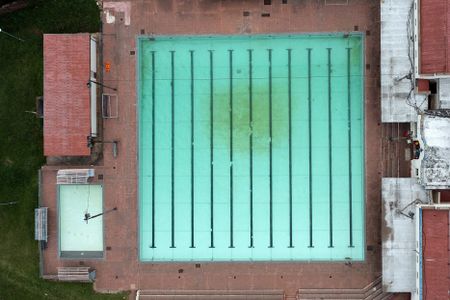
The chlorine shortage has also affected Sydenham Swimming Pool, which serves residents from surrounding suburbs and communities further afield. Regular swimmer and resident in the area, Hillel Shevel, said chlorine shortages had become an annual occurrence, and that people who had offered to donate chemicals last year had been prohibited from doing so by the City.
‘A disaster for our communities’
“It is a disaster for ours, and our neighbouring communities. There are regular swimmers who use the pool to train every day. On weekends, the pool is packed with schoolchildren who come from as far as Alexandra and Hillbrow to use the facility,” Shevel said, adding that residents had approached both the City and their ward councillor but had received no response.
“We have been told that the suppliers have not been paid, so one cannot blame them,” Shevel said.
Ward councillor Daniel Schay said he had arranged for a City official to meet residents to discuss the issue. DM
With additional reporting by Anna Cox.
This story is produced by Our City News, a non-profit newsroom that serves the people of Johannesburg.

Comments
Scroll down to load comments...