


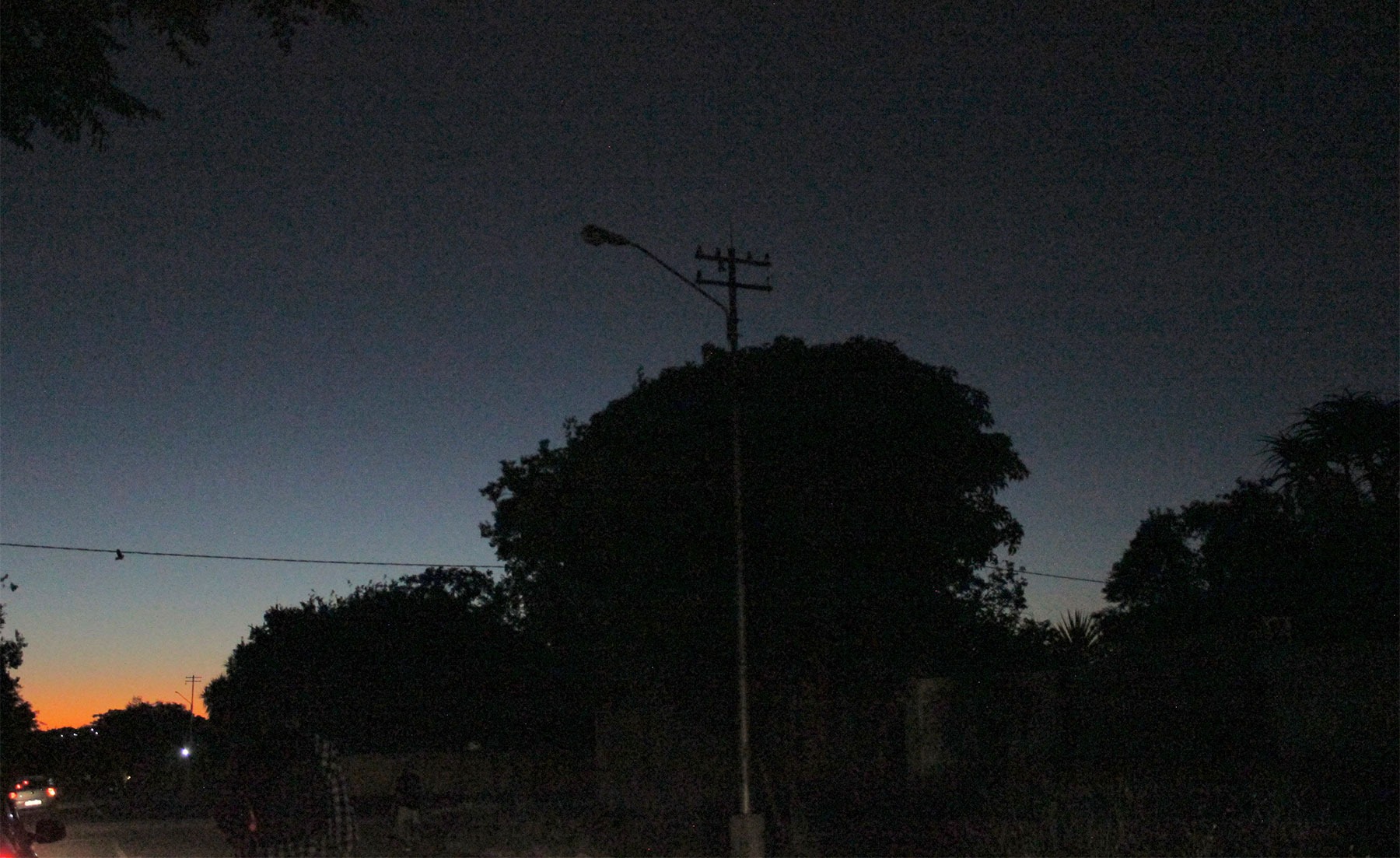
 Unlit streets plunge parts of Kempton Park into darkness, leaving residents vulnerable after dark. (Photo: Reitumetse Pilane)
I had a bad feeling about leaving my car parked alongside the road where the walk was due to begin, but I was assured it would be safe and that security personnel would be present.
I have covered situations that might seem far more frightening: rowdy protests, volatile crowds and scenes where people have lost their lives. There is always some degree of fear when you go into the streets to report. You calculate what could go wrong, where you might find cover, how you would get out. You learn to manage fear because the story demands it.
This felt different – I was in Ekurhuleni, the metro where I grew up and have spent most of my life. And I was frightened.

On Thursday evening, 22 October, I joined the Democratic Alliance's Ekurhuleni After Dark safety initiative, a night patrol led by the party’s Ekurhuleni mayoral candidate, Khathutshelo Rasilingwane. The walk began on Commissioner Street in Kempton Park and continued through the surrounding streets, bringing together DA representatives and local crime-fighting stakeholders.
I was grateful for the opportunity to walk through an area I might not otherwise have ventured into after dark. The campaign gave me a reason to be there, to observe the streets and document what I saw.
As we moved through the neighbourhood, I became increasingly conscious of just how dark and quiet it was. Most streetlights were out, and the road ahead was swallowed by the night.
It was difficult to see much beyond the immediate pool of light around us. I struggled to make out what lay ahead or to see other people clearly. I knew we were walking in a group, with other people and security around us, but that did little to settle the unease.
The recent murders of women in Ekurhuleni were never far from my mind. The R21 highway area, where several women’s bodies were found, was roughly 10km away. I could not separate the darkness around me from what I knew had happened in the wider area. I was walking these streets as part of a crime-fighting initiative, yet I found myself thinking about how vulnerable a person could be out here, alone and unable to see what was around them.
When I edited my photographs afterwards, I hesitated to increase their brightness. I wanted people to see what we had seen, to understand how dark it was. But I also knew that if the photographs were too dark, people might not look at them at all.
There was something deeply frustrating about that.
I am proud to be a product of the East Rand. We get enough jokes about where we come from, enough mockery of our peculiar little corner of Gauteng. I am proud to call Benoni home, with all its strangeness. But it hurts to watch the place that shaped me deteriorate, and to feel increasingly uneasy in the streets I know.
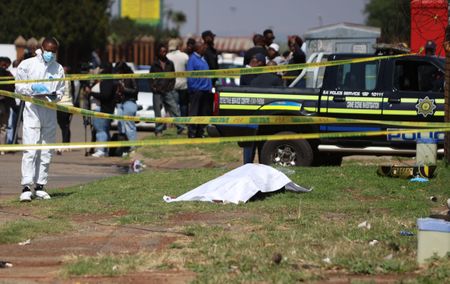
The Ekurhuleni murders have made that unease harder to shake. While covering the cases, I found myself looking over my shoulder on my runs, something my family and friends found amusing. They were convinced I was too caught up in my work. We live in a gated community, after all. What was there to be afraid of?
But what does that reassurance mean when the violence we are reporting on is happening in the metro we call home?
I think about Elizabeth “Tsontso” Moselakgomo and her life before it was taken from her. Running was part of that life, and I wonder whether she ever felt the need to look over her shoulder, whether she ever imagined a run could leave her vulnerable to a killer who saw her as prey.

I cannot know what happened in her final moments. I do not know what went through her mind, whether she had time to understand what was happening to her, or whether she thought of her loved ones, of the daughter awaiting her return.
What I do know is that no one should have to endure what these women did.
And that is what made the night patrol so difficult to square with reality. Here we were, walking the streets in the name of fighting crime, in an area where the darkness itself felt like a warning.
When the body count in Ekurhuleni mounted, police and political leaders made promises about responding to the crisis. Police Minister Firoz Cachalia said Kempton Park would be locked down. But what, beyond the words, changed for those living here?
Have the promises translated into a visible difference? Are there more police officers patrolling these streets? Have broken streetlights been repaired? Can residents walk, run, or travel home without having to calculate the risks of being outside after dark?
These are not unreasonable demands. They are the bare minimum.
I am angry that women can be murdered in our communities and that the most basic conditions for feeling safe, including functioning streetlights and a visible police presence, still feel like too much to ask. I am angry that we so often get stuck at the talking stage: the statements, the speeches, the assurances that something will be done.

I do not want to become so accustomed to this that it stops upsetting me. Nor do I want the fear I felt that night to become another reason to retreat behind a gate and convince myself that it’s others who face the danger.
The darkness in these photographs is real. So is the fear I felt walking those streets.
The women who were killed in Ekurhuleni deserve more than a renewed wave of public outrage, more than the promises made in the aftermath of their deaths. Their lives mattered before their names became part of a national conversation. Their deaths should demand action long after that conversation moves on.
Our lives are not cheap. They are not political talking points. We are not expendable. DM
Comments
Scroll down to load comments...