



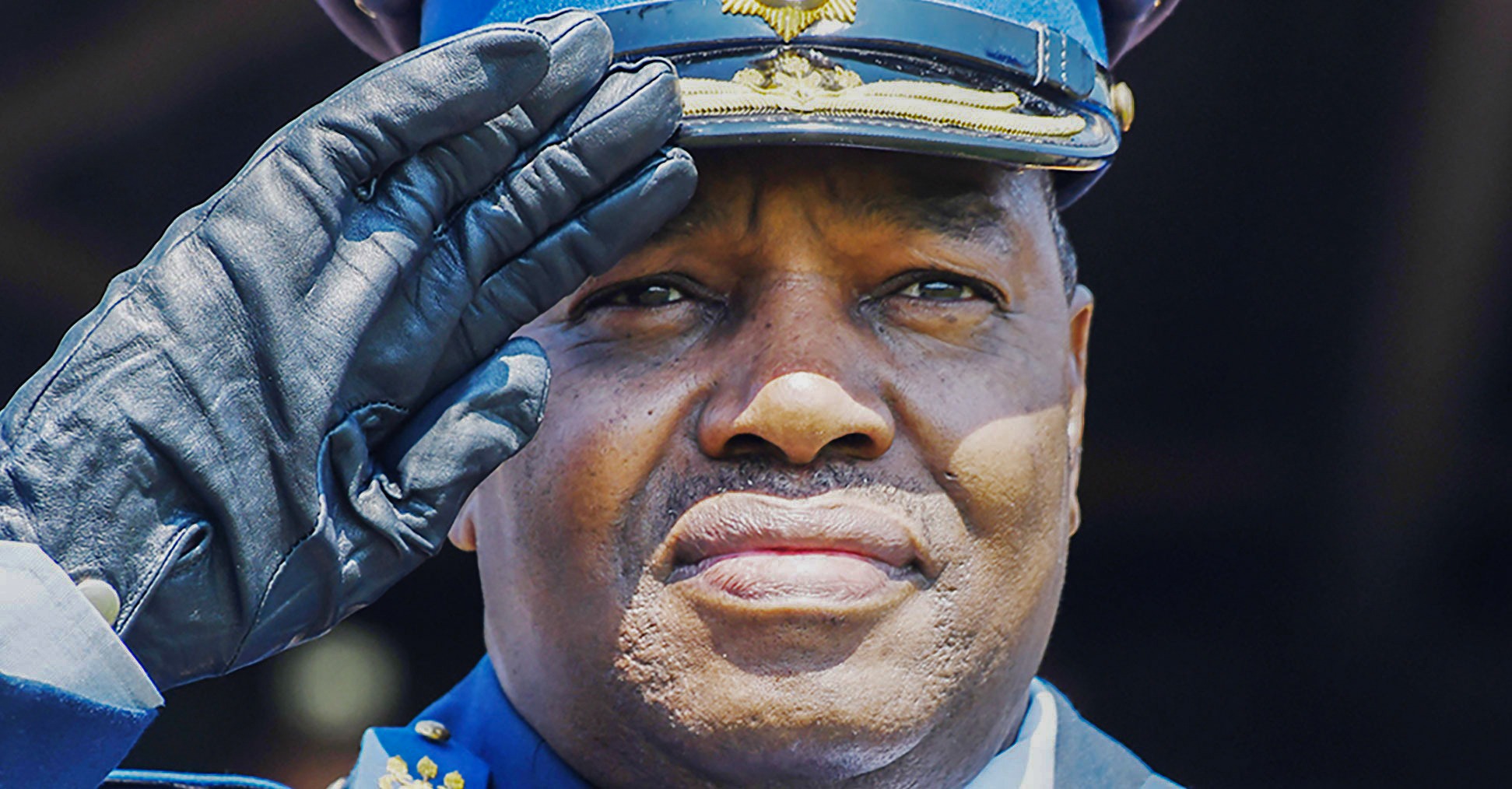
 SAPS national commissioner General Fannie Masemola. (Photo: Gallo Images / Frennie Shivambu)
National Police Commissioner General Fannie Masemola should be back at work on Monday, after President Cyril Ramaphosa lifted his suspension. This came after criminal charges against him were withdrawn.
The president’s decision was announced on Friday, 16 October. It ends a six-month period in which the country’s top police officer was sidelined over allegations linked to a controversial R360-million South African Police Service (SAPS) health-services contract awarded to Medicare24. That company is associated with alleged underworld figure Vusimuzi “Cat” Matlala.
But Masemola’s return is about more than the restoration of a suspended police chief. Evidence presented at the Madlanga Commission of Inquiry has raised serious questions about the quality of investigations into senior police officials, the conduct of prosecutors and the accountability of institutions tasked with fighting corruption, particularly the Investigating Directorate Against Corruption (Idac).
It also reflects an ongoing shift in power battles within SAPS, with Masemola and his perceived allies now appearing firmly in charge.
From suspension to reinstatement
Masemola was placed on precautionary suspension on 23 April 2026 after he appeared in the Pretoria Magistrates’ Court on four counts of contravening the Public Finance Management Act. The charges stemmed from the controversial R360-million SAPS health-services contract awarded to Medicare24.
Masemola was among 13 SAPS officials charged in connection with the contract. Ramaphosa appointed SAPS chief financial officer Lieutenant-General Puleng Dimpane to act in his place.
Masemola maintained his innocence, telling journalists outside court on 21 April: “I know that I am not guilty, I am not wrong.”
On 15 September, National Director of Public Prosecutions Andy Mothibi ordered the withdrawal of the charges, with the National Prosecuting Authority (NPA) citing no reasonable prospects of a successful prosecution. It followed a review of cases launched by Idac.
In July, Mothibi said the NPA was implementing a six-month plan to “reset” Idac.
/file/attachments/orphans/Vince-Maseloma-suspension-lifted1_586846.jpg "Advocate Andy Mothibi. (Photo: Gallo Images / City Press / Tebogo Letsie)")
The Pretoria Magistrates’ Court formally withdrew the charges on 22 September, but Masemola remained suspended until Ramaphosa lifted the suspension on Friday, 16 October, clearing the way for his return to duty.
Acting Police Minister Firoz Cachalia welcomed the decision, saying Masemola’s return provides an opportunity for the leadership of the SAPS to maintain focus on operational priorities and the ongoing work to build a professional, capable and trusted police service as per the Police Reset Agenda.
Madlanga evidence raises questions about investigations
Testimony at the Madlanga Commission in July 2026 exposed divisions in Idac over investigations targeting senior police officials, including Masemola and former Crime Intelligence head Lieutenant-General Dumisani Khumalo.
On 30 July, Idac prosecutor Drushantha Ramsamy told the commission that former Idac head Andrea Johnson was in charge of Project Diversion, an investigation aimed at building cases against Masemola and Khumalo.
/file/attachments/orphans/ED_616934_726181.jpg "Adv Drushantha Ramsamy (State Advocate with the Investigative Directorate Against Corruption (IDAC) testifies at the Madlanga Commission of Inquiry at Brigette Mabandla Judicial College on July 30, 2026 in Pretoria, South Africa. President Cyril Ramaphosa established the commission to investigate and report on the veracity, scope, and extent of the allegations made on 6 July 2025 by KwaZulu-Natal (KZN) Police Commissioner Lieutenant-General Nhlanhla Mkhwanazi that South Africa’s criminal justice system was compromised. (Photo: Gallo Images / Frennie Shivambu)")
The commission heard that Idac investigated Masemola without the required complaint referral and that Johnson appeared determine to have him charged.
Speaking to BusinessLive on Friday, Masemola said: “I do not know what the motive was; I feel, of course, they [had] a greater plan in terms of what they intended on doing. Obviously not only me, but I think they were executing a bigger plan, which only they know. Maybe one day we will know what that plan was, but it did not succeed. My plan is to continue serving South Africans.”
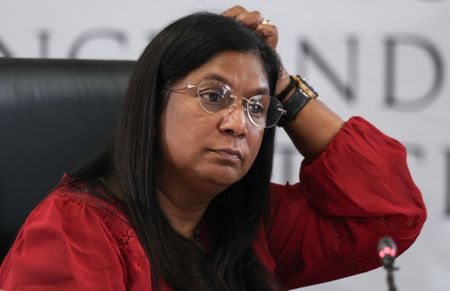
The investigation into Khumalo included allegations that Brigadier Dineo Mokwele had been unlawfully appointed to head Crime Intelligence’s Technical Support Services. However, documentary evidence indicated that she met the post’s qualifications.
Johnson defended her pursuit of the officers, arguing that their alleged conduct pointed to the “capture of systems and processes for private interests”. However, on 23 July, she admitted that she had relied on information supplied by her team, some of which was not factual.
Senior Idac prosecutor advocate Peter Serunye told the commission that Khumalo and six others had been arrested prematurely, before investigators had gathered critical evidence. He pointed to incomplete investigative work and potentially defective charges.
KwaZulu-Natal police commissioner Nhlanhla Mkhwanazi had previously warned that rogue elements in Idac were targeting certain police officers. Johnson initially rejected claims that her directorate was conducting a witch-hunt.
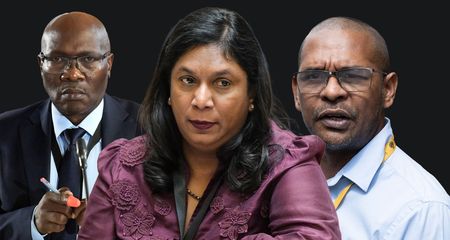
Although this testimony does not establish that the case against Masemola was improperly pursued or that it prompted the withdrawal of charges, it raises broader questions about the quality of investigations involving senior police officials. His reinstatement resolves his suspension, but not the wider concerns about investigative and prosecutorial accountability.
Police accountability remains under the spotlight
Masemola’s reinstatement comes amid continuing allegations against senior police officials before the courts and the Madlanga Commission.
Dismissed deputy national police commissioner Shadrack Sibiya, who has been in custody since 21 September, is seeking R20,000 bail. He faces six charges, including rape, sexual grooming of a minor, human trafficking and negligent handling of a firearm. He has pleaded not guilty.
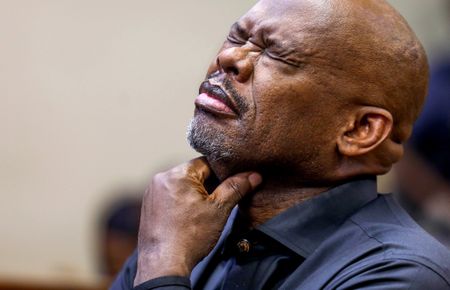
In separate allegations, Sibiya, who is seen to be from a rival SAPS faction to Masemola, Khumalo and Mkhwanazi, has been accused of taking bribes, which he has denied.
On Wednesday, 26 August, at the Madlanga Commission, Matlala denied paying money to Sibiya but alleged that Sergeant Fannie Nkosi collected money from people in Gauteng on Sibiya’s behalf.
Matlala was being grilled about his meeting in April 2025 with KwaZulu-Natal police commissioner Mkhwanazi, which opened a window into an alleged money-collection network around suspended deputy police chief Sibiya. Matlala stated he acknowledged that Sibiya was collecting money, but refused to identify those allegedly making the payments, repeatedly invoking his right against self-incrimination and maintaining that it formed part of his defence in his criminal trials.
Meanwhile, the former deputy head of Crime Intelligence, Major-General Feroz Khan, also seen as a rival to Masemola, Khumalo and Mkhwanazi, faces criminal charges in relation to a precious metals case. He could also face criminal charges for his failure to appear and give evidence at the commission. DM
Comments
Scroll down to load comments...