



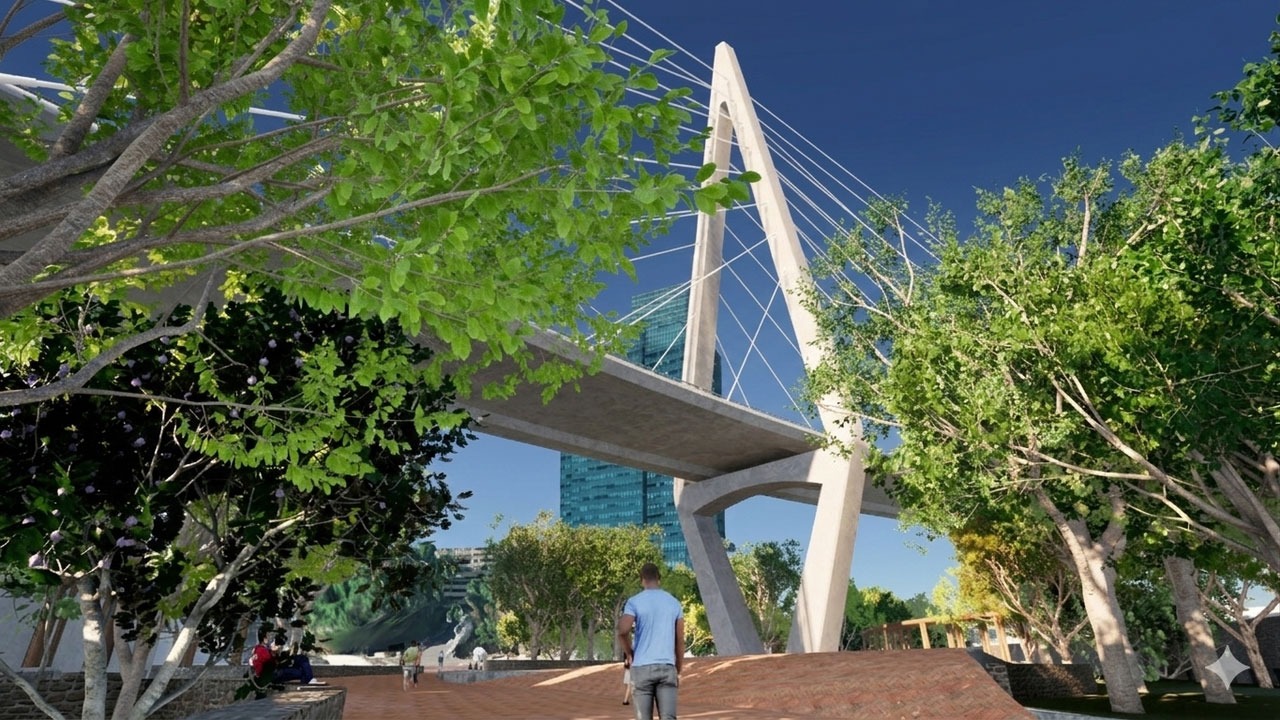
 By day, the proposed bridge would be framed by lush greenery and public open spaces, creating a greener and more people-focused entrance to the city. (Image: Supplied / City of Cape Town)
Their towering columns and elevated freeway structures have become part of the city’s landscape, prompting generations of Capetonians to wonder why the bridges were abandoned and whether they would ever be finished.
The unfinished Foreshore Freeway Bridge, in particular, has become an unlikely city icon, featuring in films and stunt scenes.
Construction began in the early 1970s on a bridge intended to connect the CBD with the coastal areas, but the project was halted, with funding constraints among the reasons cited.
The unfinished highways are known colloquially as “Solly’s Folly” after Solly Morris, the city engineer in the 1970s at the time they were built and then scrapped midway.
Fast-forward more than five decades to Friday, 2 October when mayor Geordin Hill-Lewis unveiled the City’s vision to finally complete what has become known as Cape Town’s unfinished freeway.
/file/attachments/orphans/Vince-City-unlock-foreshore-5_984147.jpg "On Friday, 2 October, Cape Town Mayor Geordin Hill-Lewis On Friday, 2 October, Cape Town Mayor Geordin Hill-Lewis unveiled the City’s vision to transform the Foreshore’s unfinished highways into a new link bridge, promenade and vibrant neighbourhood. City Manager Lungelo Mbandazayo described the project as an opportunity to transform and future-proof Cape Town’s CBD. (Photo: Gallo Images / Brenton Geach)")
Under the proposal, a new bridge would link the inbound freeway directly to Helen Suzman Boulevard, bypassing Buitengracht Street below. The outbound freeway would be placed in an underground tunnel alongside Duncan Road, while 15 hectares of surrounding land would be transformed into a new neighbourhood.
Hill-Lewis described the plan as the end of “50-year-old unfinished business”, arguing that the project could ease congestion while unlocking investment, jobs and more affordable homes.
“The project will transform Cape Town’s unfinished highways into a new link bridge and tunnel to relieve inner-city congestion and fix the connection between the foreshore and Atlantic Seaboard. And most importantly, over the decades ahead, a brand-new vibrant Foreshore neighbourhood will be unlocked, including affordable housing, walkable streets and a tree-lined promenade along the harbour’s edge all the way to Sea Point,” he said.
The announcement came with fanfare from the City, but for Good party secretary-general and Cape Town mayoral candidate Brett Herron, the unanswered questions are as significant as the vision itself.
It is not the first time the City has tried to revive the unfinished Foreshore freeways. In 2017, a bid evaluation committee was tasked with assessing six proposals, but the process was delayed and the committee was later scrapped in controversial circumstances.
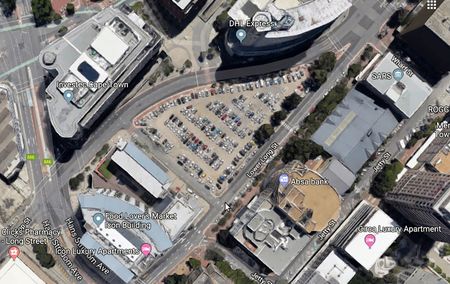
Plan for congestion relief, housing and reconnecting Cape Town with the sea
For Hill-Lewis, the unfinished Foreshore freeways are more than concrete relics. They represent a city physically cut off from the sea and constrained by infrastructure that has occupied valuable inner-city land for more than half a century.
He stressed that the project was about more than completing the bridges. It would, he said, help address some of Cape Town’s biggest congestion headaches while unlocking investment, jobs and more affordable homes.
“We want Cape Town to be the City of Hope in South Africa. That means doing bold things, and that’s exactly what we are doing today. Not since before the 2010 World Cup has Cape Town enjoyed major public road and transport upgrades.
“Now we are doing two – the expansion of the MyCiti bus network to Khayelitsha and Mitchells Plain, which is under construction along all 42km of that project; and now this Foreshore Precinct project,” he said.
Friday marked the start of the public-facing phase, with the City releasing drawings for public consultation. The plans will then move through detailed engineering, funding, procurement and, ultimately, construction.
To limit the disruption to traffic, the project would be delivered in two phases.
The first would involve a new bridge over Buitengracht Street and improvements to the inbound freeway, linking it directly to Helen Suzman Boulevard and allowing traffic travelling towards Green Point and Sea Point to bypass much of the CBD.
/file/attachments/orphans/Vince-City-unlock-foreshore-1_536501.jpg "At night, the proposed bridge would become a striking landmark, with architectural lighting illuminating the city skyline and creating a dramatic new gateway to Cape Town. (Image: Supplied / City of Cape Town)")
The second would introduce an outbound link and underground tunnel, paving the way for the eventual removal of the existing outbound elevated freeway.
That, Hill-Lewis said, would unlock the bigger prize: extending the CBD towards the harbour, creating new streets and public spaces and opening land for residential development, including affordable housing.
His vision is for the Foreshore to become more than a route through the city – a new neighbourhood where walking, cycling and public transport are central to how people move around.
“This is not simply a big transport project. It is not just a property development plan,” Hill-Lewis said. “It is about rethinking what the centre of Cape Town can be.”
But the vision remains just that for now. Public consultation, detailed design, funding decisions and procurement still lie ahead.
The financial burden of the Foreshore Precinct Project is already emerging as a key question. Hill-Lewis has indicated that the city intends to shoulder the full cost of the first phase, while Transnet and the national government are expected to help finance the second.
But construction of the first phase will only begin during the next municipal council term, following the 2026 local government elections — placing delivery within the five-year period from 2026 to 2031.
‘Hollow puffery’
The Good party’s Herron is far from convinced.
A day after Hill-Lewis unveiled the vision, Herron challenged the DA-led administration to spell out the cost, funding model, construction timeline, Transnet’s position on port land and how many affordable homes will be delivered.
Without those answers, Herron described the announcement as “hollow election-linked puffery”.
He also argued that much of the vision revives a decade-old proposal abandoned after the City’s 2017/18 process under the then mayor, Patricia de Lille. That proposal included completing the unfinished freeways and developing about 3,200 market-rate and at least 450 affordable homes through private-sector funding.
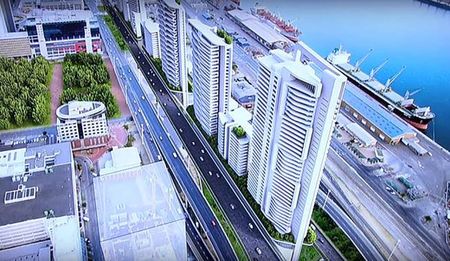
“The DA has cut-and-pasted the ideas but dropped the part that made them affordable: private funding,” Herron claimed.
The new proposal differs significantly, including an underground outbound route and the eventual removal of the existing elevated freeway. But the City has yet to disclose a final cost or funding model.
Herron warned that the proposed tunnel could expose the city and ratepayers to significant cost overruns, pointing to Boston’s Big Dig, where costs rose from an initial estimate of about $2.8-billion to $14.8-billion.
He also questioned the engineering risks of tunnelling through the reclaimed Foreshore, much of it built from dredged material, rubble and waste.
“What will it cost to tunnel through that, Mr Hill-Lewis, and who carries the risk when it overruns?” he asked. DM
Comments
Scroll down to load comments...