



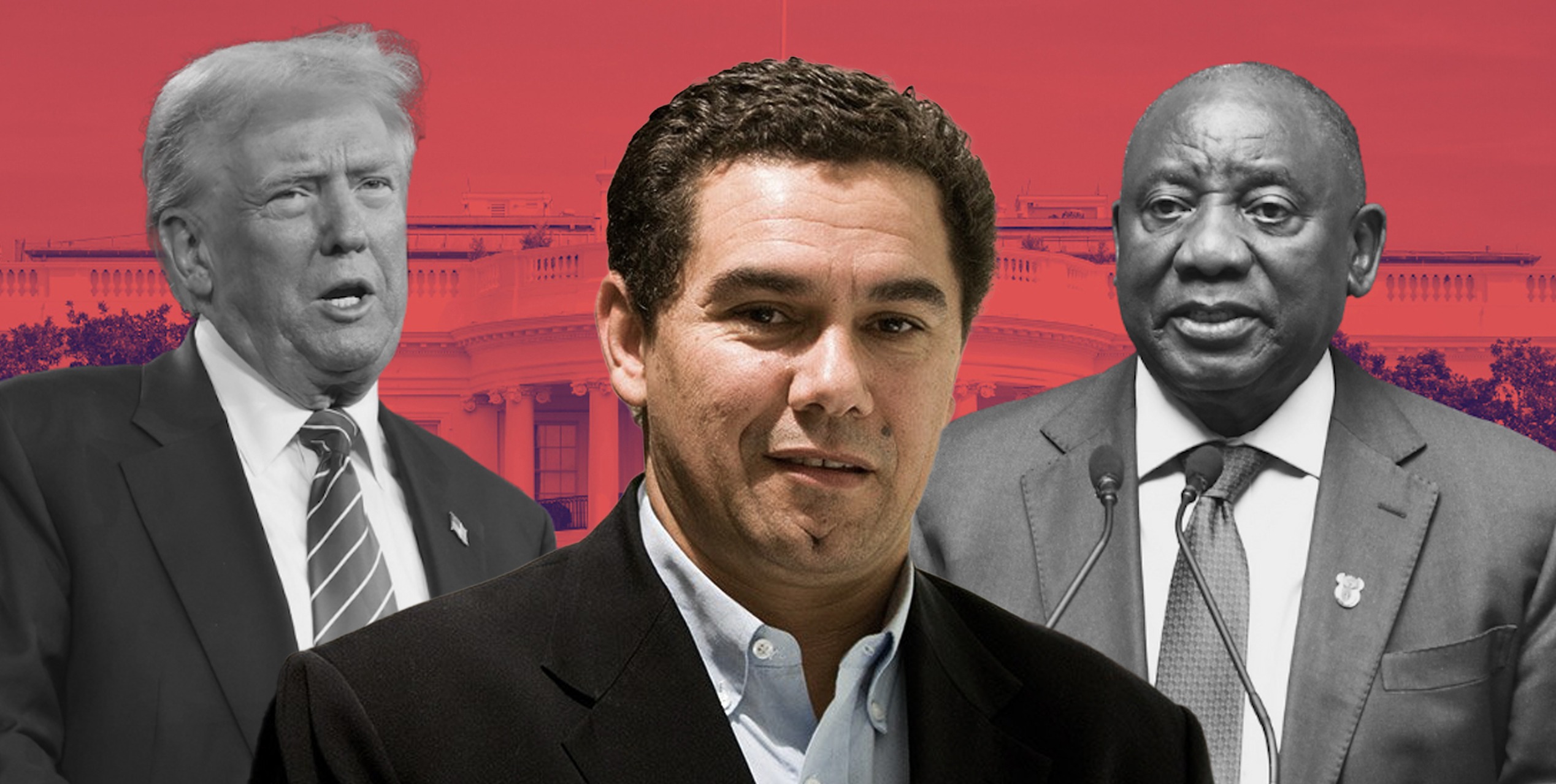
 Illustrative image: (From left) President Donald Trump | Alister Ruiters | President Cyril Ramaphosa. (Photos: Gage Skidmore / Flickr | GCIS | GCIS / Flickr)
The South African government says it is mystified by the US announcement on 15 September that it is imposing punitive targeted travel sanctions on South Africans, because even the US ambassador to South Africa had publicly acknowledged that South Africa has addressed two of Washington’s five key domestic demands (the “five asks”).
Pretoria says it is engaging actively with the US on the other three demands and is making progress on resolving them.
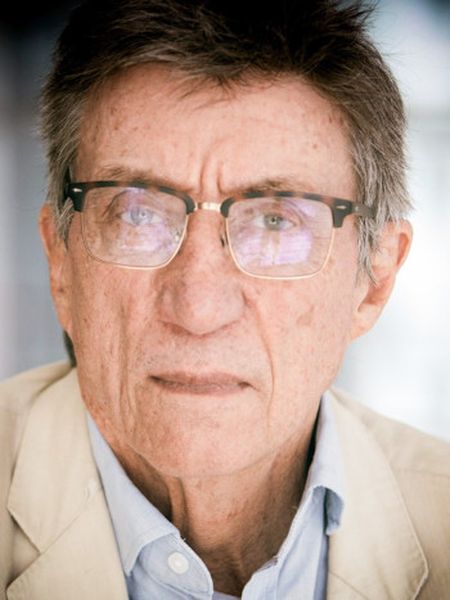
Alistair Ruiters, President Cyril Ramaphosa’s special adviser and a key negotiator with the US for more than a year, said that over the past few days US ambassador Brent Bozell had been using two words: “refusal and rejection… that we refuse to answer the question of the five asks [demands], [that] we reject the five asks. And that’s so far from the truth.”
/file/attachments/orphans/493273151_1118122527011449_695197650941248281_n_607708.jpg "Dr Alistair Ruiters. (Photo: X)")
He said Bozell himself had acknowledged in an interview with Business Day that SA had addressed the ask that Pretoria should not interfere in President Donald Trump administration’s programme of offering refugee status to Afrikaners, whom it claims (without evidence) are being persecuted in SA.
Ruiters said Bozell had also acknowledged that SA had addressed the US demand that SA should rescind expropriation without compensation.
“We both agree that the process is in the Constitutional Court. The ambassador agreed, so we’re waiting for the outcome.”
Ruiters added that in the Business Day interview published on Tuesday that Bozell had indicated “that he thinks that it’s quite likely that the [Expropriation] Act will be declared unconstitutional and then we’ll go back to the drawing board. So he’s happy with that.
“If two out of the five asks have been addressed in the mind of the ambassador, why then the punitive action?” Ruiters asked.
He was referring to the announcement on X by US Secretary of State Marco Rubio, on 15 September, that the US was imposing targeted visa restrictions on unnamed South Africans involved in “race-based discrimination and incitement of imminent violence, as well as uncompensated land seizures” allegedly directed at Afrikaners and other minorities in South Africa.
The five ‘asks’
This was three days after South Africa had sent a letter to Trump addressing in detail his questions about the five asks that Bozell had personally conveyed in a meeting with Ramaphosa on 27 August.
Rubio said South Africa had not adequately addressed these concerns, which Trump had raised in his executive order against South Africa in February 2025. In that order, Trump said that as a result of these concerns, he was offering Afrikaners refugee status in the US. Several hundred have already moved to the US.
/file/attachments/orphans/CRpondershisreplytoTrump3_985648.jpeg "President Cyril Ramaphosa holds a meeting with the United States Ambassador to South Africa, His Excellency Leo Brent Bozell III, at Mahlamba Ndlopfu, his official residence in Tshwane. (Photo: Elmond Jiyane/GCIS)")
Ruiters added that SA was “actively engaged” with the US in trying to resolve the remaining three US “asks”.
“We have files and files of documents on all of these things.”
On the US objection to black economic empowerment (BEE), for instance, he said it was no accident that Ramaphosa had said in this year’s State of the Nation address (Sona) that he was calling for a review of BEE, “to refine, realign and strengthen it”.
And Ramaphosa had said that he would report back by the next Sona. “He specifically says the initial phase of the review will focus on mining and telecommunication sectors.
“He’s met with the minister of telecommunications [Solly Malatsi] on several occasions to have discussions about equity equivalence in the sector.” (Equity equivalence means allowing investors to contribute to transformation funds, for example, rather than ceding 30% equity in their businesses to South African entrepreneurs.)
“We’re talking about that […] all the time. This is not something we’re trying to avoid. We’re trying to find solutions,” Ruiters said.
“We communicate that to the US. What more do we have to do?
“Because the president can’t, by decree, say, ‘I announce that there’s equity equivalence in the following sectors’. We’re a constitutional democracy.”
On the US objection to the chanting of the Kill the Boer struggle song, Ruiters noted that Ramaphosa had signed into law the Prevention and Combating of Hate Crimes and Hate Speech Act 16 of 2023, which criminalises hate crimes and hate speech against other races and ethnicities. (The Constitutional Court has, however, ruled that chanting Kill the Boer is not hate speech)
Ruiters said Ramaphosa would reinforce the message of opposition to hate crime and hate speech in future speeches as part of a systematic national campaign against crime including femicide.
On the fifth US “ask” – that SA should address crimes against white farmers – Ruiters said Pretoria had communicated to the US that the national rural safety strategy had been implemented at 893 of 900 identified rural police stations.
“The Presidency has also met with representatives of AfriForum and Solidarity to discuss rural safety, including discussing AfriForum’s rural safety submissions to the US embassy.”
“We’re not trying to fabricate, or obfuscate. We’re basically saying to them, we are committed to dealing with these issues.”
He confirmed that the US had also urged the government to meet several local interest groups, including AfriForum and Solidarity, to discuss rural safety, which it had been doing regularly since last October or November. He said the US had even suggested it might pay for some of the measures to improve rural safety.
“We’re not trying to fabricate, or obfuscate. We’re basically saying to them, we are committed to dealing with these issues.
“These issues are also important to our country. BEE is something we need to talk about. Crime and rural safety is something we need to talk about as South Africans. None of these issues are stuff we’re trying to run away from. We’re addressing it, but we’re addressing it as South Africans.”
“And if perhaps we’re not communicating effectively, then perhaps let’s talk about it.
“I’ve engaged with the ambassador. So many hours have been spent talking to the ambassador. The reason why we’ve resolved two issues is because of those discussions.”

Describing the run-up to the present impasse, Ruiters said that Bozell had visited Washington last month and had then contacted the SA government to say he wanted to deliver a message directly from his president to President Ramaphosa.
Ramaphosa agreed, and so Bozell met Ramaphosa in the Union Buildings on 27 August (not 26 August as Daily Maverick has previously reported). He delivered the message from Trump verbally.
Ramaphosa gave his response in a letter addressed to Trump delivered on Saturday, 12 September, which set out the progress SA had made in addressing the five asks.
“Until today, we have still not received a reply,” Ruiters said. The only responses had been Rubio’s announcement on X of visa restrictions and several media interviews by Bozell in which he had said things “which to us don’t make sense”.
“It’s difficult to understand, because we’re not quite sure why he hasn’t said it to us directly,” Ruiters said, adding that he wondered why Bozell had “has never had the courtesy” of replying to Ramaphosa’s message, “which was not a rejection and not a refusal” of Trump’s demands.
“We acceded to all the requests in our mind. We might not have said it in the language that they wanted; in the time frame that they wanted. But that’s because we're a sovereign democratic country.
‘SA doesn’t do things by decree’
“We’ve got processes that are governed by our Constitution. We have to issue regulations, go through a process of public consultation. We don’t do things by decree.”
Ruiters said he had held several meetings with Bozell over the past several months. Bozell had his cellphone number as well as that of South Africa’s ambassador to the US, Roelf Meyer.
/file/attachments/2995/roelf-meyer-donald-trump-afrikaner-refugee-programme_584585.jpg)
Ruiters said Bozell could have called both of them at any time to discuss whatever problems America might have had with Ramaphosa’s letter, such as SA’s timeframes.
“Are you trying to resolve this issue or are you trying to escalate this issue?”
Instead, the US had not only taken punitive action, but Bozell had threatened more punitive action (on a post on X last week).
“Are you trying to resolve this issue or are you trying to escalate this issue?” Ruiters asked of the US.
Ruiters said SA might disagree with the US demands, but in the interest of maintaining the strategic relationship it was ready to engage. “The last thing we want […] is job losses, loss of trade, loss of investments.”
He added that he was sure that Bozell felt the same. “He’s come across as someone who seems extremely committed to South Africa. So I don’t know where this is going.”
He stressed that the SA government remained ready to sit down and talk with the US to clarify and resolve the issues.
He said part of the strategic relationship with the US was access to minerals such as the platinum group metals, vanadium and rhodium, which SA had been supplying the US for decades. In his letter to Trump, Ramaphosa had committed himself to continue that supply and to discuss new projects to ensure strong supply chains into the US, while also ensuring SA benefitted by adding value in SA to the critical minerals.
Ruiters said Ramaphosa had written in his letter to Trump that “we want our commercial relationship to grow” and had added that there were “substantial opportunities to increase South African purchases from the United States”.
Trade and exports
Ramaphosa had also said that he wanted to grow US exports in both goods and services to South Africa and had underscored that the US was South Africa’s second-largest trading partner overall and its largest services trade partner and the most significant supplier of critical minerals.
Ramaphosa had also told Trump in the letter that his ambassador, Bozell, had underscored that the reliable supply of the six critical minerals which SA exports to the US was a “key priority for your administration”.
He had added that this was an area in which SA and US interests were closely aligned and where South Africa could make a direct and meaningful contribution to the economic and national security of the US.
Ruiters also clarified that the current negotiations were dealing only with US demands about South Africa’s domestic policy and not foreign policy.
He said when negotiations began last year, the US had had 14 “asks”. But he had insisted these should be consolidated, which they were, to the current five.
Ruiters also disclosed that the US and SA had agreed to separate out geopolitical issues (such as South Africa taking Israel to the International Court of Justice over Gaza) from the domestic ones.
The US still has eight geopolitical asks but negotiations on these would only start when, or if, the five domestic asks have been resolved. DM
Comments
Scroll down to load comments...