




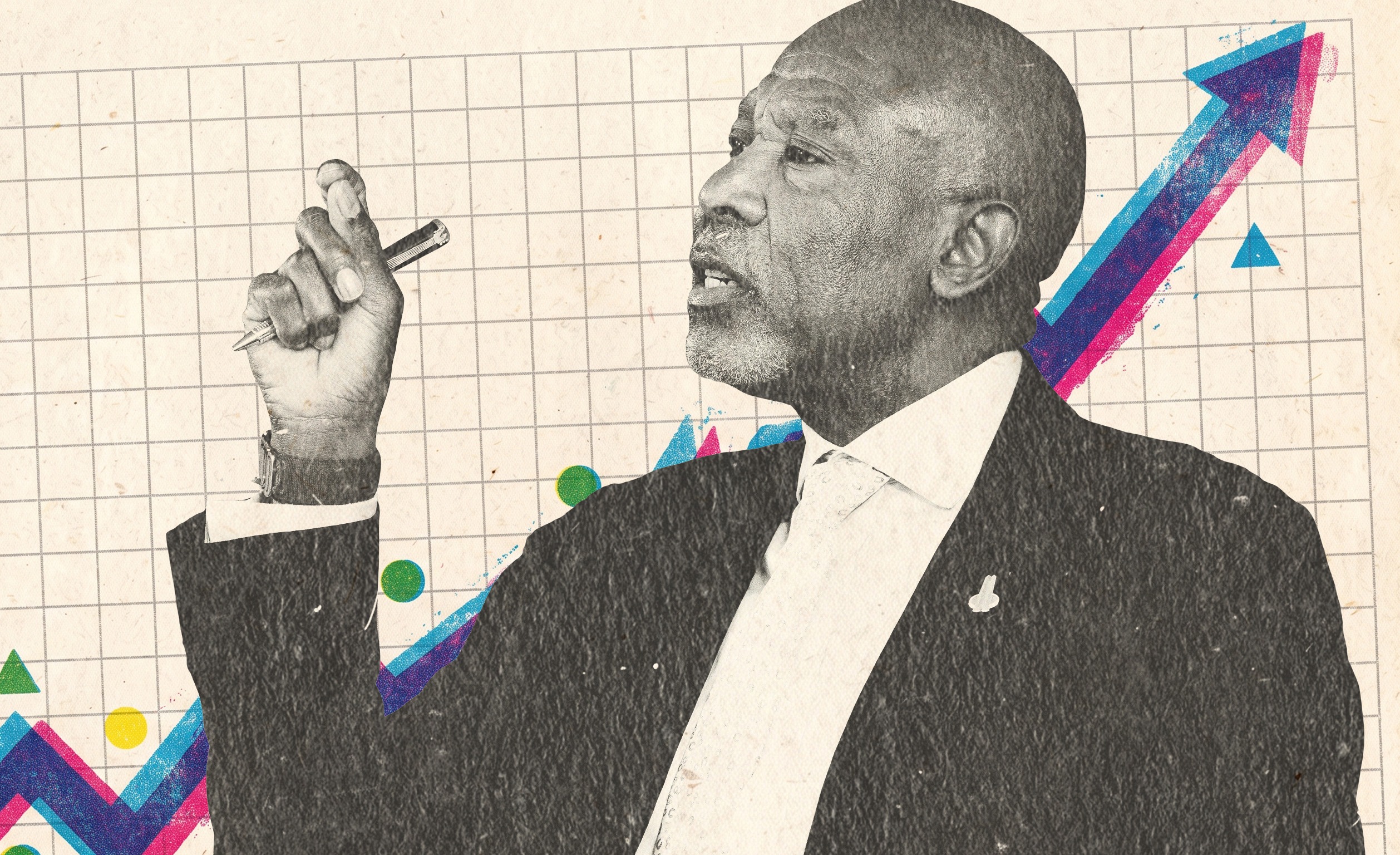
 Illustrative image: Governor of the South African Reserve Bank Lesetja Kganyago (Photo: Gallo Images / Alet Pretorius)
Archbishop Desmond Tutu set us up for failure by handing grocery retailers the perfect commercial opportunity when he flipped Heritage Day into Braai Day.
Even Christmas has the decency to fall on payday, ditto for Reconciliation Day (the next public holiday to look forward to outside of the Local Government Elections).

And this year, to commemorate our annual gathering around the fire, the Monetary Policy Committee (MPC) of the South African Reserve Bank (SARB) decided in a unanimous vote to raise the repo rate by 25 basis points (0.25%), moving it from 7.00% to 7.25%.
This adjustment automatically elevated the commercial benchmark prime lending rate from 10.50% to 10.75% – making your bond and car payment more expensive – and marks the second such increase since Godongwana and Co said we were done with austerity.
The move, however, does not come as a surprise. While headline inflation rose modestly to 4.4% in August 2026, headline CPI is projected to peak at 5.7% in November 2026. Persistent services inflation (5.1% in August) threatens to bleed into broader wages and price-setting behaviour, keeping long-term inflation expectations elevated above the Sarb’s own 3.0% midpoint target.
And let’s not forget that Cyril’s domestic economy contracted by 0.2% in Q2 2026, leading the Sarb to revise its full-year 2026 GDP growth forecast downward to 1.2%.
Into the fire
There seems to be broad consensus among market analysts who view the 25-basis-point increase as a preventive measure designed to anchor inflation expectations rather than the beginning of an extended tightening cycle.
Johann Els (Chief Economist at PSG Financial Services) says that while the unanimous decision was more hawkish than expected, supply-side shocks ultimately dampen demand:
“I expected the decision to be close... However, the fact that it was unanimous was more hawkish than I expected. Supply-side price shocks are initially inflationary, but they are ultimately deflationary for demand and growth... My expectation is no further rate increases after this one, under current circumstances.”
Meanwhile Patrick Buthelezi (Economist at Sanlam Investments) tipped Daily Maverick off about the persistence of underlying price pressures:
“Concerns are more about persistent services inflation which advanced to 5.1% in August. Services inflation tends to influence wages and inflation expectations... Policy is likely to remain higher for longer.”
Strained household spend
But consumer advocacy groups and credit bureaus are warning that the rate hike lands on households already straining under extreme debt-servicing burdens.
“Millions of South Africans who are already battling to afford the basic essentials are reeling from the news,” Neil Roets, CEO of Debt Rescue, wrote in his statement on the decision.
“The rate hike itself is just the tip of the iceberg. Higher borrowing costs affect households directly, but they also flow through to small businesses – a critical part of South Africa’s economy. Pressure on business cash flow can constrain expansion and hiring, while increasing the risk of job losses.”
The common narrative is that rate hikes curb inflation, but consumer spending data is providing an alternate storyline about self-regulation in the biggest contributor to GDP (read: domestic consumption).
“What we’re seeing is not necessarily that consumers are wanting to stop spending, but that they are thinking much more carefully about how they pay and how a purchase fits into their broader monthly spending,” is PayJustNow COO Dean Hyde’s view. “The important distinction is between planning the timing of a purchase you can afford and spending beyond your means.”
Demons of the past
Another popular narrative suggests that South Africa (SA) enjoyed greater economic stability prior to 1994 and the establishment of formal democratic governance and trade unions.
But the empirical macroeconomic data directly contradicts this.
During the 1980s under apartheid rule, SA suffered from severe stagflation, fiscal dominance, double-digit runaway inflation, capital flight and record-high interest rates.
In September 1995, when the country first celebrated Heritage Day, the year-on-year headline consumer inflation rate stood at exactly 8.60%.
The official CPI index value for that month was recorded at 20.2 (when using the contemporary rebased metric where December 2024 equals 100, of course), which represented an increase from the 18.6 index value recorded in September 1994.
This single-digit inflation rate represented a monumental triumph for the SARB, considering that just nine years prior, the country had been trapped in a destructive cycle of inflation that peaked at nearly 21%.
Yes, the rate hike comes at a very bad time for the economic realities playing out in the wallets of South Africans gathering around a fire today, but let that not blind us to the progress we have made. DM
Comments
Scroll down to load comments...