



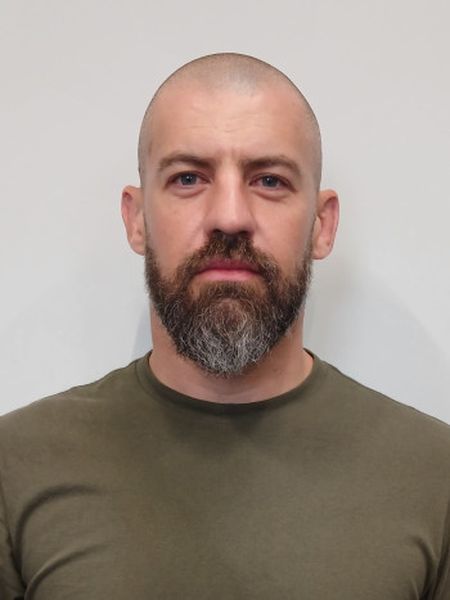
 Siyabulela Mbane, Ntobeko Msome and Xolelwa Msome face a string of murder and fraud charges for their alleged involvement in a Murder for Money syndicate. (Photo: Deon Ferreira)
Last month, a high court judge was gobsmacked to learn that people were being killed by ruthless syndicates so they could profit from funeral policies which the victims were not even aware of.
This drew into question the entire life insurance industry and how easy it is for unsuspecting victims to become the target of organised criminals seeking to profit from their deaths.
But earlier this week, the National Financial Ombud Scheme (NFO) stepped forward and again raised this alarming question, and said urgent changes were needed within the life insurance industry to safeguard the lives of would-be victims.
The simple suggestion seemed like common sense: get consent from the person whose life is being insured.
While a legal expert in the thick of ongoing Murder for Money investigations acknowledges the NFO’s stance as a step in the right direction, he believes further changes are required where certain policy structures are “incentivising” criminals to commit these heinous crimes.

“Getting consent from the person whose life is being insured is certainly a step in the right direction. However, many of these policies offer double, or even triple, payouts [if] a person dies of unnatural causes. As long as these benefits remain in effect, the insurance companies are creating incentives that violent criminals simply cannot resist,” senior public prosecutor advocate Louis Sinclair said.
Last month, Sinclair returned to the Eastern Cape Division of the High Court in Gqeberha, where four accused are facing a laundry list of charges related to a suspected Murder for Money racket in which they allegedly profited by more than R1.7-million from fraudulent funeral policies.
Siyabulela Mbane, husband and wife Ntobeko and Xolelwa Msome and Unathi Peter face charges related to nine murders and 29 fraudulent funeral policies where they are accused of lying about being related to the deceased to profit from their deaths.
/file/attachments/orphans/Riaan-LifeInsuranceChanges_715081.jpg "Siyabulela Mbane, Ntobeko Msome, Xolelwa Msome and Unathi Peter face a string of murder and fraud charges, totalling over R3-million, for their alleged involvement a Murder for Money syndicate. (Photo: Algoa FM)")
This is one of many cases under investigation by the police’s Murder for Money (MFM) task team, established in Nelson Mandela Bay because the metro and the broader Eastern Cape have become a hotbed for life insurance and funeral policy killings in South Africa.
Proposed policy changes
These cases, the many victims they represent and the continuous attention the cases receive in the media, prompted the NFO to voice its strong stance against the status quo in the insurance industry.
“A murder-for-payout racket is rattling the insurance sector, and the Life Division of the NFO has sounded the alarm on these chilling cases surfacing in the media.
“At the same time, the NFO cautions that justice delayed must not become justice denied. Where probes drag on unreasonably, or where police confirm that the beneficiary is not a suspect, insurers may be obliged to assess claims on their merits rather than leave families stranded in uncertainty,” lead ombud of the NFO’s Life Insurance Division, Denise Gabriels, said.
/file/attachments/orphans/Riaan-LifeInsuranceChanges6_874797.jpg "Denise Gabriels, Lead Ombud, Life Insurance Division of the NFO. (Photo: Supplied / NFO)")
The NFO said that media reports had highlighted the “devastating social consequences of insurance-related crime” and subsequently raised legitimate concerns over whether additional measures and safeguards were needed within the insurance industry to protect the public.
“One of the most effective safeguards aimed at reducing opportunities for abuse before policies are issued would be a requirement that insurers obtain the informed consent of the life assured whenever cover is taken out on his or her life by another person.
“A mandatory consent requirement would enhance transparency, strengthen consumer protection, reduce opportunities for fraud and abuse and assist insurers in verifying the legitimacy of policies at inception,” Gabriels said.
She said that while many insurance providers had such measures in place, these practices were not always uniform, and the NFO believed improved standards across the industry would lead to better services for consumers.
On the other hand, the NFO said criminal allegations did not automatically equal a conviction and therefore it remained committed to ensuring that all parties were treated fairly.
“It would be unjust for insurers and beneficiaries to remain in a state of uncertainty indefinitely while awaiting the outcome of a criminal investigation that shows little progress. Where there have been unreasonable delays in finalising criminal matters, the NFO may require the insurer to assess the claim on its merits based on the available evidence and the terms and conditions of the policy.
“This approach recognises that while public policy requires vigilance against fraudulent and unlawful claims, indefinite delays may also undermine the rights of innocent policyholders and beneficiaries,” Gabriels added.
Incentivising Murder for Money
Sanlam Retail Mass chief executive Bongani Madikiza said their company welcomed the NFO’s inputs, but said no “single intervention” will solve the Murder for Money conundrum.
“We welcome measures that can strengthen the protection of customers, including the proposal for proof of the life assured’s informed consent before a policy is issued. There is also merit in exploring additional safeguards.”
Madikiza said the financial services industry has introduced various ways to improve verification and reduce the risk of fraud, including the provision of certain documents like a proof of address, bank statements and payslips.
While Sinclair agrees with the NFO’s approach, he does not believe consent from the insured person alone is enough to deter criminal syndicates from bleeding the system.
He said ruthless syndicates could easily threaten or blackmail victims into giving consent.
“The bigger concern from my point of view are the insurance packages that offer double or triple payouts when the insured person suffers an accidental death.
“In several of these MFM cases, we see an insurance policy being upgraded to include these benefits shortly before the victim is killed. It is like these additional payouts serve as an incentive for the syndicates as their profits increase.”
Sinclair believes doing away with these payout multipliers, or changing the policies so that they do not pay out in the event of an unnatural death, would serve as a better deterrent for violent syndicates, as the rewards would be considerably less attractive.
However, Sinclair said this would have to be an industry-wide decision, because as long as one company still offered such options, the others would not scrap them for fear of losing clients to their competitors.
“As long as insurance providers keep dangling that carrot, murder for money syndicates will keep popping up,” Sinclair said. DM
Comments
Scroll down to load comments...