




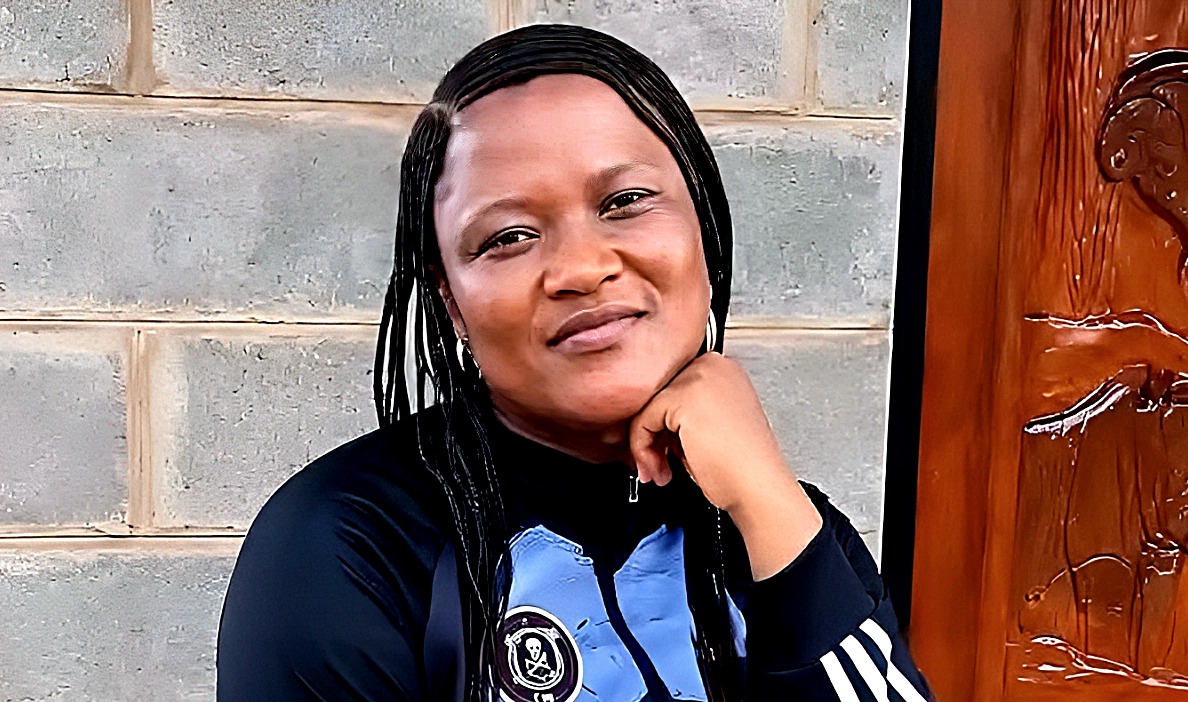
 Itumeleng Kekana (32) was found dead on Great North Road in Pomona, Kempton Park, on 3 August 2026. (Photo: The Instigator / X)
Itumeleng Kekana, from Mmakwane Village in QwaQwa in the Free State, went missing on 17 July 2026.
She lived and worked in Kempton Park, and according to her older brother Themba Kekana, 44, she sold beauty products at a local shop.
Themba last spoke to his sister on the morning she disappeared.
“On 17 July it was my birthday. The last time I spoke to her was that morning. She was excitable and cheerfully wished me a happy birthday,” he said.
The two spoke regularly, but he did not hear from his sister again for the rest of the day.
“On 18 July, my calls were no longer going through.”
Later that day, he contacted Itumeleng’s neighbour, who told Themba that she had left the previous evening at about 7pm, saying she was going to see someone. The neighbour said Itumeleng did not say where she was going or who she intended to meet. The neighbour assumed she was meeting a client to sell beauty products.
/file/attachments/orphans/Tumi-Itumeleng-Kempton-Killing1_576203.jpg "Themba Kekana, 44, is Itumeleng Kekana's oldest brother.
<br>(Screengrab: SABCNews / X)")
After realising his sister was missing, Themba and other relatives travelled to Kempton Park on 19 July to search for her.
They made enquiries at police stations, hospitals and mortuaries before receiving devastating news on 3 August.
“On 3 August there was a man on the way to work. He didn’t end up going to work because he got the shock of his life when he saw her,” Themba said.
The man had found Itumeleng’s body.
Itumeleng was the youngest of seven siblings and left behind both her parents and a 14-year-old daughter. She was laid to rest in QwaQwa on 22 August.
Themba told Daily Maverick that he saw his sister’s remains shortly after they were discovered and again at the mortuary.
Kempton Park SAPS spokesperson Sergeant Dipou Ditshego said Itumeleng’s decomposing body was found in the bushes next to the road with multiple stab wounds.
Themba says he has pleaded with investigating officers for CCTV footage from a camera near where Itumeleng’s remains were found, as he believes it could provide crucial information that could help identify Itumeleng’s killer or killers.
Itumeleng is one of the nine women whose bodies have been discovered across Ekurhuleni since July. Three of the women have so far been identified.
The SAPS has confirmed that a ninth body of a woman was discovered in Dawn Park on Thursday morning.
There are no details available yet on the state of the body or if it bears any resemblance to the other bodies found in and around Kempton Park.
The police have appealed to residents to share any information that may help the investigation.
The latest killing would be added to the investigations into the deaths of women in Ekurhuleni.
On Wednesday evening, 16 September 2026, the SAPS said that 38-year-old Dineo Evelyn Motapane’s family positively identified her body at the Springs mortuary.
Dineo, her family said, was last seen alive on Sunday. They hadn’t reported her as missing.
Acting National Police Commissioner Lieutenant General Puleng Dimpane offered her condolences to Motapane’s family and said investigations into the deaths of the women were being intensified.
SAPS said a multidisciplinary team of investigators and specialists was continuing to work “around the clock” to establish the circumstances surrounding each case and identify those responsible.
How evidence is collected
With five women remaining unidentified, the police are appealing to families of missing women to come forward and assist with the process.
So far, the bodies of the women have been found in Kempton Park, Rhodesfield, Olifantsfontein, Clayville, Springs and Dawn Park. Police are trying to establish whether the cases are connected.
Police have cautioned that no link between the cases has been confirmed, saying investigators are comparing the circumstances, evidence and profiles of the victims before reaching a conclusion.
Yesterday, acting Police Minister Firoz Cachalia said the investigation had been prioritised, while police have deployed specialised investigators and forensic resources to examine the cases.
The DA has offered to add R500,000 to the cash reward for information that could lead to the arrest and prosecution of those responsible for the murders.
Forensic specialist Brenda Thomas told Daily Maverick how police and forensic services were likely to investigate the murders, how evidence was usually collected and how cases could be linked.
Brenda Thomas is a pseudonym used to protect the identity of the forensic expert who has previously worked within SAPS and continues to work closely with police and forensic structures.
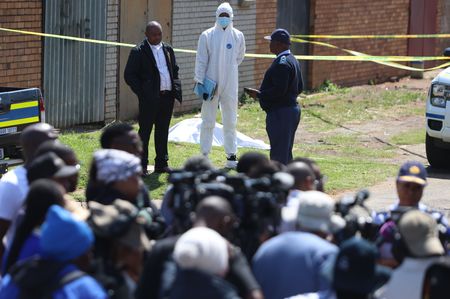
When a death is reported, local police, including an investigating officer, attend the scene, she explained. The investigating officer then calls in the Local Criminal Record Centre, including photographers and fingerprint experts, to process the scene.
/file/attachments/orphans/Felix-Tumi-Ekurhuleni-murders3_920254.jpg "Police investigate the crime scene in Olifantsfontein where the body of the fifth victim was discovered on 14 September 2026. (Photo: Felix Dlangamandla)")
Thomas said the thoroughness of that process could depend on how the responding officer initially classified the scene. Where a body shows no obvious signs of trauma, for example, fewer precautions may be taken, such as bagging the hands or preserving trace evidence.
“It also very much relies on the person responding to the scene and what they see, and how much experience they have, to classify it correctly, to launch the correct investigation, and have the right people attend and process the scene.”
According to Thomas, inconsistencies in how scenes are classified can contribute to cases being missed or undercounted as part of a wider series. This could help explain why one or two victims were not initially included in the overall investigation.
“Because it’s in different police stations and different jurisdictions, you might not actually pick up a pattern quickly enough. It’s only when they start comparing, and someone raises the flag to say, ‘there’s quite a bit happening in our area’, that we should look into it.”
Once police release a body from the crime scene, it is collected by the mortuary with signed paperwork. A preliminary autopsy is conducted before the body undergoes a full autopsy.
At the mortuary, samples are collected based on the information available from the scene. A suspected rape and murder case would receive a full kit test, while a case where the cause of death is unclear may not.
The investigating officer may also attend the autopsy. According to Thomas, their presence can affect evidence handling. If the officer is absent, evidence collected is kept in a safe pending collection and, in some cases, is never collected.
DNA backlogs and matching
Samples are sent to the SAPS DNA laboratory, which has a severe backlog. Thomas said turnaround times are slow and inconsistent, including in GBV cases, despite previous presidential directives prioritising such cases.
“The lab, as much as they say they don’t, they do have a backlog. So how quickly that kit will be processed is anyone’s guess,” said Thomas.
DNA profiles are compared against a national DNA database with separate indices for crime-scene samples, convicted offenders for Schedule 8 offences, missing persons and their relatives, and an exclusion database containing the DNA of laboratory staff to identify possible contamination.
A “hit” can establish a link between samples or scenes, but does not by itself identify a person until there is a suspect against whom the DNA can be compared.
Thomas said timing is critical because DNA evidence can degrade depending on storage conditions and temperature. Delays can also mean results are not available before a case reaches court.
Identifying a possible serial pattern
Thomas also pointed to gaps between police jurisdictions, saying there was no shared real-time database across police stations. This meant patterns could go unnoticed until someone identified a cluster of cases.
According to Thomas, serial killers often adapt their strategies until they find one that works best, which could lead to differences in cases where one killer is responsible.
Once a case is suspected to be serial, SAPS’s specialised investigative unit, which handles psychologically motivated and serial crimes, becomes involved and can compare DNA and other evidence across cases.
Thomas said an “area of comfort”, where an offender lives, works or is familiar with, is a classic indicator of geographical clustering in serial crimes.
She also, however, acknowledged that South Africa’s high rates of crime, femicide and murder meant that cases occurring in the same area could plausibly be unrelated.
Thomas said there was no real-time national database or trigger system that linked community-level cases across jurisdictions. Instead, police stations reported aggregate crime statistics upwards. She argued that even a database would do little to change outcomes without corresponding investment in police resources.
“There can be a database, but if the police don’t have the resources and the things to combat this crime or do what needs to be done, nothing’s going to change.” DM
This article was updated on 17 September 2026 at 955am to include the discovery of a ninth body.
Comments
Scroll down to load comments...