




 Illustrative image: Informal settlement. (Photo: iStock) | Sassa logo. (Source: sassa.gov.za) | Gavel. (Photo: iStock)
In January last year, the Gauteng Division of the High Court in Pretoria handed down a judgment that found that the Social Relief of Distress (SRD) grant system was unlawfully designed in that it excluded millions of otherwise eligible applicants.
On 25 August 2026, the State appealed against that high court judgment in the Supreme Court of Appeal in Bloemfontein.
In the high court, last year the Institute for Economic Justice (IEJ) and #PayTheGrants, represented by the Socio-Economic Rights Institute (Seri), brought the case against the minister of social development and the South African Social Security Agency.
The high court had found the system of online-only application, flawed bank verification and database checks, restrictive income assessments and an appeals process that repeats the same problematic verification mechanisms, to be unlawful and unconstitutional.
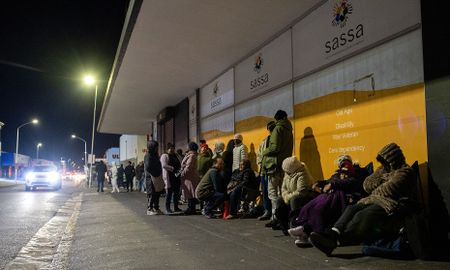
The case also dealt with the adequacy of the SRD grant and the income threshold used to determine eligibility. The food poverty line stands at R855, and the grant remains at R370 a month, while the income threshold stands at R624 a month, despite inflation.
The applicants had argued that if the grant had kept up with inflation since 2020, it would now be over R470. They had further argued that government had a constitutional obligation to progressively improve access to social assistance, rather than allowing both the value of the grant and eligibility thresholds to deteriorate in real terms.
The litigation also challenged the failure to pay many people who have already been approved for the SRD grant. This was as millions of beneficiaries continued to experience delayed or missed payments despite having successfully qualified. Approval without payment, they added, amounted to a denial of the constitutional right to social assistance.
Treasury
Advocate Gilbert Marcus SC, representing the state and National Treasury in the Supreme Court of Appeal (SCA), laid out the government’s argument on Tuesday.
“The heart of this matter is a fundamental divergence of political, economic and legal theory. On the one hand, there is the laudable desire – which is shared by Treasury – to widen the net of social assistance as much as possible,” the advocate explained.
“The divergence is how to achieve that end and which branch of government can and should do so. Treasury has set out in considerable detail that it cannot afford to do more, having regard to the multiple demands on government and the depressed state of the economy.”
Treasury is conscious of the “extreme levels of poverty” in the country, and Marcus outlined that South Africa has one of the highest fiscal spending on social protection of any developing or emerging market country in the world.
The problem, said Marcus, is that Government can only spend what it extracts through taxation and that borrowing money is just deferred taxation.
“Treasury’s medium- to long-term plan is to facilitate and promote economic growth in order to create jobs. This is presently accompanied by huge expenditure on social assistance… It is unrealistic and counterproductive to commit the state to providing significantly more resources to grants as opposed to investing more to create opportunities for people to have sustainable livelihoods,” Marcus said.
The SRD grant is a stop-gap measure, he added.
Marcus went on to list Government initiatives other than the grant system, which are designed to aid in the progressive realisation of socioeconomic rights, such as the Expanded Public Works Programme, which ended in 2024, and the National School Nutrition Programme.
He explained that when it came to affordability, if the wider relief sought by the IEJ were granted, it would require additional expenditure of between R93-billion and R109-billion.
“The argument [by the IEJ] is premised on the notion that the grant can always be made affordable by raising taxes or borrowing. That, we submit, is an artificial and unsustainable notion of affordability.”
He put forward that the SRD is unlike other (permanent) grants, because it was a temporary measure brought under the Disaster Management Act, which limits its lifespan. He said inflationary increases should prioritise the permanent grants.
Online applications and database verifications prevent fraud and ensure eligibility, he said.
“The argument [by the IEJ] is premised on the notion that the grant can always be made affordable by raising taxes or borrowing. That, we submit, is an artificial and unsustainable notion of affordability,” Marcus said.
Sassa
/file/attachments/orphans/SASSAOfficeBelvilleDH6551copy_424897.jpg "A queue outside the SASSA office in Belville Cape Town. (Photo: David Harrison)")
Advocate Herman van Eeden, representing the Department of Social Development (DSD), said that there are now kiosks at Sassa offices, which can now assist people who don’t have electronic platforms to access the grants.
However, responding to this, advocate Jason Brickhill, representing Seri as counsel for the applicants, said the kiosks have been piloted at some offices but not countrywide. “You cannot walk into any Sassa office and ask to be assisted,” he said.
“The online system is what is allowing DSD to reach 15 million people on a monthly basis. The human resources in DSD and Sassa can never replicate 15 million people,” Van Eeden countered in his submission.
The verification methodology is reasonable, he said, and if it is changed by order of the court, the payments will come to a halt as the programme will have to be re-designed – as it is an online-only system.
In terms of appeals, van Eeden said that unsuccessful applicants are directly advised on the reasons for rejection, and then an applicant can update his or her information on the relevant database with the correct information. The appeal tribunal verifies the information received from database resources to determine whether the applicant did qualify.
The problem, Brickhill mentioned later on in his submission, is the errors in the system.
“Some of the sources indicate that the database exclusion errors may be as high as 33% – so 33% of applicants are wrongly excluded.”
Brickhill said there are one million appeals a month, and 12 million a year, with 99% of appeals refused.
‘That ought to be a massive red flag,” he said.
/file/attachments/orphans/ED_460744_330182.jpg "Minister Dina Pule of Social Development. (Photo: Gallo Images/Papi Morake)")
IEJ
Brickhill referenced the grant value increase resulting in additional expenditure of R93-billion to R109-billion.
“That’s what they put before you, and they place those big numbers we submit before the court as they did in the high court because they are significant sums. But what they failed to do is to place them in perspective,” Brickhill said.
With the R20 increase that was implemented, it cost an additional R1.7-billion for the 8.5 million approved beneficiaries, he said.
Increasing the grant value to R500 or R600 would have a significant impact on poverty, which is something the DSD had suggested in mid-2023, he explained. He stipulated that the order does not dictate exactly what the next increases should be, but affordability will weigh on that decision.
The issue of ad hoc payments and their impact on grant eligibility means that it creates a perverse incentive for people to starve to qualify for the grant, he said. DSD and Treasury should engage on increasing grant values and the income threshold.
The high number of appeals and the low success rate indicates a broken system, Brickhill said, with a need for comprehensive reforms.
“Five percent of approved beneficiaries remained unpaid for two years. It’s not a historic concern. In fact, on the papers, it remains a pressing concern at a matter at scale.”
Friend of the court
The Global Center on AI Governance, represented by the Centre for Applied Legal Studies (CALS) Lethogonolo Mokgoaroane, appeared as an amicus curiae (friend of the court) in the Supreme Court of Appeal (SCA) case.
In terms of the online-only system, “An automated decision for survival support requires individualised, intelligible reasons. A bare rejection delivered online does not meet the constitutional floor for administrative decision-making.”
“Where a person’s access to something they depend on, whether it’s credit, a benefit, or sustenance itself, is in truth determined by an automated processing of their data, the decision does not escape legal scrutiny because a machine produced it,” Mokgoaroane said.
Additionally, “ A system reachable only online excludes the very people who … have neither smartphones nor internet. Access online or in person is not a convenience. It is a condition of equal access to that right.”
The use of the verification process, which is fully automated, is unfair and unreasonable, she said, citing Judge Twala’s findings.
The unreliability of the government databases was accepted by both parties, she said. The evidence of erroneous exclusion was not uncontroverted.
“Behind the word ‘automated’ are millions [to whom] access to food and to means of survival turn on these systems, these decisions made. The amicus has placed before the court, comparatively in different jurisdictions, in which courts have confronted the same question, and it has offered a principle to ensure that even at the scale of millions, each person’s rights to dignity, to equality, to just administrative action are not lost to the machine.”
The appellants will have two weeks to respond with additional affidavits, and respondents will have a week for reply. Thereafter, the Supreme Court of Appeal will rule on the case, and judgment is reserved. DM
Comments
Scroll down to load comments...