




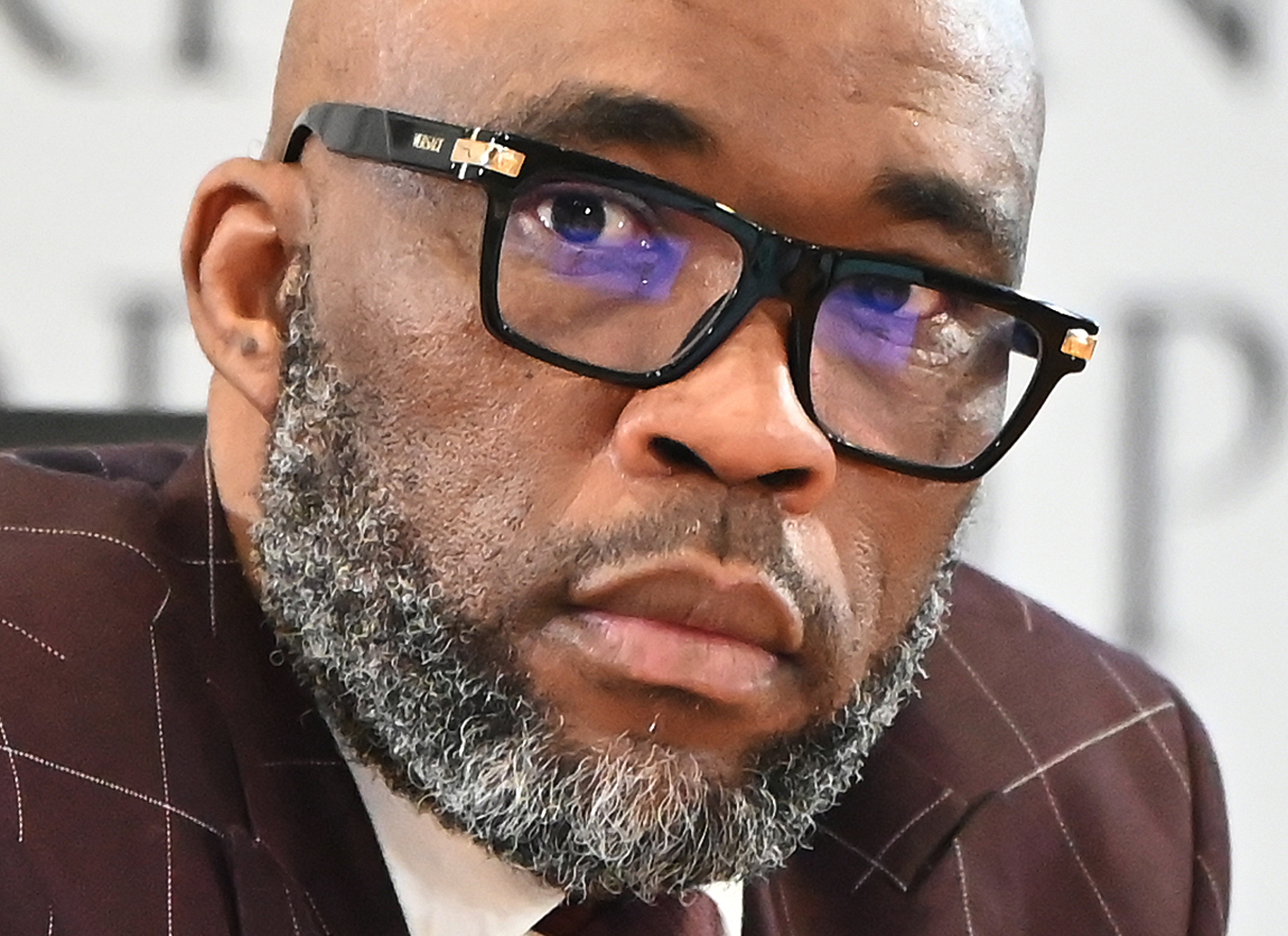
 Vusimusi ‘Cat’ Matlala testifies at the Madlanga Commission of Inquiry in Pretoria on 24 August 2026. (Photo: Gallo Images / Frennie Shivambu)
On Monday, the Madlanga Commission turned to Vusimuzi “Cat” Matlala’s continued reluctance to answer questions, which he has asserted is his constitutional privilege against self-incrimination when it comes to matters linked to investigations that could incriminate him.
The commission, however, is now testing the limits of that claim, asking: does the privilege give Matlala a broad shield against questions about his relationships with senior police officials, or does it protect only answers that pose a real risk of self-incrimination?
Matlala argues that answering questions about the R228-million Medicare24 tender and other matters could prejudice his pending criminal case.
Suspended national police commissioner Fannie Masemola is a co-accused in the Medicare24 case, but unlike the 12 police officials charged with fraud, corruption and related offences, he faces four charges under the Public Finance Management Act.
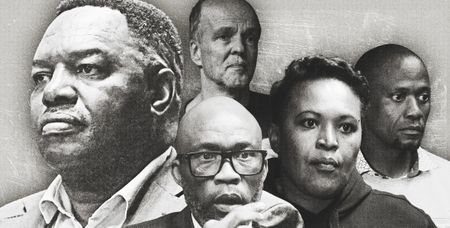
Last week, Matlala told the Madlanga Commission about his relationship with controversial ANC-linked North West businessman Suliman Carrim, including a R15-million loan and their shared visits to the late taxi boss Jothan Msibi, whom authorities have linked to the alleged Big Five cartel.
Matlala also confirmed meeting KwaZulu-Natal Police Commissioner Lt-Gen Nhlanhla Mkhwanazi once in Durban in early 2025, but said they had no relationship. He was also questioned about embattled Crime Intelligence officer Feroz Khan, who was shot in June shortly before he was due to testify.

But a more pointed question emerged: why did Matlala omit suspended deputy police commissioner Sibiya from his affidavit filed on 17 August, and again fail to mention him when he testified on 24 August?
Matlala’s bid to shield Sibiya relationship challenged
Matlala’s attempt to invoke his constitutional privilege against self-incrimination to avoid questions about his relationship with suspended deputy national police commissioner Sibiya came under sustained scrutiny at the Madlanga Commission on Monday.
/file/attachments/orphans/idac-madlanga-caryn8_721331.jpg "Advocate Mahlape Sello SC at the Madlanga Commission in Pretoria, South Africa, on July 21, 2026. (Photo: Felix Dlangamandla)")
Evidence leader advocate Mahlape Sello, SC, challenged Matlala to explain how discussing his relationship with Sibiya could expose him to criminal liability. Matlala has argued that he cannot discuss the relationship because Sibiya is allegedly the subject of an investigation linked to the Medicare24 tender, and recordings involving the two.
Sello pointed out that the privilege was not a blanket protection against answering questions. “Logic dictates,” she said, that a person can only incriminate themselves in relation to a specific offence.
She pressed Matlala: “Incriminate yourself in what?”
Commission’s chairperson Justice Madlanga also referred to Constitutional Court authority requiring a claim of privilege to fall within clearly defined parameters, rather than being asserted in general terms.
/file/attachments/orphans/ED_596444_142659.jpg "General Shadrack Sibiya (Deputy National Police Commissioner for Crime Detection ) testifies at Madlanga Commission Of Inquiry at Brigette Mabandla Judicial College on February 18, 2026 in Pretoria, South Africa. President Cyril Ramaphosa established the commission to investigate and report on the veracity, scope, and extent of the allegations made on 6 July 2025 by KwaZulu-Natal (KZN) Police Commissioner Lieutenant-General Nhlanhla Mkhwanazi that South Africa’s criminal justice system was compromised. (Photo: Gallo Images / Frennie Shivambu)")
Matlala said discussing Sibiya could force him to address matters relating to the Medicare24 investigation, including allegations of fraud and money laundering, which he said he did not know how to explain without going into the investigation itself.
Sello then pressed him on the connection between Sibiya and the charges Matlala faces.
“Sibiya is not a co-accused, but maintained that he was being investigated by the Independent Directorate Against Corruption (Idac) in connection with the Medicare24 tender,” Matlala said.
Asked what evidence he had that Sibiya was under investigation, Matlala said he knew because he had been questioned about Sibiya and had made a section 204 statement during those inquiries.
Sello challenged him, saying his assertion that Sibiya was under investigation was not enough to justify refusing to answer questions.
/file/attachments/orphans/ED_620130_670496.jpg "Vusimusi “Cat” Matlala testifies at the Madlanga Commission of Inquiry at Brigette Mabandla Judicial College on August 24, 2026 in Pretoria, South Africa. President Cyril Ramaphosa established the commission to investigate and report on the veracity, scope, and extent of the allegations made on 6 July 2025 by KwaZulu-Natal (KZN) Police Commissioner Lieutenant-General Nhlanhla Mkhwanazi that South Africa’s criminal justice system was compromised. (Photo: Gallo Images / Frennie Shivambu)")
Matlala maintained that going further would require him to disclose the contents of the investigation.
He ultimately sought to minimise the relationship, saying Sibiya was not his friend and that their communication had been limited. He said he had emailed Sibiya directly once, had never called him and had communicated with him mainly through Sergeant Nkosi (Sergeant Fannie Nkosi, a member of Gauteng’s Organised Crime Unit, who appears to have acted as a conduit between alleged members and associates of the Big Five organised crime group and the police) on about four occasions.
The exchange leaves a central question for the commission: is Matlala invoking self-incrimination to protect himself from a genuine criminal risk, or using the pending investigation to shield him against scrutiny of his dealings with Sibiya?
Section 204 affidavit becomes key battleground
A crucial new fault line has emerged in Matlala’s self-incrimination application: what exactly is the Section 204 affidavit he repeatedly invokes, and does it give him a legal basis to refuse to answer questions before the Madlanga Commission?
Evidence leader Sello challenged Matlala on his repeated references to a Section 204 statement in the Medicare24 matter. Sello pointed out that a Section 204 witness is ordinarily a person who is granted an indemnity from prosecution in return for giving truthful and complete evidence.
Matlala rejected that characterisation, saying: “I’m not a Section 204 witness.” Sello then asked him to clarify which Section 204 statement he was referring to.
/file/attachments/orphans/ED_620156_561366.jpg "Vusimusi “Cat” Matlala legal team at the Madlanga Commission of Inquiry at Brigette Mabandla Judicial College on August 24, 2026 in Pretoria, South Africa. President Cyril Ramaphosa established the commission to investigate and report on the veracity, scope, and extent of the allegations made on 6 July 2025 by KwaZulu-Natal (KZN) Police Commissioner Lieutenant-General Nhlanhla Mkhwanazi that South Africa’s criminal justice system was compromised. (Photo: Gallo Images / Frennie Shivambu)")
Matlala’s counsel, advocate Fatima Missi, intervened. She argued that the document was a privileged affidavit containing information Matlala provided while he was being investigated and that his attorney, as an officer of the court, could confirm that he remained a suspect in relation to matters covered by it.
But this immediately created a problem for the commission: the commissioners and evidence leaders have not been given the affidavit Matlala repeatedly relies on to justify his refusal to answer questions.
/file/attachments/orphans/Madlanga14_777051.jpg "Commissioner Sesi Baloyi at the Madlanga Commission in Pretoria, South Africa, on July 21, 2026. (Photo: Felix Dlangamandla)")
Commissioner Sesi Baloyi SC put the difficulty bluntly: how could the commission determine whether Matlala’s reliance on Section 204 was valid without seeing the document?
Missi proposed that an attorney could inspect the affidavit and confirm its contents sufficiently for the commission to determine whether Matlala was entitled to claim privilege.
Evidence leader Sello offered another option: the affidavit could be provided to the commission and evidence leaders on a confidential basis, allowing them to assess precisely what rights Matlala was asserting.
Commissioner Baloyi then challenged the logic of relying on the attorney as an officer of the court. If the commission, commissioners and evidence leaders were themselves officers of the court or a constitutional body made up largely of lawyers, she asked, why should they simply accept an attorney’s assurance without being allowed to examine the document?
The issue is crucial because Matlala repeatedly tells the commission, in effect, “I cannot speak to this because I am being investigated”, while refusing to provide the underlying document that he says establishes that basis.
Missi argued that disclosure could itself defeat the protection she says Matlala enjoys. She relied on section 105(10) of the Criminal Procedure Act, arguing that where a person ceases to be a State witness, information disclosed in the course of the process may remain protected. Her concern was that placing the affidavit before the commission could expose information over which Matlala claims privilege.
Sello then introduced another significant complication. She put it to Matlala that he had entered into a plea-and-sentence agreement with the State in the Medicare24 matter, which was presented to court, but ultimately rejected after the court made a counter-proposal involving a heavier sentence. Matlala rejected that counter-proposal on 13 July 2026.
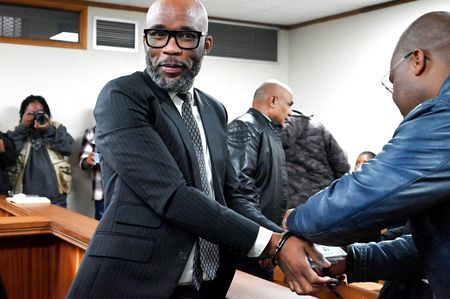
Sello’s argument was that, once Matlala rejected the agreement, the plea-and-sentence agreement fell away and became null and void. The evidence leader therefore questioned why documents generated during those negotiations should continue to be used by Matlala as the basis for claiming protection before the Commission.
Matlala’s cross-examination will continue on Tuesday. DM
Comments
Scroll down to load comments...