



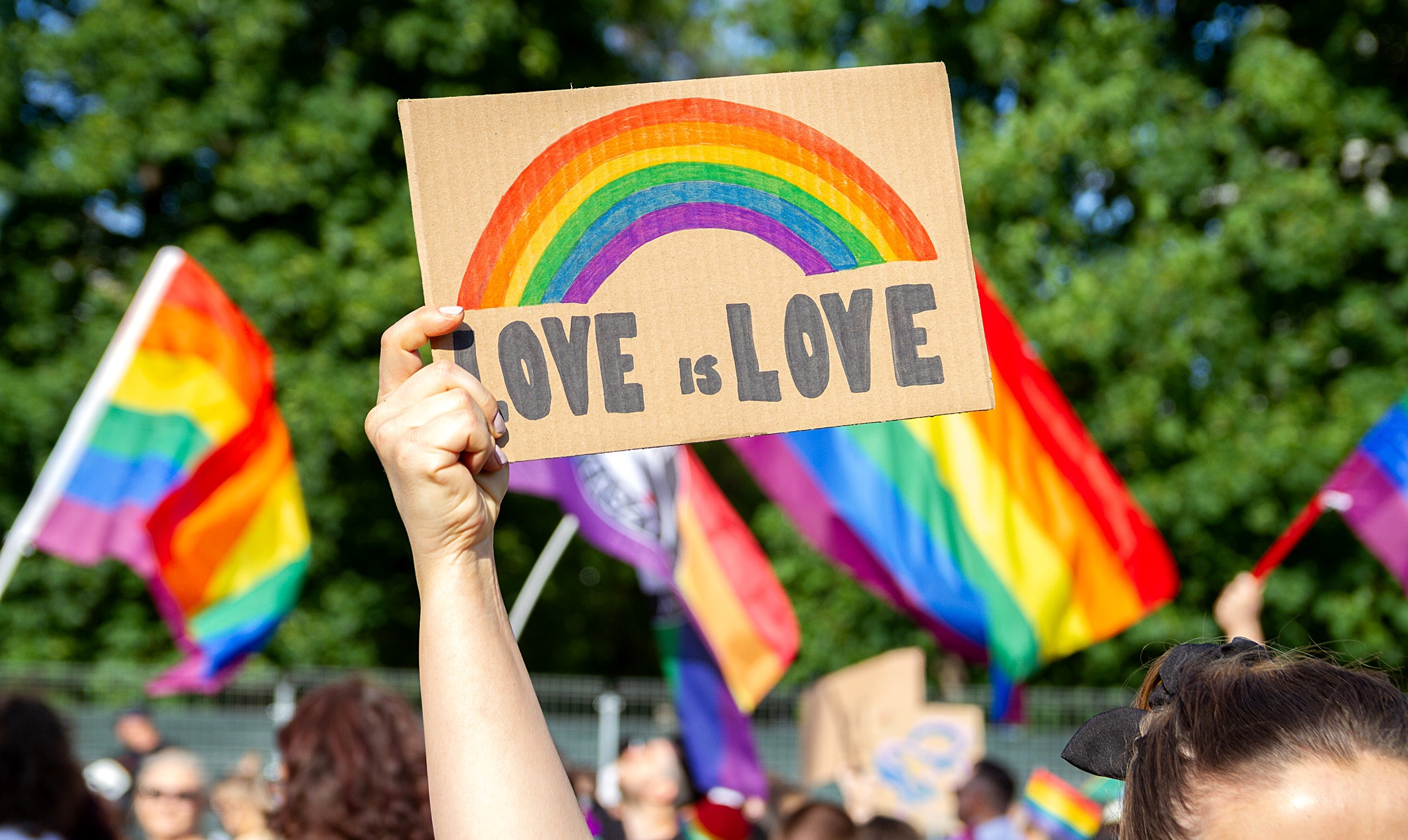
 The Department of Basic Education recently confirmed that its long-awaited guidelines on Sexual Orientation, Gender Identity, Expression and Sex Characteristics are in the ‘advanced stages’ of finalisation. (Photo: iStock)
The July controversy over the flying of the Pride flag at Bishops Diocesan College has led to scrutiny of the Department of Basic Education’s (DBE’s) long-awaited guidelines on sexual orientation, gender identity, expression and sex characteristics.
The DBE recently confirmed that the guidelines are in the “advanced stages” of finalisation. Framed as part of broader anti-bullying measures, the policy promises to help schools create safer, more affirming environments for LGBTQI+ youth.
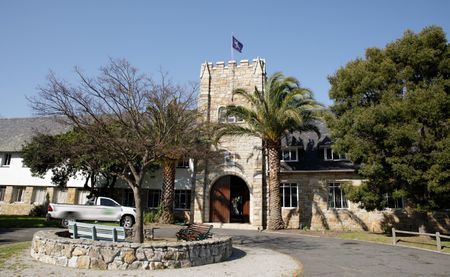
For a South African learner, seven years spans almost their entire school journey from primary phase to matric graduation. But, in the administrative corridors of the Department of Basic Education (DBE), seven years is also how long a national policy meant to protect vulnerable learners from discrimination has remained trapped in drafting loops.
“The Minister can confirm that we are at advanced stages of finalising the inclusive guidelines to provide practical but non-binding guidance to empower schools to create more inclusive spaces,” said department spokesperson Lukhanyo Vangqa.
/file/attachments/orphans/Giuseppe-Pride-at-High-school6_938471.jpg "The Queer Pride flag was hoisted during Pride Month at Bishops Diocesan College for the first time in 2021, although there was a backlash. (Photo: Supplied / Bishops Diocesan College)")
Vangqa added that while the policy remained under development, provincial education departments were expected to support schools on an ad-hoc basis, “applying common-sense judgement that prioritises the interests of the learner”.
However, the Social Inclusion in Education Working Group — a coalition of parents, civil society and education experts — warned against framing the guidelines as optional. The group stressed the document created no new rights, but simply provided operational steps for existing constitutional duties protecting equality (section 9), dignity (section 10), basic education (section 29), and the best interests of the child (section 28).
“This is why attempts to reassure critics by emphasising that the guidelines are “non-binding” are ultimately unhelpful. While technically accurate in a narrow legal sense, such statements risk creating the impression that the underlying rights that the guidelines seek to operationalise are themselves optional. They are not,” said the group.
The human cost of political delay
The working group warned that the real cost of this seven-year delay was paid not by politicians or policy drafters, but by children.
Without clear national directives, LGBTQI+ learners face persistent bullying, social stigma and institutional exclusion. The resulting minority stress drives elevated rates of absenteeism, psychological distress and early dropouts. The fallout eventually spills past the school gates, as youth pushed out of education face higher risks of unemployment and poverty later in life.
“Behind every statistic is a child trying to learn while feeling unsafe, and a family hoping their child will simply make it through the school day,” the working group noted.
Stressing that the guidelines aimed to protect children rather than alter personal beliefs, the group called on the DBE to publish a definitive implementation timeline after seven years of stalling.
“We may hold different views on many things, but surely, we can agree on this: no child should suffer abuse, violence or exclusion because of who they are,” the group stated.
“This is where the cost of continued delay becomes impossible to ignore.”
/file/attachments/orphans/Giuseppe-Pride-at-High-school_575157.jpeg "Paul Malherbe founded Bishops Pride in 2021. The matric class of 2020 had demanded the society be established in a memorandum handed over to the school at the height of the Black Lives Matter protests. (Photo: Supplied / Bishops Diocesan College)")
A school that put inclusion into practice
While national policy stalls, some public schools are already offering a practical blueprint for what inclusive policy looks like.
At Cape Town’s Westerford High School, building a supportive campus environment has been an evolving, long-term process rather than a sudden policy overhaul. Groundwork began in 2017 when the secular secondary school introduced gender-neutral uniforms alongside standardised hair and jewellery rules for all pupils.
Those structural changes have since filtered into daily campus interactions, from optional pronoun badges on blazers to gender-neutral language during assemblies.
Monn-Lee Geduld, a teacher at the school, described the changes as part of a broader journey, rather than a single policy decision, saying the school had worked to normalise identity-based choice in uniforms, language and student support.
‘The unfamiliar becomes familiar’
“When we first introduced it, it wasn’t about resistance, but it was more about the unfamiliar then becoming familiar, and I think we have come a long way,” said Geduld.
That process of normalisation has fundamentally reshaped how staff communicate with learners in and out of the classroom.
“We won’t normally address the pupils as ‘boys and girls’; we use gender-neutral language or address pupils by their first names, because we felt as a school that a pupil’s name forms a fundamental part of their identity,” said Geduld.
Principal Mark Smith echoed this student-centred approach. Whether it’s allowing pupils to wear pronoun badges or choosing how to wear their uniforms, the emphasis remains on voluntary expression rather than rigid mandates.
“It goes to the whole thing of what we wear on our blazers; it’s a place of expression. Somebody asked [about pronoun badges], and we said, ‘Go for it.’ But the important thing is it was not made compulsory. If you want to, you can, and people did,” said Smith.
Smith, who also teaches Grade 8 life orientation, uses visual tools like the “genderbread person” to help incoming learners understand identity, pronouns, and diversity within a secular school framework.
“We use it to explain to pupils that this might not be your worldview, but this is how some people see the world. We’re learning what it means to be a secular school where people have a worldview or a life expression that might be different. But I’ll go along with that. You want to identify as they/them? I’ll call you they/them,” he said.
‘A safe space for all’
Smith and Geduld emphasise that fostering inclusivity requires continuous education, particularly as new primary school cohorts arrive each year.
“We’ve done a lot of work, and we have to keep educating because the primary school kids coming through know very little about that. They can be dismissive, they can be disparaging, and we want our school to be an accepting place of respect,” said Smith.
Peer-led advocacy plays a central role in maintaining this culture. Among Westerford’s 33 student-run clubs and societies is Plus (Provision of Learning and Understanding of Sexual Identities and Gender Issues), a society dedicated to creating safe spaces for dialogue.
“Plus is run by the pupils and for the pupils. It’s basically a society advocating to make the school an inclusive, safe space for everyone. They meet weekly to discuss the latest topics, which the rest of the school gets invited to... through our online platforms or during assemblies, sometimes bringing in outside speakers or hosting safe-space discussions,” Geduld explained.
Ultimately, Smith stresses that meaningful inclusion goes far deeper than symbols, badges, or policy documents; it comes down to the daily lived reality of every learner.
“It’s nice to have badges and the clubs, but the most important barrier to overcome is that every child coming in knows that the person next to them is not going to say something on social media or to their face that is going to hurt them,” Smith said.
“We try not to be performative. It has to come through in the life and experience of people at school; the kids must feel that they’re accepted.” DM
Comments
Scroll down to load comments...