



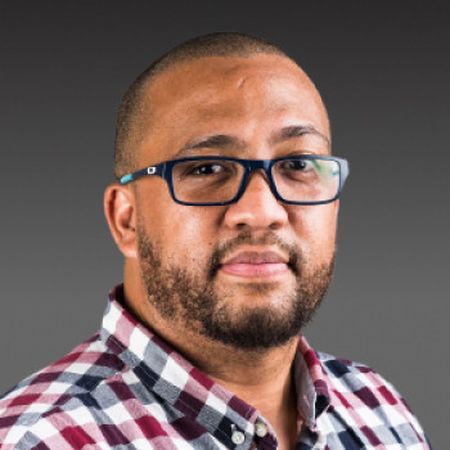
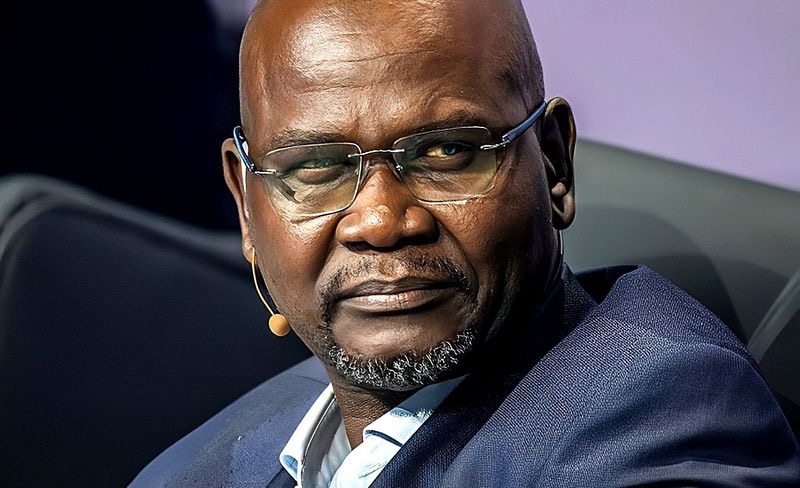
 Suspended Public Investment Corporation (PIC) CEO Patrick Dlamini brought an urgent application in the high court against the PIC and its board of directors, and Daily Maverick has the affidavit. (Photo: Supplied)
Under the Public Investment Corporation (PIC) Act 23 of 2004 and its subsequent PIC Amendment Act 14 of 2019, the chief executive officer (CEO) bears explicit statutory, financial and fiduciary duties as both the operational head and an executive director of the board.
The PIC’s own literature says its primary function is to manage and invest funds on behalf of state depositors, most notably the Government Employees’ Pension Fund (GEPF). The CEO has a direct fiduciary responsibility to ensure that all investments strictly mirror the approved client investment mandates rather than political or personal whims.
But the PIC Amendment Act of 2019 significantly altered the investment framework by introducing a statutory balancing act.
The CEO and the board must ensure that the PIC “seeks to invest” in projects that further the developmental objectives of South Africa (such as job creation, industrial development and infrastructure).
Crucially, the amendment explicitly states that this developmental focus must not compromise the financial interests of the depositors. The CEO’s fiduciary duty is to ensure these dual mandates co-exist without exposing public servants’ retirement savings to undue risk.
And therein lies the rub for the court challenge of suspended CEO Patrick Dlamini.
An imperfect lawn
According to the Mpati Commission, Harith was established by former PIC executive (from the Brian Molefe CEO era) Tshepo Mahloele to manage the Pan African Infrastructure Development Fund (PAIDF).
The commission found that Harith’s creation was not at arm’s length, providing it “easy access to PIC funds, influence and including an enhanced ability to secure additional investment”.
Dlamini served as CEO of the DBSA from 2012. The DBSA was a major investor in the PAIDF, contributing $100-million to the first fund – which contributed to the capital Harith and a consortium of investors used to acquire Lanseria International Airport.
If the PAIDF acronym sounds familiar, it’s because the $200-million top-up called PAIDf 2 was a key part of the capital raise for Harith’s almost successful (requiring only Competition Tribunal approval) acquisition of FlySafair.
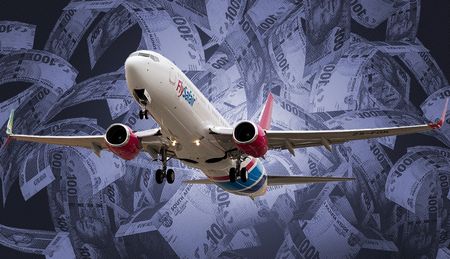
During a press briefing on the airline’s jet fuel surcharge methodology and a subsequent interview with Daily Maverick, FlySafair Chief Marketing Officer Kirby Gordon explained that Harith acted as an equity firm and fund manager that “successfully created a fund that will effectively invest in FlySafair ... so FlySafair is being purchased by an entity which is a special-purpose vehicle called Harith Aviation”.
While Gordon downplays Harith’s direct operational interference, his admissions do colour it as ultimate puppet masters:
“They’re the fund managers and they’re the coordinating party that created the special purpose, actually effectively created the deal and brought it together.”
In his words, Harith acts as “value investors,” mandating the airline to “keep doing what you’re doing, keep giving us a good return” without injecting massive venture capital.
FlySafair already operates extensively out of Lanseria International Airport. Because Harith owns Lanseria and now coordinates FlySafair, Gordon disclosed that, as was explained to him, Harith had to construct a “Chinese wall” between the two entities to appease the Competition Commission and avoid anti-competitive behaviour.
Tweezing out the weeds
Acapulco’s 25% stake in Lanseria (it was the BEE partner in the consortium alongside Harith) was funded by a R333-million PIC loan in 2013. When Acapulco defaulted in 2023, the PIC moved to perfect the security (take over the shares).
The process where the Lanseria Holdings board approved the transfer, cancelled Acapulco’s share certificate, and officially updated the share register to reflect the PIC as the holder of the 25% shareholding, was completed on 8 November 2024.
While he was not yet the PIC CEO, Dlamini was already serving as a non-executive director on the board of Lanseria Holdings during the time of the default and when the shares were transferred.
Wait, but how did Dlamini get involved?
The PIC and Acapulco initially agreed to appoint accounting firm BDO to conduct the valuation. On 2 October 2024, BDO delivered a draft valuation report valuing Acapulco’s 25% stake at R238.1-million. Acapulco immediately rejected this, citing “manifest, material and significant errors”, and unilaterally terminated BDO’s mandate.
The parties then appointed Crowe to value the equity, supported by Mills Fitchet (which valued the physical property base). In December 2024, Crowe issued a draft valuation of R550-million for the stake. However, in January 2025, Crowe issued its final valuation report, which shockingly jumped to R1.04-billion for Acapulco’s 25% shareholding.
The PIC outright rejected the final Crowe valuation, arguing that it contained a fundamental error. The PIC’s forensic investigators (PwC) later noted that Crowe appeared to be guilty of “double-counting” – it had added the R2.3-billion Mills Fitchet physical property valuation to the operational cash flows of the airport, which already included the rental income derived from that same property.
Because the PIC rejected the R1.04-billion valuation, Acapulco referred the matter to arbitration. In September 2025, the arbitration panel ruled in favour of Acapulco, declaring the Crowe valuation binding.
Patrick Dlamini took over as PIC CEO in June 2025, while the arbitration was under way. By November 2025, the PIC had sought permission and paid the R411.2-million (you get this by subtracting Acapulco’s R629.3-million debt to the PIC from the updated R1.04-billion share valuation) award to Acapulco.
The story goes that Dlamini was deeply concerned by this outcome and the shortcomings that led to it. In his affidavit challenging his suspension, he states that he commissioned a forensic probe into the original transaction and the arbitration to investigate how the PIC lost hundreds of millions to a defaulting debtor.
On 2 December 2025, the PIC formally appointed PwC to conduct this forensic investigation.
The current record shows that Acapulco viewed this forensic investigation as a targeted, bad-faith attack orchestrated by Dlamini to serve the commercial interests of Harith, and retaliated with aggressive legal and corporate warfare.
Acapulco launched a massive high court damages claim of R900-million against both the PIC and Dlamini personally, accusing Dlamini of “tortious interference with our existing and prospective commercial relationships”.
Acapulco argued that Dlamini’s probe served no legitimate PIC interest, but was instead designed to soften up Acapulco so that Harith could acquire its assets at a “depressed valuation”.
Acapulco sent letters to the PIC Board highlighting that the Letter of Authority appointing PwC bore “Mr Dlamini’s signature alone”, with no board resolution ever produced.
It used this to argue that the investigation was a rogue operation run from Dlamini’s office.
/file/attachments/2995/Screenshot2026-08-02at185322_742677.png "Screenshot of Patrick Dlamini‘s signature to close out the Draft Update Letter to the GEPF")
The grass is not greener
The previous PIC board used the 26-page whistleblower complaint as its justification for suspending its CEO.
Dlamini countered by saying that the complaint “bears a striking and material resemblance” to Acapulco’s litigation letters. He has a point, because on 22 May 2026, Acapulco explicitly threatened the board that if it did not rein in Dlamini, Acapulco would lodge “appropriate complaints to the Public Protector, the Auditor-General and Parliament”.
But while Dlamini can successfully prove who blew the whistle, his affidavit completely fails to disprove why the whistle was blown.
He did not deny that he sat on the Lanseria Board as a Harith appointee. He does not deny that he refused to recuse himself.
This failure to recuse himself from a glaring conflict of interest fundamentally compromised his fiduciary duty to the PIC and the GEPF.
Then there is the matter of the signature on the document that admits to the GEPF that the PIC was bent over a barrel and had no other legal option – after seeking extensive counsel on the matter – than to pay the money.
By that evidence alone, and his inability to provide a board resolution according to his mandate, is not a great look for the would-be protector of the government pension purse. DM
Comments
Scroll down to load comments...