




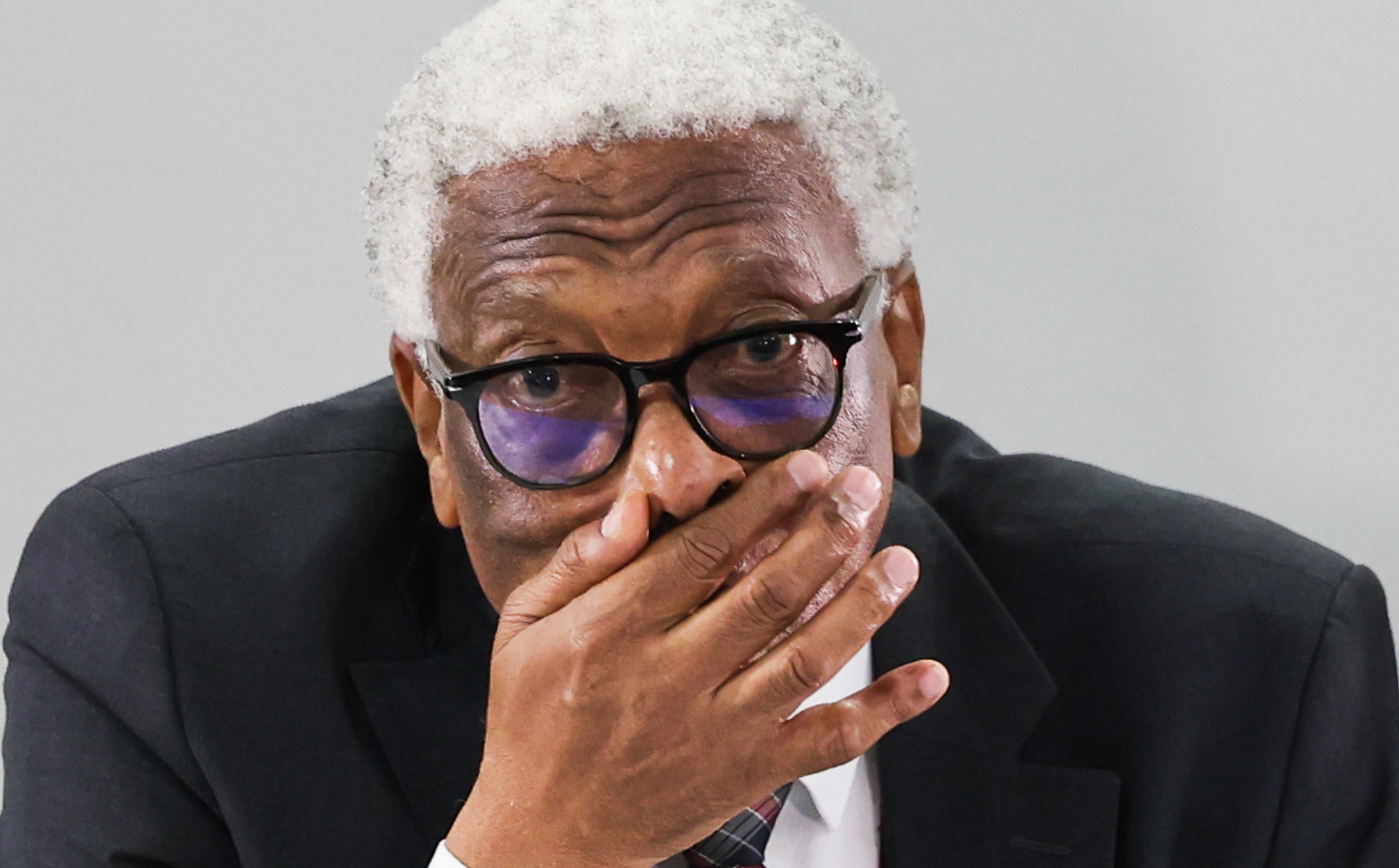
 Eastern Cape Judge President Selby Mbenenge at his Judicial Conduct Tribunal hearing on 3 June 2025. (Photo:Gallo Images / Lubabalo Lesolle)
The recommendation by the Judicial Service Commission (JSC) that Judge President of the Eastern Cape Selby Mbenenge be formally suspended is another small victory in the declared national disaster that is gender-based violence (GBV).
From the start, the composition of the opposing teams who represented the complainant, court secretary Andiswa Mengo, and Eastern Cape Judge President Selby Mbenenge in a humiliating Judicial Conduct Tribunal sexual harassment hearing revealed an old world colliding with new age.
It was a bit like the subtext in the South African-made hit Netflix series, The Polygamist, where protagonist Jonasi Gomora deploys a sort of culture-by-numbers to excuse his appetite for sex and deception. In the patriarch’s world, this is the language of privilege where “culture” can be tossed into the room to excuse antisocial behaviour.
The decision earlier this week by the JSC to suspend Mbenenge sends a strong message across the judiciary and ripples through South African society that sexual harassment and an abuse of power in the workplace or elsewhere have serious consequences.
The JSC stated that the Tribunal had not understood the power balance between a judge president and a secretary, and that sexual harassment was an “affront to the propriety of judicial office and the values underpinning the Constitution”.
The line in the sand
In Mengo’s corner during the exhausting hearing was evidence leader Salomé Scheepers with the formidable advocate Nasreen Rajab-Budlender as her legal representative. Bringing the receipts were pioneering, multi-lingual forensic linguist Dr Zakeera Docrat and veteran expert on GBV and sexual harassment Dr Lisa Vetten.
Standing in the corner observing and holding it all for Mengo and other women in her position across the country was the Women’s Legal Centre, which immediately challenged the Tribunal’s first finding that Mbenenge was not guilty of impeachable conduct.
Mbenenge has since filed papers with the Pretoria high court to halt the impeachment process pending a review of the JSC’s decision to overturn the tribunal’s original verdict, a decision he regarded as “unreasonable, unconstitutional and unlawful”.
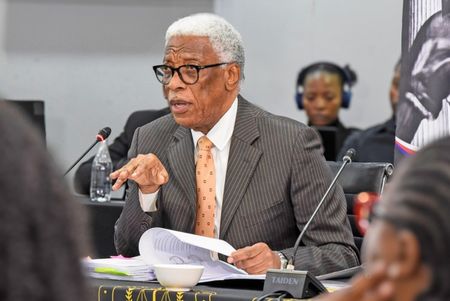
In the cultural battle, Mbenenge had the fabled advocate Muzi Sikhakhane and Griffiths Madonsela in his corner, who pooh-poohed Docrat’s qualifications and relevance and suggested that Vetten and women like her “should get off their feminist high horse”. That Docrat spoke and read fluent isiXhosa seemed to take the men by surprise later.
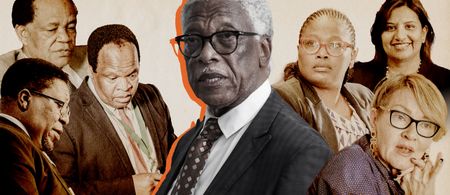
Also in Mbenenge’s corner was tribunal chair, retired judge Bernard Ngoepe, a man out of time, like Mbenenge, who chuckled at the absurdity of women expecting to be taken out on a date and given flowers and, god forbid, spoken to at length before a romantic approach is made.
Mbenenge had hardly interacted with Mengo when he began to harass her, firing off suggestive emojis of aubergines and peaches, requests for nude pictures and other embarrassing demands. Repeated attempts at deflecting these approaches by Mengo had proved almost impossible, the Tribunal heard.
Mbenenge claimed the interaction with Mengo had been consensual and that, as a Xhosa man, this was how he went about things. Sikhakhane argued that any criticism of Mbenenge’s approach was racist and colonial. Mbenenge said he was above all this, and did not view himself as superior to any worker in his orbit. Also, he claimed that workplace legislation did not apply to him, as a judge.
Victory dance
The tribunal released its findings in February, finding Mbenenge not guilty of Category C misconduct, which meant he would not have to face impeachment. He was found guilty, however, of misconduct, a lesser charge.
An elated Mbenenge, who had been on suspension all the while, declared he was ready to return to work. Sikhakhane too read the verdict as a victory, but no sooner had the champagne corks popped when, in April, the Judicial Service Commission overturned the tribunal’s finding.
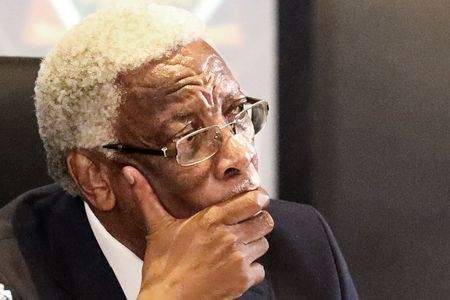
The JSC found Mbenenge guilty of gross misconduct and sexual harassment and announced that it planned to write to the Speaker of the National Assembly, opening the door to the 64-year-old judge’s possible impeachment, on the eve of his retirement.
Mbenenge has challenged the JSC’s order, arguing that suspension would “unfairly embarrass” him while a review was pending.
The “trickle-down” effect of the decision by the JSC to overturn the tribunal’s original ruling is in line with Chief Justice Mandisa Maya’s commitment to ridding the judiciary of sexual harassment.
Earlier this month, delivering a keynote address at the Judiciary Conference in Durban, Maya said the judiciary could not insist on “dignity, equality and freedom” for citizens when it had no “adequate means” of censoring “humiliation, intimidation, coercion and sexual harassment” within the institution.
Work was underway in establishing a “fully fledged” Gender Unit in her office.
The time of the patriarchs is truly over. DM
Comments
Scroll down to load comments...