




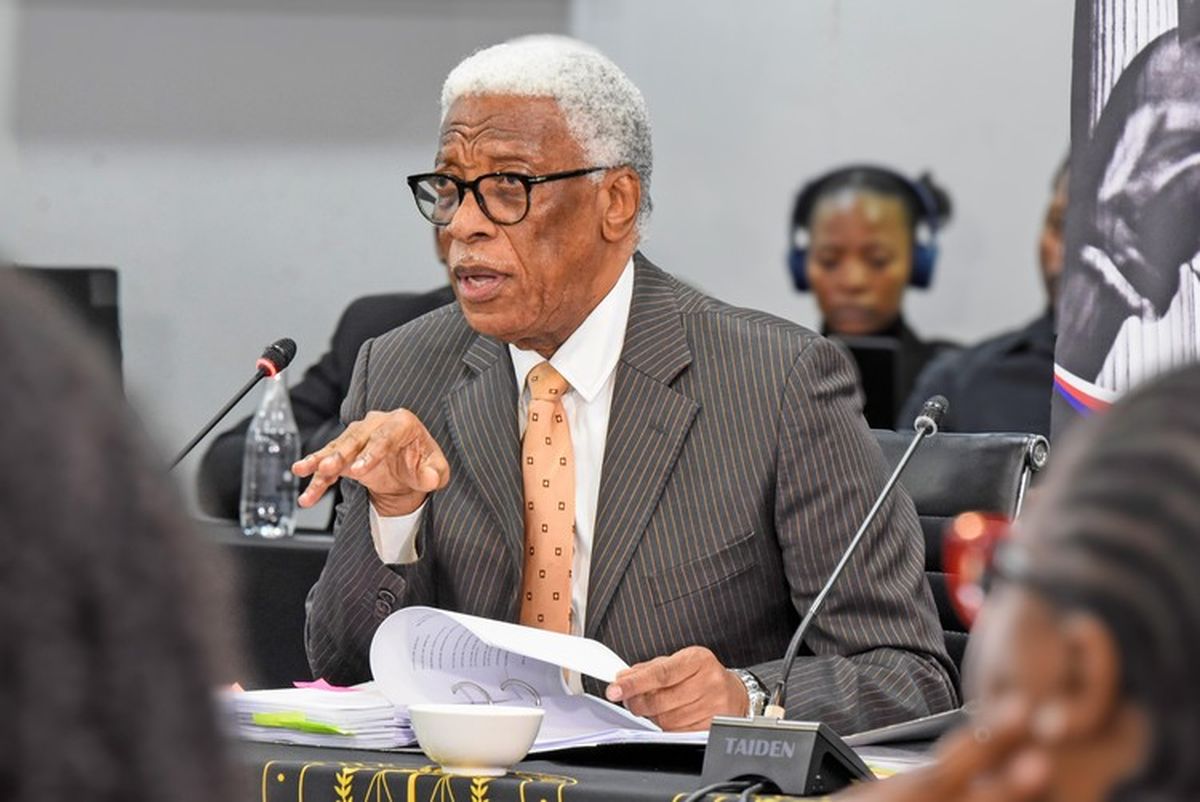
 Eastern Cape Judge President Selby Mbenenge. (Archive photo: Office of the Chief Justice)
The Judicial Service Commission (JSC) on Thursday found Eastern Cape Judge President Selby Mbenenge guilty of gross misconduct and sexual harassment, overturning an earlier decision by a Judicial Conduct Tribunal that had found Mbenenge guilty of misconduct not amounting to gross misconduct.
The commission said it would make a submission to the Speaker of the National Assembly on its findings. This opens the door to the 64-year-old judge’s possible impeachment, on the eve of his retirement.
The commission indicated it might call on President Cyril Ramaphosa to suspend Mbenenge pending Parliament’s decision on whether to institute impeachment proceedings against him.
“The conduct concerned is serious and constitutes an affront to the propriety of judicial office and the values underpinning the Constitution. It undermines core values of the judiciary, including integrity, accountability, equality, respect and dignity,” the JSC found.
The JSC added that Mbenenge had shown “no remorse”.
This is a blow to retired judge Bernard Ngoepe, who chaired the tribunal, and to Mbenenge’s legal representative, advocate Muzi Sikhakhane, who had argued aggressively that “Xhosa cultural courting rituals” were being enacted by Mbenenge that could not be understood by a Western, “liberal” worldview or be interpreted by the Constitution.
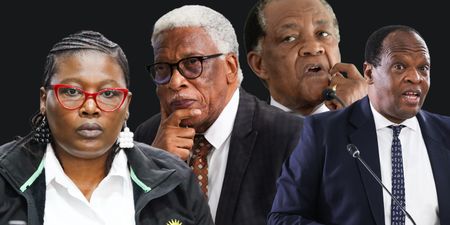
The judicial oversight body stated it had differed with the tribunal report in several key respects.
It noted that the tribunal limited its assessment to whether Mbenenge’s conduct, in initiating and sustaining a “flirtatious” relationship with court secretary Andiswa Mengo, had taken place at a place of work and during working hours.
/file/dailymaverick/wp-content/uploads/2025/06/ED_556131.jpg "Andiswa Mengo at the judicial tribunal hearing on 5 May 2025. (Photo: Luba Lesolle / Gallo Images)")
“The JSC considered this to be a misdirection. What the tribunal should have had regard to was not merely the place and timing of the exchanges, but their nature, content and context as well as the fact that they were admittedly initiated by JP Mbenenge and sustained over a period of time,” reads the JSC’s report.
The JSC said these communications had not been confined to working hours or the workplace “but had extended beyond both, and included exchanges which, by their nature, bore directly on the standard of conduct expected of a judge and, more particularly, of a Judge President engaging with a junior member of staff”.
By characterising the matter principally “as a flirtatious relationship” at work and during working hours, the tribunal had understated the significance of the admitted conduct and failed to properly assess the extent to which laws were contravened.
Grossly inappropriate
Bearing in mind the nature and content of the communication as set out in various parts of the tribunal’s report, the view of the JSC was that such conduct was “grossly inappropriate for a person holding the position of Judge (let alone a Judge President), especially in relation to a person in the position of the complainant. It is conduct incompatible with the standard of honourable behaviour and propriety required of judicial office.”
The JSC did not endorse the finding by the tribunal that there was no sexual harassment, noting that the tribunal had not applied the appropriate standard for assessing whether there was sexual harassment.
“Instead, it appears to have treated the enquiry principally as an objective one directed at whether the admitted communications were unwelcome, instead of a balanced amalgamation of an objective and subjective standard which took into account the complainant’s position and the respondent’s conduct in context.”
The tribunal and its chair, Ngoepe, had failed to consider whether Mbenenge ought to have known that his conduct was unacceptable, bearing in mind the responsibilities entrusted to him by virtue of his office and the position of the complainant.
/file/dailymaverick/wp-content/uploads/Craig-cricketMatchfixing-inset.jpg "The tribunal’s chair, Bernard Ngoepe, during an interview on 20 October 2012. (Photo: Mabuti Kali /Gallo Images / Sunday World)")
This resulted in the tribunal focusing “almost exclusively on the conduct of the complainant” without giving “due consideration” to Mbenenge’s conduct, including whether he should have appreciated it was inappropriate and unacceptable.
The tribunal also failed to properly consider the impact of the relationship of power between Mbenenge and the complainant. This was relevant to its assessment of whether or not his advances had been unwelcome.
It had approached the matter on the basis that “the parties were consenting adults on an equal footing who had the right to freedom of association, thereby giving insufficient weight to the significance of the disparity in position between them”.
Written representations
After the tribunal’s decision, the JSC received written representations from the parties involved, and these were considered alongside the report.
Mengo complained that she had been sexually harassed by Mbenenge from approximately June 2021 to around November 2022.
Mbenenge submitted that the finding that he was not guilty of sexual harassment and, therefore, not guilty of gross misconduct was correct and should be upheld. He also requested that the finding of misconduct simpliciter should be set aside because it was “ultra vires the terms of reference” of the tribunal.
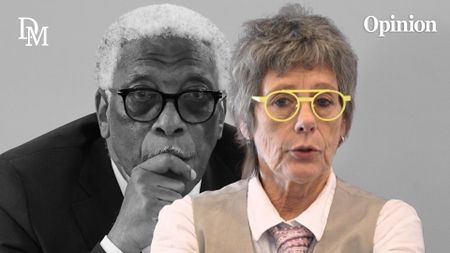
By contrast, Mengo submitted that Mbenenge’s conduct amounted to sexual harassment and that the tribunal’s finding of misconduct simpliciter was inappropriate as Mbenenge’s conduct constituted gross misconduct.
Two questions
The JSC deliberated on two questions: whether to uphold the finding that the conduct of Mbenenge amounted to misconduct and whether this conduct amounted to misconduct simpliciter (a non-impeachable offence) or gross misconduct (an impeachable offence) in terms of Section 177(1) of the Constitution.
The JSC agreed with the tribunal that, on the admitted facts, Mbenenge was guilty of contravening Section 5.1 of the Code of Judicial Conduct, which provides that “A judge must always, and not only in the discharge of official duties, act honourably and in a manner befitting judicial office.”
It also considered the impact of Mbenenge’s conduct on the workplace and on public confidence in the judiciary.
Responses
Dr Lisa Vetten — who was called as an expert witness by the tribunal — told Daily Maverick the case was important as it highlighted sexual harassment that was not obvious and straightforward.
Also, this highly public case had challenged “attitudes, beliefs and the understanding” of the issue. “This all occurred within the full glare of the public spotlight, and it had to push what we understand about ethics in the workplace.”
/file/dailymaverick/wp-content/uploads/2025/08/Z63_3015.jpg "Gender-based violence researcher Lisa Vetten on stage at The Gathering 2025. (Photo: David Harrison)")
She added that any woman watching the tribunal who had witnessed the manner in which Mengo had been treated during her cross-examination “would have second thoughts about rushing forth with any complaint”.
The JSC, she said, had “firmly reaffirmed the significance of the Constitution and the necessity of sexual harassment legislation. This matter did not fit the stereotypical case and pushed boundaries “of what we think is acceptable,” she said.
The advocacy group Judges Matter issued a statement welcoming the finding.
“Judges are entrusted with upholding dignity, equality, and freedom. When judges themselves breach the judicial code, it weakens the moral authority of the courts and the rule of law. Everyone who interacts with the courts deserves to be treated with dignity,” it noted.
The finding proved that the JSC took misconduct of this nature seriously and that the judiciary played a critical role in combating gender-based violence in South Africa.
“The outcomes of these judicial misconduct proceedings send signals, to potential complainants, to the legal profession and to the public, about the seriousness with which the judiciary takes this misconduct seriously, but also its own integrity,” said Judges Matter. DM
Comments
Scroll down to load comments...