



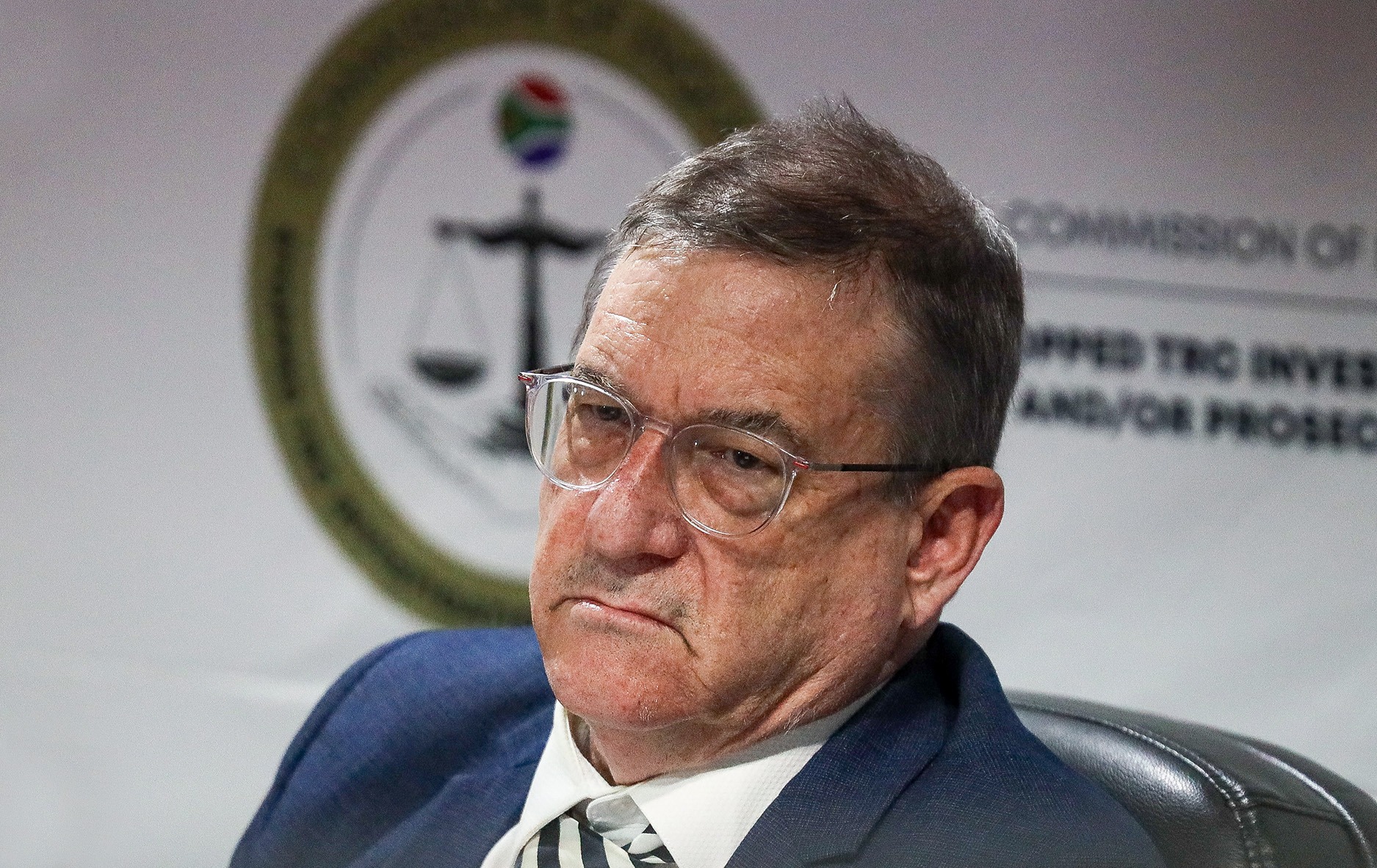
 John Jeffrey testifies at the Khampepe Commission of Inquiry in Johannesburg on 24 July
2026. (Photo: Gallo Images / Fani Mahuntsi)
John Jeffrey testifies at the Khampepe Commission of Inquiry in Johannesburg on 24 July
2026. (Photo: Gallo Images / Fani Mahuntsi)Appearing before the Khampepe Commission of Inquiry into delayed Truth and Reconciliation (TRC) prosecutions, John Jeffery, Deputy Minister of Justice and Constitutional Development, denied claiming that the ANC had made compromises with apartheid-era leaders.
Lukhanyo Calata, son of activist Fort Calata – one of the Cradock Four murdered by security police in 1985 – has presented evidence to the inquiry that Jeffery, in 2017, had said that the lack of TRC prosecutions had been part of a “negotiated settlement” at the Convention for a Democratic South Africa (Codesa, 1991/92).
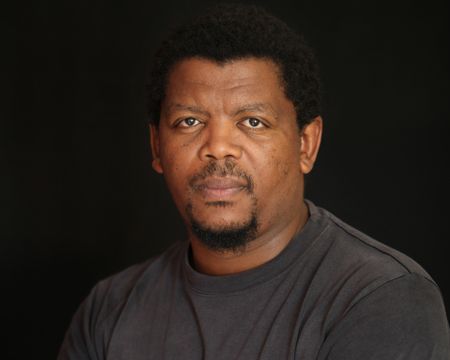
Calata was three when his father was murdered alongside Matthew Goniwe, Sicelo Mlauli and Sparrow Mkonto. In June 2025, he told the reopened inquest into their deaths that the deputy minister had intimated that delayed TRC issues were “the price that had to be paid for the negotiated settlement”.
This, he recalled, had been “a punch in the gut”.
/file/attachments/orphans/ED_519487_879407.jpg "Lukhanyo Calata (son of Fort Calata) attends the Cradock Four inquest at the Gqeberha high court on 2 September 2024. (Photo: Gallo Images / Die Burger / Lulama Zenzile)")
Jeffery, however, disputed that he had conceded that the ANC government had agreed not to prosecute TRC cases or that compromises reached with perpetrators had prevented some cases from proceeding.
‘Out of context’
On Friday, Jeffery appeared before the inquiry and denied the concessions attributed to him by Calata, saying his words may have been taken out of context.
“What I did not [say was] that the ANC or the ANC government had taken any decision that there shouldn’t be prosecutions,” said the former deputy minister, adding that his reference to a “political decision” had to do with the wider question of whether prosecutions should have taken place while amnesty applications were still being considered.
“Maybe it’s more the broader issue of the broader qualification of political – was it appropriate to be running criminal prosecutions at the same time as TRC amnesty applications were [being submitted for those same crimes], and that’s what I think I meant by a political decision,” he said.
/file/attachments/orphans/ED_616432_807443.jpg "Former deputy minister of justice and constitutional development John Jeffery testifies at the Khampepe Commission of Inquiry in Johannesburg on 24 July 2026. (Photo: Gallo Images / Fani Mahuntsi)")
Jeffery said he had set out for Calata the difficulties surrounding the National Prosecuting Authority’s (NPA’s) prosecution policy for apartheid-era crimes, stating that there had been mounting pressure with “contemporary violent crime, corruption and cases arising from State Capture”.
He had attempted to explain what he had understood to be the “practical constraints under which the criminal justice system was operating at the time, including the need to make difficult decisions about the allocation of limited resources.
“In doing so, I was not suggesting that apartheid-era crimes were unimportant or undeserving of investigation,” said Jeffery.
He said the NPA’s capacity had also declined after 2009 when prosecutors began to leave the troubled authority and widespread corruption linked to the State Capture period had forced the NPA to prioritise other cases, shifting resources and attention away from outstanding TRC matters.
Witness to murder
Jeffery said that as someone who had been present in 1992 when a car bomb exploded, instantly killing ANC KZN deputy chair, Reggie Hadebe, and injuring activist Shakes Cele and Jeffery, who was also in the car, he was aware of the impact on families.
He told the commission he was an activist and lawyer at the time and caught up in a “low-intensity civil war” in the Natal Midlands when the blast occurred in Pietermaritzburg. Later, he said he had been called to testify at the TRC.
“The hearing was into the assassination of Reggie Radebe. So I was asked to testify there, which I gladly did. I think because of that, then the TRC bureaucracy included me as a victim of a human rights violation.
“I didn’t want to be listed as one, as I made my contribution, you know, out of commitment and there are many people who suffered far greater human rights violations than I did simply by being black.”
“I was not seeking to minimise the suffering of the Calata family. Rather, I sought to explain that their experience formed part of a broader national tragedy in which many families were left without full answers about the deaths of their loved ones”.
Role in TRC matters
Jeffery, the commission heard, had received an official ministerial memorandum from the National Director of Public Prosecutions (NDPP), advocate Shamila Batohi, regarding the strategic handling of Truth and Reconciliation Commission (TRC) cases.
He was also the primary recipient of ministerial memoranda on the implications of the Rodrigues judgment, which found there had been political interference in the delay of TRC cases.
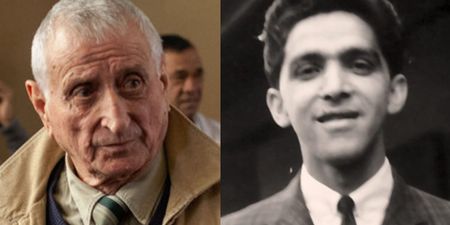
In that instance, Judge Jody Kollapen noted in 2019 that “justice and truth were never meant to be compromised in dealing with our troubled, turbulent and shameful past”.
Jeffery was also formally copied on the October 2022 memorandum informing the Minister of Justice of the decision to appoint advocate Dumisa Ntsebeza SC to review the NPA’s measures for handling TRC matters.
The “Ntsebeza SC Opinion”, as it is known, later opened with a quote from Corazon Aquino: “Reconciliation should be accompanied by justice, otherwise it will not last. While we all hope for peace, it shouldn’t be peace at any cost but peace based on principle, on justice.”
The Khampepe Commission is scheduled to wrap up in December 2026. DM
Comments
Scroll down to load comments...