




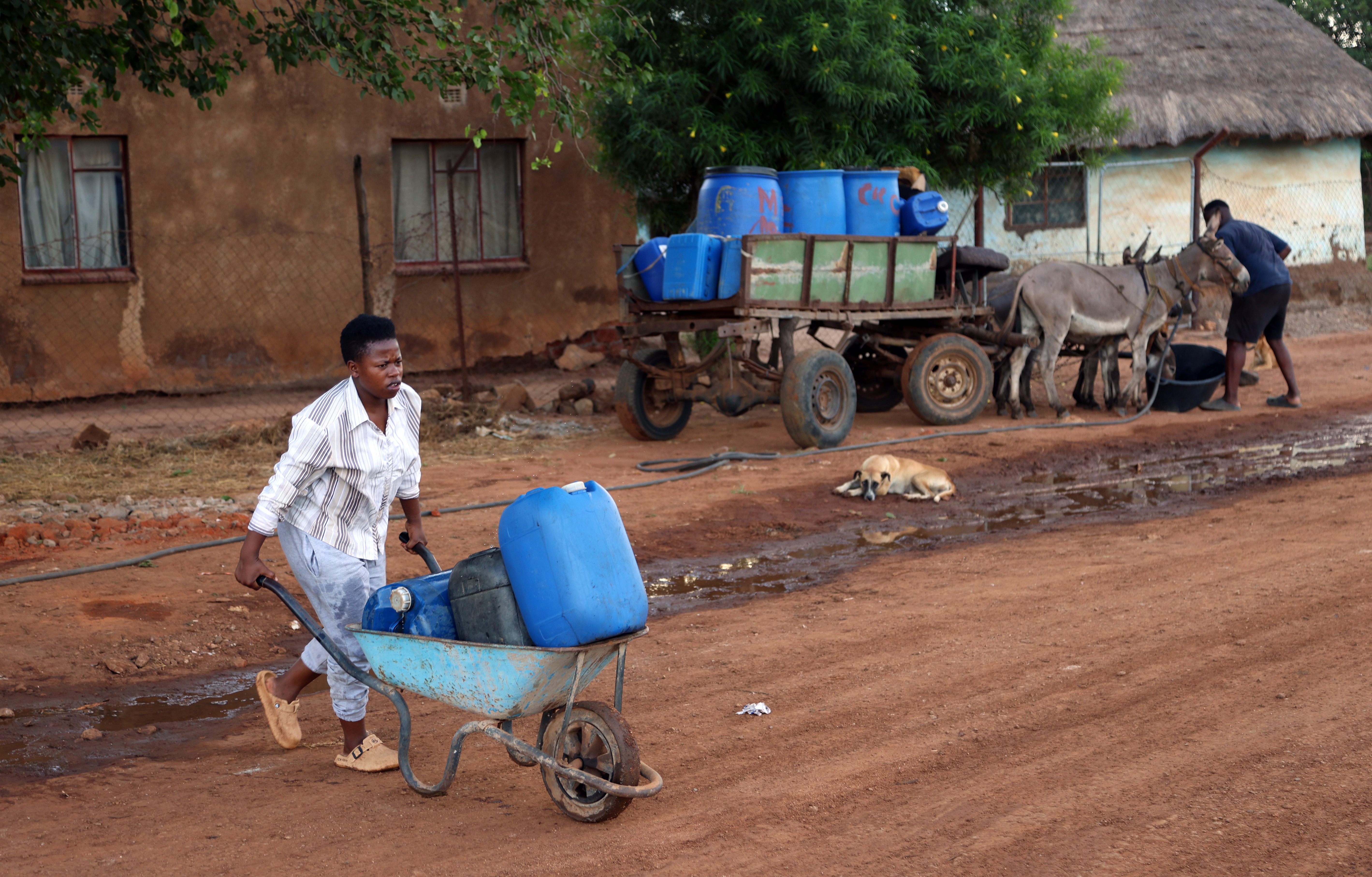
 Residents in Giyani, Limpopo, collect water from a communal tank, relying on shared sources as ongoing shortages affect the area. (Photo: Felix Dlangamandla)
President Cyril Ramaphosa has finally released the highly anticipated National Water Action Plan, four months later than expected.
Ramaphosa announced the establishment of the National Water Crisis Committee in his February State of the Nation Address (Sona), vowing to bring an end to the crippling water crisis that has gripped many parts of the nation.
/file/attachments/orphans/019A5850_390923.jpg "President Cyril Ramaphosa chairs a meeting of the National Water Crisis Committee on 23 July 2026 at the Union Buildings in Pretoria, where he officially released the National Water Action Plan. (Photo: Kopano Tlape / GCIS)")
During the Sona debate, Minister in the Presidency Khumbudzo Ntshavheni promised that a comprehensive water action plan would be finalised by mid-March. However, the National Water Action Plan was released only on Thursday, 23 July 2026, following a meeting of the National Water Crisis Committee, now known as Watercom.
Watercom is modelled directly on the National Energy Crisis Committee, which succeeded in bringing an end to load shedding.
To this end, President Ramaphosa said, “We are applying the same approach to the water crisis that has been unfolding in many parts of the country. The National Water Action Plan outlines a clear, practical and focused approach to ensure water security for all South Africans, no matter where they live.”
Chaired by Ramaphosa and with Water and Sanitation Minister Pemmy Majodina, Minister in the Presidency Khumbudzo Ntshavheni and Cooperative Governance and Traditional Affairs Minister Velenkosini Hlabisa as commissioners, Watercom includes a range of government departments and state agencies, such as the South African Local Government Association (Salga), which will be responsible for implementing the plan.
In a statement released on Thursday, the Presidency said the plan “sets out a focused programme of priority interventions designed to establish new foundations for sustainable water service delivery”.
The Presidency said the plan outlined short, medium and long-term interventions to address the water crisis. This included strategies to:
- Increase investment in infrastructure, including through private sector investment;
- Implement legal and regulatory reforms to improve municipal service delivery; and
- Address corruption and criminality in the water sector.
“Watercom is working with municipalities to mobilise resources, expertise and new partnerships to stabilise failing systems, recover critical services and expand access across the country.
“It will ensure a coordinated approach to the institutional and financing reforms necessary to achieve water security, including ring-fencing water revenues to ensure adequate maintenance of water assets and increasing investment in bulk water and distribution infrastructure,” said Ramaphosa’s spokesperson Vincent Magwenya.
The lack of ring-fencing is a significant issue affecting the water sector, particularly in the City of Johannesburg, where R4-billion was diverted from Joburg Water to pay for other municipal expenses.
Magwenya said Watercom would meet regularly to oversee the implementation of the plan and hold responsible departments and agencies accountable for delivery. DM
This is a developing story, and Daily Maverick will publish further reports in the coming days.
Comments
Scroll down to load comments...