




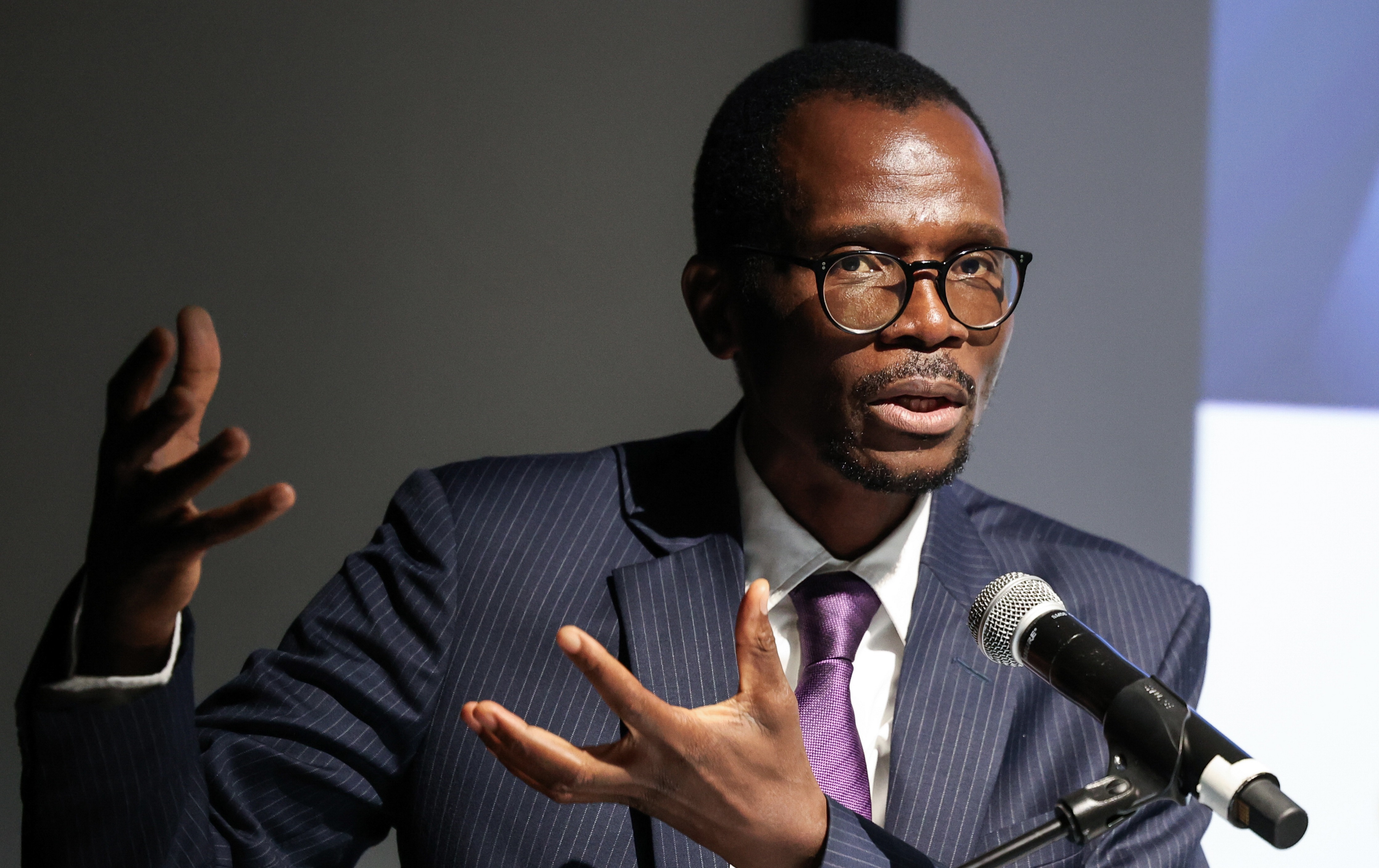
 PIC chairperson David Masondo addressed employees at a town hall meeting on 16 July 2026 to provide an update on the asset manager’s governance crisis. (Photo: Luba Lesolle / Gallo Images)
 The board of the Public Investment Corporation (PIC) was not informed that the Financial Sector Conduct Authority (FSCA) had requested documents relating to a whistleblower matter, PIC chair David Masondo told employees at a town hall meeting this week.
Masondo said the regulator’s earlier requests were not brought to his attention or that of the board, pointing to a breakdown in communication between PIC management and the FSCA.
The disclosure comes during an escalating governance crisis at the PIC, which manages about R3-trillion in public-sector assets. The FSCA inquiry, the precautionary suspension of chief executive Patrick Dlamini and changes to the PIC’s investment leadership were among the issues discussed during the staff meeting on Thursday, 16 July.
According to a statement shared by the National Treasury on Friday about the outcome of the meeting, Masondo became aware of the FSCA’s requests only through later correspondence from the regulator. He then supplied the requested documents and committed the board to co-operating with the inquiry.
He described independent regulatory scrutiny as necessary for healthy institutions and an opportunity to strengthen the PIC’s governance systems.
Masondo also told employees that the board had obtained independent advice from senior counsel before placing Dlamini on precautionary suspension.
He stressed that the suspension was not a finding of guilt. The board decided that removing Dlamini temporarily was necessary to protect the investigation, preserve procedural fairness and allow the allegations to be tested independently.
“The alternative would have been for the board to ignore serious allegations placed before it,” Masondo said. “A board entrusted with the retirement savings of millions of South Africans cannot selectively apply its governance responsibilities. Had we failed to act, we ourselves would rightly have been found wanting.”
GEPF rejected appointment of acting CIO
Masondo also confirmed that the Government Employees Pension Fund (GEPF), the PIC’s largest client, had not approved August van Heerden’s appointment as acting chief investment officer (CIO).
Under the investment management agreement between the PIC and the GEPF, the appointment of key investment personnel requires the pension fund’s consent. The GEPF did not recognise Van Heerden as a key person under the mandate.
Masondo said Van Heerden had not been suspended, because he was acting in the position and had not been appointed permanently.
However, retaining him in the role without the GEPF’s approval would have exposed the PIC to contractual and regulatory risk and would have conflicted with its fiduciary responsibilities, Masondo said.
Leon Smit was subsequently appointed acting CIO with the GEPF’s support. Masondo described Smit as one of the PIC’s most experienced investment professionals, with more than 30 years of experience in fixed income, treasury and portfolio management. He has acted as CIO on several previous occasions.
Masondo also said legal advice relating to a PwC forensic report had initially been withheld from him. After the advice came to his attention, he made a decision – subsequently adopted by the board – to refer the report to the Special Investigating Unit.
Unlisted investments
/file/dailymaverick/wp-content/uploads/2024/02/ED_476862.jpg "PIC chairperson David Masondo has given an update on the PIC’s unlisted investments. (Photo: Jaco Marais / Die Burger / Gallo Images)")
The chair also addressed concerns about the PIC’s unlisted portfolio, which includes investments examined by the Mpati Commission.
The PIC has investments in 150 unlisted companies, with 39 legacy investments undergoing turnaround or distress-management processes.
The full unlisted portfolio represents 4.5% of the PIC’s assets under management. Distressed and turnaround investments account for 1.7% of the unlisted portfolio and less than 0.1% of the corporation’s total investments.
The PIC has recovered R10-billion of its R19-billion debt book and is pursuing legal action to recover a further R9.3-billion.
According to the town hall statement, the unlisted portfolio grew by 3.6% during the financial year ended March 2026.
Masondo concluded the town hall by thanking employees for their professionalism during a challenging period and assured them that the PIC remains operationally stable, investment mandates continue uninterrupted, leadership continuity has been secured and the corporation’s fiduciary responsibility to millions of public servants remains unchanged.
The rest of the country may need more than spoken reassurances. DM