




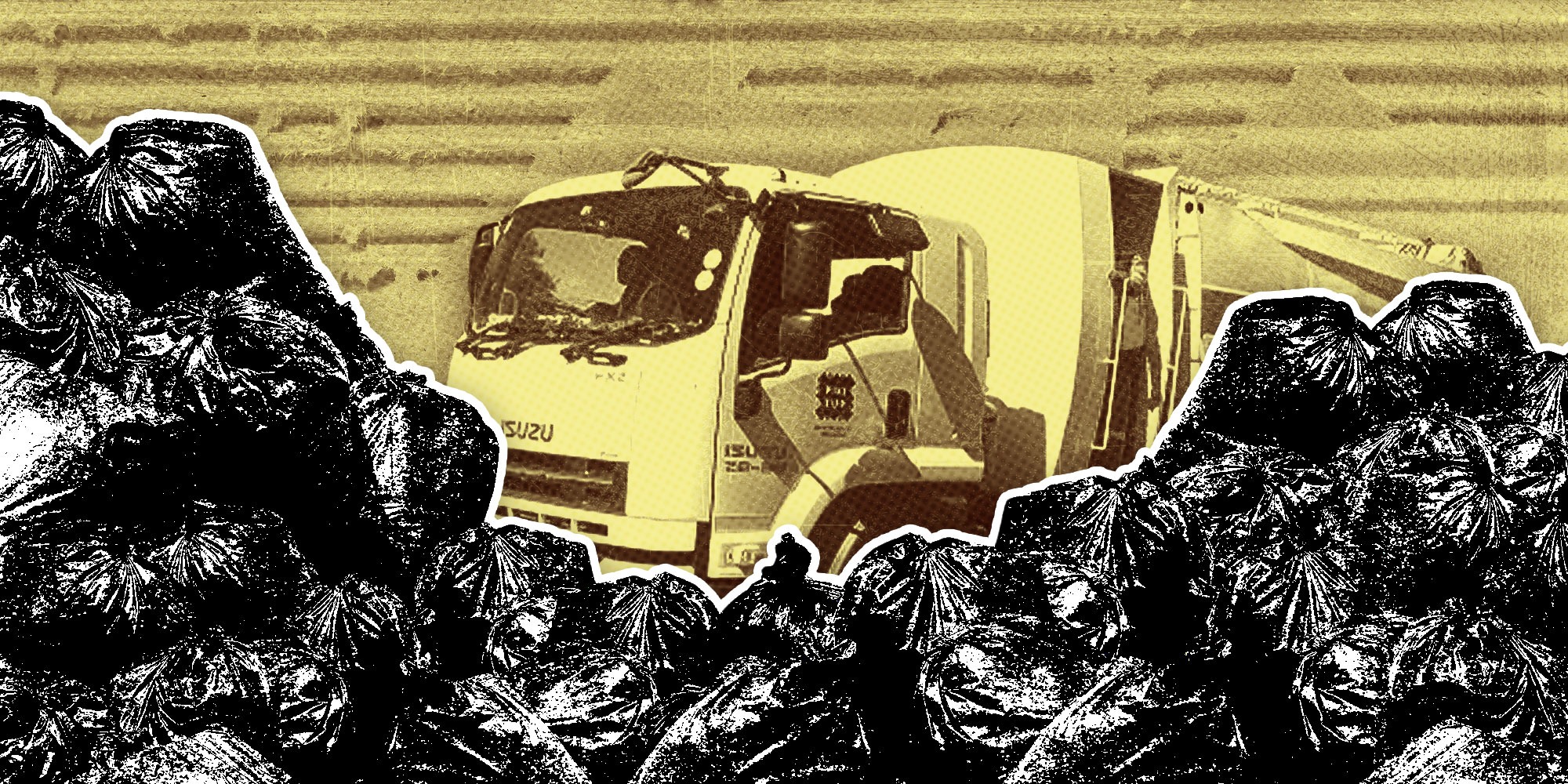
 Illustrative image: A Pikitup vehicle. (Photo: Joburg newsroom) | Trash bags. (Image: iStock) | (By Daniella Lee Ming Yesca)
 This week, the City of Johannesburg announced emergency measures to stabilise Pikitup, including ring-fenced funding for fuel, fleet maintenance, landfill operations and supplier payments.
The intervention follows earlier reporting by Daily Maverick that Pikitup owed contractors and suppliers R1.33-billion despite a reported R2.15-billion balance in the City’s central sweeping account. Pikitup subsequently explained that it could not access those funds because they formed part of the City’s central treasury system.
Pikitup spokesperson Anthony Selepe acknowledged that the utility had consistently been allocated less money than it needed to operate.
“Pikitup has not been allocated enough money to pay service providers on a weekly or monthly basis. The allocated amount has always been below the monthly cost, which means the liability has or is growing daily,” he said.
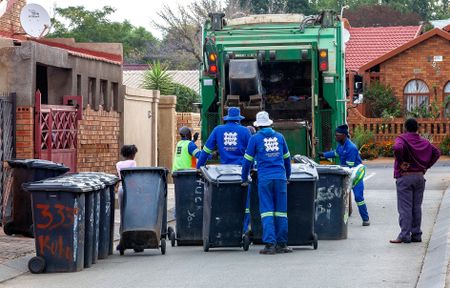
Most significantly, Selepe disclosed that requests to replace the utility’s ageing fleet of specialised refuse trucks had been submitted every year for the past seven years, but were rejected by the City’s Budget Steering Committee because of “competing budget interests”.
Despite an operating budget of R891-million for fleet operations, only R10-million had been allocated for vehicle replacement, and that funding was limited to administration vehicles and illegal dumping equipment rather than refuse trucks.
Selepe further confirmed that the cash shortages had already disrupted landfill operations, street cleaning, refuse collection, vehicle administration and even fuel supplies, with blocked fuel cards at times preventing trucks from operating.
Taken together, Selepe’s admissions paint a picture of a utility that has been operating for years with structural funding shortfalls, leaving it unable to replace vehicles, pay suppliers or maintain normal refuse collection.
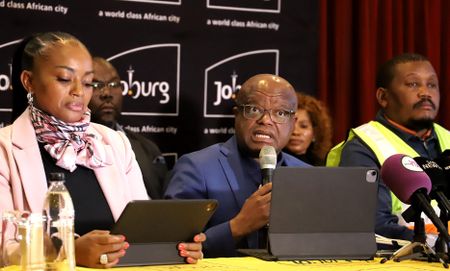
Only days later, Executive Mayor Dada Morero announced that the mayoral committee had considered a dedicated report on Pikitup’s cash-flow position and approved emergency intervention measures.
“Waste management is an essential service, and under the Metro Trading Services Reforms Programme, funding for fleet maintenance, fuel, landfill operations and the other essentials that keep refuse trucks on the road is being ring-fenced and protected. An initial operational allocation is being prioritised to settle the payment backlog with service providers and restore supplier confidence,” Morero said.
The mayor’s announcement directly addresses many of the operational pressures identified by Selepe, with the City now committing additional funding for the very areas Pikitup said had been affected by chronic underfunding.
The refuse collection crisis is one of several service delivery failures linked to Johannesburg’s broader financial distress. The City owes creditors R25.2-billion, has cash reserves of just R3.9-billion, Pikitup owes suppliers R1.33-billion and the National Treasury has intervened over concerns about the municipality’s financial management.
However, the City has not disclosed how much money will be allocated to Pikitup, how much of the R1.33-billion owed to suppliers will be settled, or whether the ring-fenced funding represents a permanent change in how the utility is financed.
During his briefing last week, Morero said Joburg Water would receive additional funding in July, City Power in September, while Pikitup was “next”.
Operational problems continue across several Pikitup depots, with numerous residents’ groups complaining of missed refuse collections and increasing illegal dumping.
The utility said five of its 12 depots had been affected by casual worker protests demanding permanent employment.
The Avalon depot remains the worst affected after casual workers blockaded the entrance and prevented permanent employees from leaving to collect refuse. Protests also disrupted operations at the Randburg depot before the blockade was lifted, while services at the Marlboro depot remain constrained because casual workers have refused to return to work despite access to the depot being restored.
The Waterval depot has resumed normal operations following the lifting of protest action. However, the Roodepoort depot continues to battle refuse collection backlogs because of a shortage of compactor trucks, despite there being no current protest action at the depot.
Pikitup said it continued to engage with stakeholders while implementing operational measures aimed at progressively restoring waste collection services across affected areas. DM
Comments
Scroll down to load comments...