



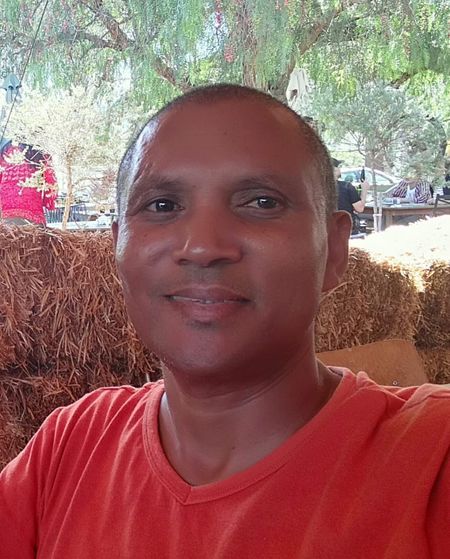
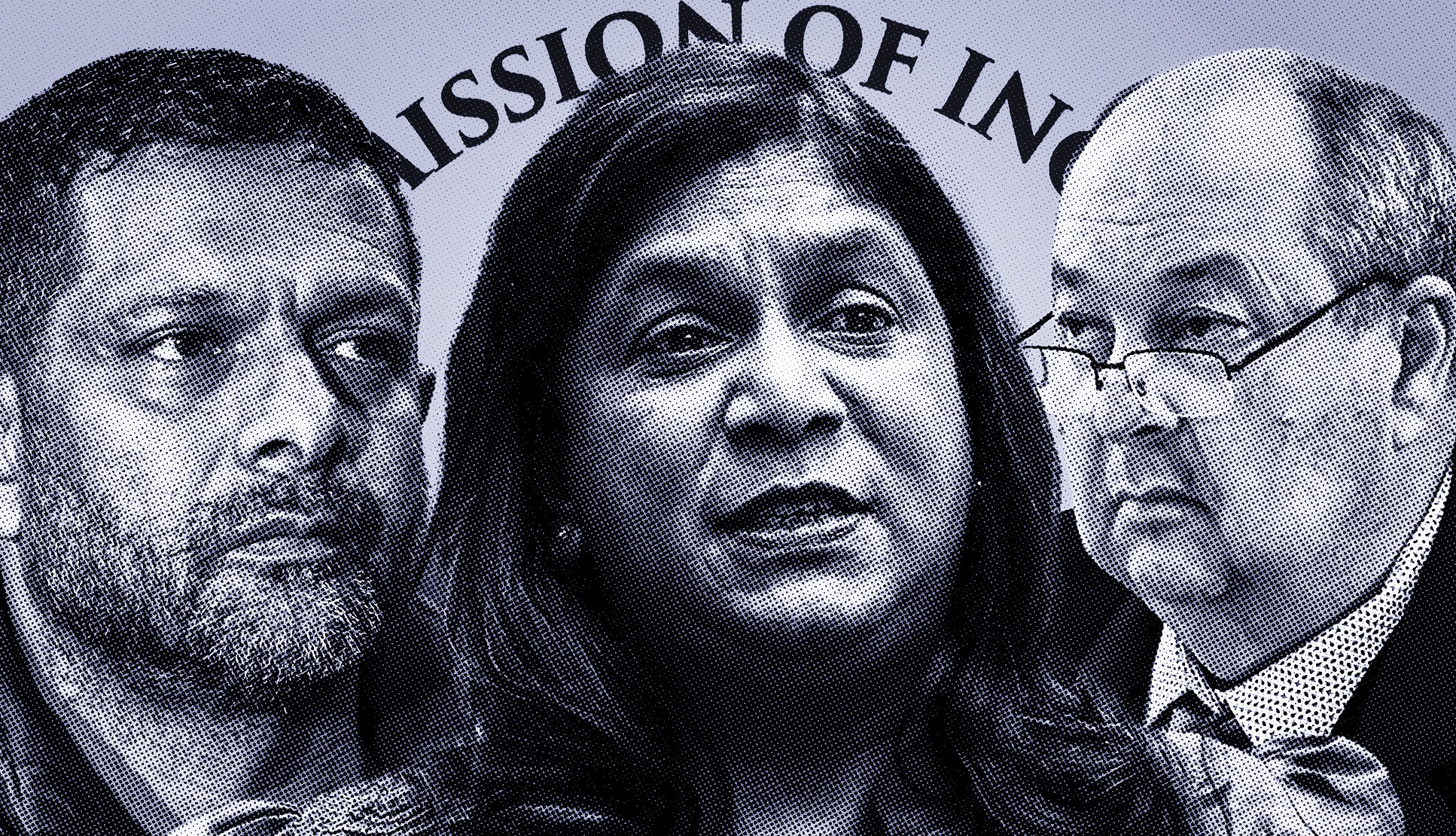
 Illustrative image: Senior Crime Intelligence officer Feroz Khan. (Photo: Gallo Images / OJ Koloti) | Idac head Andrea Johnson. (Photo: Gallo Images / Brenton Geach) | Retired Colonel Kobus Roelofse. (Photo: Gallo Images / Frennie Shivambu)
A whistleblower’s decision to ignore an instruction to delete an email eight years ago has placed advocate Andrea Johnson, head of the Investigating Directorate Against Corruption (Idac), at the centre of explosive testimony before the Madlanga Commission.
/file/dailymaverick/wp-content/uploads/2025/11/ED_585364.jpg "Idac head Andrea Johnson testifies at the parliamentary ad hoc committee inquiry into alleged corruption and political interference in the criminal justice system at Good Hope Chambers in Cape Town on 6 November 2025. (Photo: Gallo Images / Brenton Geach)")
On Friday, 10 July, the commission turned its focus to Idac, hearing evidence that Johnson, then a senior prosecutor at the National Prosecuting Authority (NPA), allegedly funnelled the contents of a confidential criminal complaint to the very man it accused: Major-General Feroz Khan, then head of Operational Intelligence Support at Crime Intelligence.
The complaint was laid by Brigadier Lenora Phetlhe, who alleges that Khan assaulted and intimidated her during an altercation at Crime Intelligence headquarters on 26 June 2018. Her A1 statement was commissioned at Silverton Police Station the same day, and a J88 medical report before the commission allegedly recorded injuries she sustained in the confrontation.
The commission heard evidence that Khan had access to Phetlhe’s complaint before submitting his own warning statement, raising questions about whether he tailored his version of events.
‘Why would you email something and then ask that it be deleted?’
/file/attachments/2994/feroz_khan_20260630061322_102365.jpeg)
A Crime Intelligence officer, testifying partially in camera as Witness O, told the commission that on 4 July 2018, while Khan was in a meeting, he handed her his cellphone and asked her to give her private email address to a woman he identified as “Andrea”. The caller told her she would send an email, that its contents were to be printed for Khan and that Witness O must then delete the message.
“I thought it was a strange request. Why would you email something and then ask that it be deleted? I was cautious and kept it,” she testified in camera.
At 12.46pm that day, an email titled “Phetlhe complaint” arrived from a Gmail address named Andrea Johnson. It contained 12 JPEG images and an audio file, which Witness O printed, sealed in a white envelope and handed to Khan. Only after opening the attachments did she realise they related to Phetlhe’s assault complaint against Khan.
The attachments appeared to include photographs of the police docket, among them Phetlhe’s A1 statement. “I didn’t read them. I simply assisted General Khan by printing the contents,” she testified.
Evidence before the commission showed that the email had been forwarded from the Johnson Gmail address after the material was sent to it by then-journalist Barry Bateman the previous day, 3 July 2018.
Witness O also cast doubt on the timing of Khan’s warning statement, saying it could not have been commissioned at 12.30pm as recorded, because the email only arrived after 12.45pm and the document’s properties showed it was modified at 1.13pm.
Asked why she defied the instruction to delete the email, she said she believed it could one day become important evidence, but was too fearful to come forward at the time. She kept the email, its attachments and the envelope for four years before making a protected disclosure in May 2022.
Her evidence was followed by retired Hawks Colonel Kobus Roelofse and Captain Mark McLean, who outlined the assault investigation and alleged interference they said prevented the case from being prosecuted.
The evidence places Johnson, now head of Idac, under fresh scrutiny at a time when she is already at the centre of controversy. Last month, her attempt to arrest Crime Intelligence head Lieutenant-General Dumisani Khumalo and Major-General Nosipho Madondo prompted an extraordinary public intervention by KwaZulu-Natal Police Commissioner Lieutenant-General Nhlanhla Mkhwanazi, who warned that the SAPS was “facing a war” and that “there are many players” in this game.
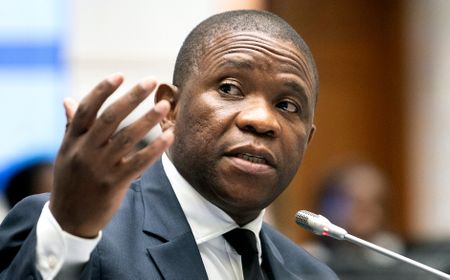
Khan has also dominated headlines in recent days after surviving what police described as an attempted assassination, days before he was due to testify before the Madlanga Commission.
Evidence raises questions over access to confidential complaint
Retired Hawks investigator Roelofse testified that Khan received Phetlhe’s A1 statement, J88 medical report and an audio recording on 4 July 2018 before providing his own version of events.
The sequence, Roelofse said, was deeply concerning.
“Receipt of such sensitive information would enable the suspect to manufacture and tailor his version,” he told the commission, adding that it also created an opportunity for a suspect to approach potential witnesses before investigators had obtained their statements.
Roelofse and McLean testified that, in June 2022, they sought to trace the origin of the email sent to Johnson by interviewing former journalist Barry Bateman, who was then employed as a media manager at AfriForum. The meeting was arranged through AfriForum’s Andrew Leask and took place in the presence of Leask and advocate Gerrie Nel.
According to the investigators, Bateman said he had received the attachments, Phetlhe’s A1 statement, the J88 medical report and an audio recording, via WhatsApp from a source he declined to identify.
The investigators testified that Bateman told them that Johnson, then a senior prosecutor at the NPA, had requested the material on 3 July 2018 and that he forwarded it to her the same day. Bateman said he could not remember why Johnson had asked for the documents.
Roelofse and McLean further testified that Bateman described his relationship with Johnson as longstanding, dating back to 2011, and said he saw nothing unusual about her request.
Although the investigators asked Bateman to provide a formal statement, Roelofse told the commission that, despite repeated follow-ups before his retirement in January 2025, the statement was only submitted to McLean in June 2026, four years after the interview.
By then McLean had also established that the NPA had decided on 15 December 2021 not to prosecute the assault and intimidation case against Khan. The docket was subsequently withdrawn from the Crime Administration System on 13 January 2022.
Protected disclosure escalated to Hawks leadership
Because the allegations implicated Johnson, Roelofse testified that he bypassed normal channels and approached then national Hawks head Lieutenant-General Godfrey Lebeya in the last week of August 2022.
He told the commission he handed Lebeya Witness O’s protected disclosure and asked him to secure the appointment of a senior prosecutor.
“I could not take the matter to a lower court due to Johnson’s position as the head of Idac,” Roelofse testified. “Her position also placed me in a precarious position because I had been placed at Idac in advocate Johnson’s office as part of a duty arrangement between the [Directorate for Priority Crime Investigations, DPCI] and the Idac.”
Days later, on 7 September 2022, Roelofse said Johnson summoned him to her office and told him the then National Director of Public Prosecutions, advocate Shamila Batohi, had informed her of the protected disclosure and the allegations against her.
According to Roelofse, Johnson said she had read the affidavit, denied any wrongdoing and had already contacted former journalist Bateman, telling him “not to worry”.
Roelofse testified that he found it “extremely concerning” that the protected disclosure had allegedly reached the subject of the allegations before any investigation had been concluded.
He said he later confirmed that Lebeya had met Batohi on 2 September 2022. Although he could not say as fact that Lebeya had handed the affidavit to Batohi, Roelofse testified that Johnson herself told him Batohi had shown her the document. He added that WhatsApp messages from Bateman also referred to Johnson saying Batohi had discussed the affidavit with her.
“The irony of the situation was not lost on me,” Roelofse said, alleging that if Batohi had indeed shared the protected disclosure with Johnson, it mirrored the earlier allegation that Johnson had Phetlhe’s criminal complaint with Major-General Khan before he submitted his warning statement. DM