




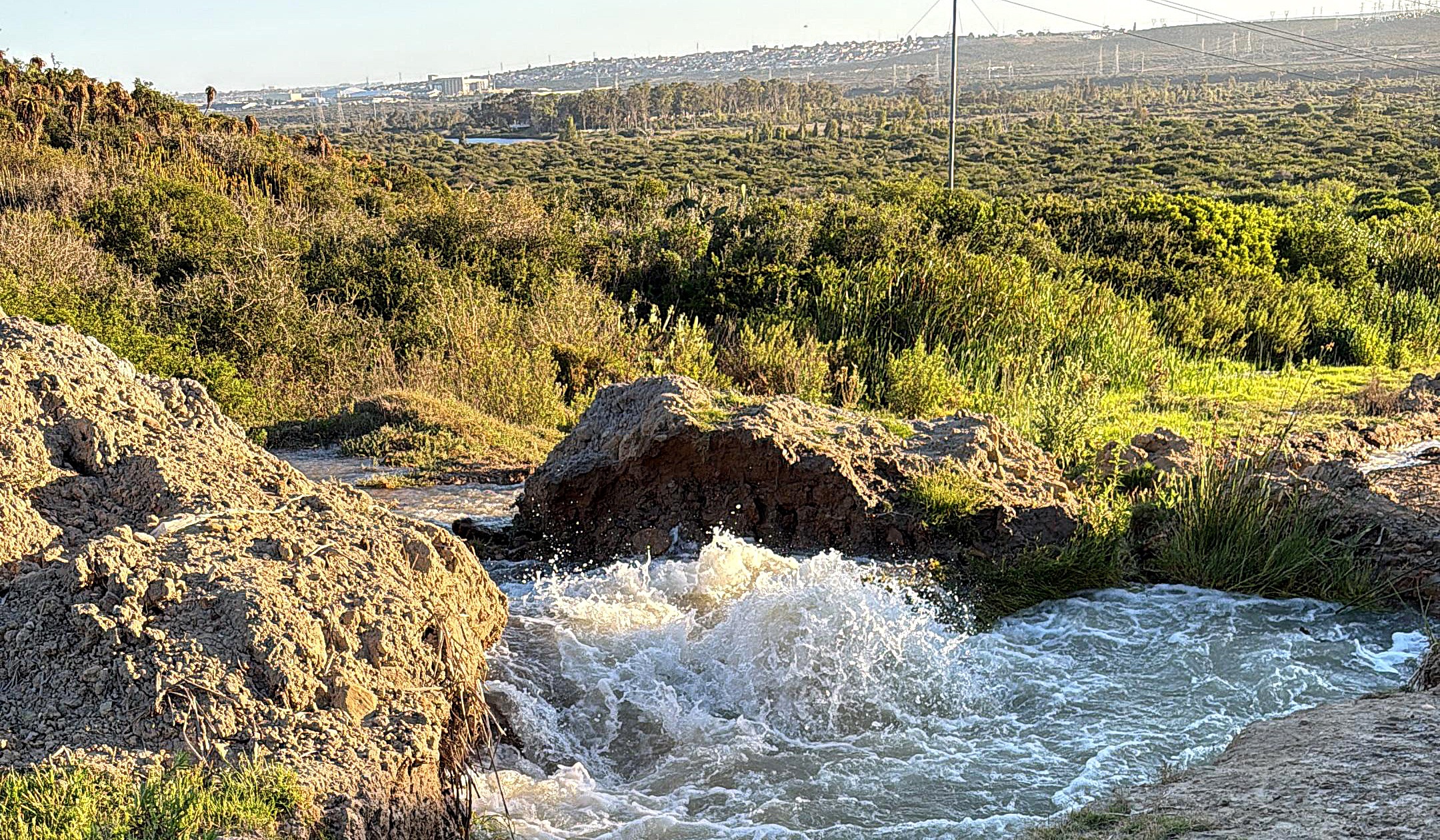
 Nelson Mandela Bay’s water crises: A torrential water leak was discovered on the outskirts of Despatch, near Nelson Mandela Bay in November 2025. Days before, municipal contractors had worked on that pipeline. Parts of Despatch were left with dry taps shortly thereafter. (Photo: Supplied)
Residents of the Nelson Mandela Bay metro should brace for another big water shutdown soon, as engineers discovered extensive damage to pipelines running from the big 500mm Chelsea/Motherwell pipeline while preparing to fix a burst.
No date or details can yet be given by the municipality.
The shutdown is likely to anger even more communities already battling extensive outages that leave many without water for days or weeks.
What is going on?
The answer to what the water service failures entail is confusing at best.
On Friday, the metro indicated that work on a major pipeline bringing water to the city could not proceed due to vandalism, making it difficult for council experts to isolate the damaged part of the pipe.
“The planned shutdown of the Motherwell-Chelsea Bulk Water Pipeline system could not proceed as scheduled today due to operational challenges encountered during implementation,” the metro’s official notice read.
“[The] burst on a critical 500mm section of the Motherwell-Chelsea Bulk Water Pipeline remains a major concern and requires urgent repairs to fully restore normal system operations.
“This pipeline forms part of an interconnected bulk water transfer system designed to provide both hydraulic flexibility and supply redundancy. Under normal circumstances, the damaged section would be isolated independently, allowing water supply to continue to most areas while repairs are undertaken.
“Unfortunately, extensive vandalism and theft of critical water infrastructure have severely compromised this capability. Several key isolating valves used to shut down individual pipeline sections have been damaged or destroyed by vandals. As a result, it is no longer possible to isolate only the affected section of the pipeline.
“Multiple interconnected pipeline sections must now be isolated simultaneously to safely undertake the repairs, resulting in a larger shutdown area than would ordinarily be required,” the message continued, referring to a water shutdown that will affect a much larger part of the metro than first envisaged.
The metro said it would proceed with a revised repair schedule.
On Friday, several communities that did not use the Chelsea/Motherwell reservoirs had no water supply, but this had been due to a power failure at the Schoenmakerskop Water Treatment Works.
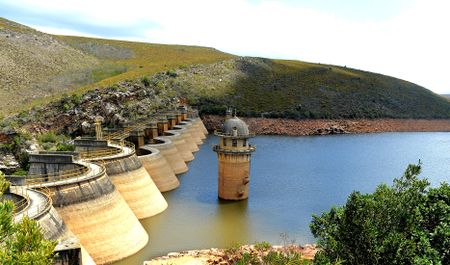
By Saturday, the smaller shutdown appeared to have gone ahead, and several reservoirs were at critical levels, or empty. “The repair works which started yesterday are at an advanced stage, and teams are working around the clock to finalise [it],” the metro promised.
However, the metro deployed water trucks as several key reservoirs were already running low.
In an effort to find more information on what is going on with the water supply, Daily Maverick sent questions about the larger shutdown to the metro’s communications director, Sithembiso Soyaya.
Question: How was the extent of the damage to the other infrastructure discovered – that will now lead to a larger shutdown of the metro’s water?
The condition of the affected infrastructure was identified through operational monitoring and detailed engineering investigations undertaken following the severe weather events in May and June.
As the technical assessments progressed, engineers determined that the extent of the work required a more comprehensive intervention than initially anticipated. A planned shutdown has therefore been identified as the most appropriate engineering solution to complete the repairs safely, protect the integrity of the bulk water system and reduce the risk of a more significant unplanned failure.
Q: But are there no weekly or monthly patrols along these lines to check on their condition? If not, why not?
Yes, there are, but these were difficult to find.
The municipality implements ongoing operational inspections, preventative maintenance programmes and condition assessments across its bulk water infrastructure network.
The metro manages an extensive network comprising hundreds of kilometres of underground pipelines, reservoirs, valves and associated infrastructure. While routine inspections form part of normal asset management practices, certain defects and underground failures may only become evident through operational monitoring, pressure testing, excavation or detailed engineering investigations, particularly following severe weather events or acts of vandalism.
The municipality continuously reviews and strengthens its asset management practices to improve infrastructure resilience and reduce service interruptions.”
Q: When will the larger shutdown happen?
It appears to Daily Maverick that the answer to this question is not yet known:
Detailed engineering planning is currently under way to determine the final scope of the planned shutdown. The objective is to complete the necessary repairs while minimising both the geographical extent of the shutdown and the duration of the interruption. Once the engineering planning has been finalised, the municipality will communicate the affected areas, anticipated duration, alternative water supply arrangements and all contingency measures.
Soyaya promised that advanced notice would be given and there was no need for residents to store water.
Q: Could you provide photographic proof of the issues that you are describing with the 500mm pipeline?
Daily Maverick assumes that the answer to this was “no”:
The municipality will continue to communicate verified information relating to the planned maintenance through its official communication platforms. The planned intervention is informed by detailed engineering assessments undertaken by qualified technical professionals following inspections of the affected infrastructure. The municipality’s priority remains the protection of critical bulk water infrastructure and the implementation of the required repairs to ensure the continued reliability and resilience of the water supply system.
Q: Have you laid any criminal charges relating to the vandalism on bulk infrastructure? Please provide case numbers and proof.
The answer to this question to Soyaya was also “no” – Daily Maverick thinks.
Soyaya said the municipality would report vandalism and theft affecting municipal infrastructure to the South African Police Service, where “criminal conduct is identified”.
But while the municipality called the pipe burst vandalism in its initial notice to residents, he said that the municipality was still verifying the “relevant information” with the responsible departments and law enforcement:
Confirmed information will be provided once that verification process has been concluded.
The municipality continues to work closely with law enforcement agencies to combat infrastructure-related crime, which remains one of the most significant threats to sustainable municipal service delivery.
Q: How long will the May/June floods still affect water provision in Nelson Mandela Bay?
Soyaya said severe storms and localised flooding in the metro had damaged the municipality’s water infrastructure.
He said the municipality’s “emergency response phase” to the damage suffered at its water reticulation and treatment plants and infrastructure had “largely been concluded”. While they were awaiting disaster funding, they were implementing recovery interventions within their available resources.
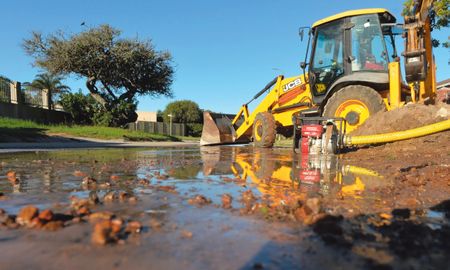
He indicated, however, that the metro could not yet say when the flood damage repairs would be completed:
It would consequently be neither accurate nor responsible to assign a single date by which every consequence of the flooding will have been resolved. DM
Comments
Scroll down to load comments...