



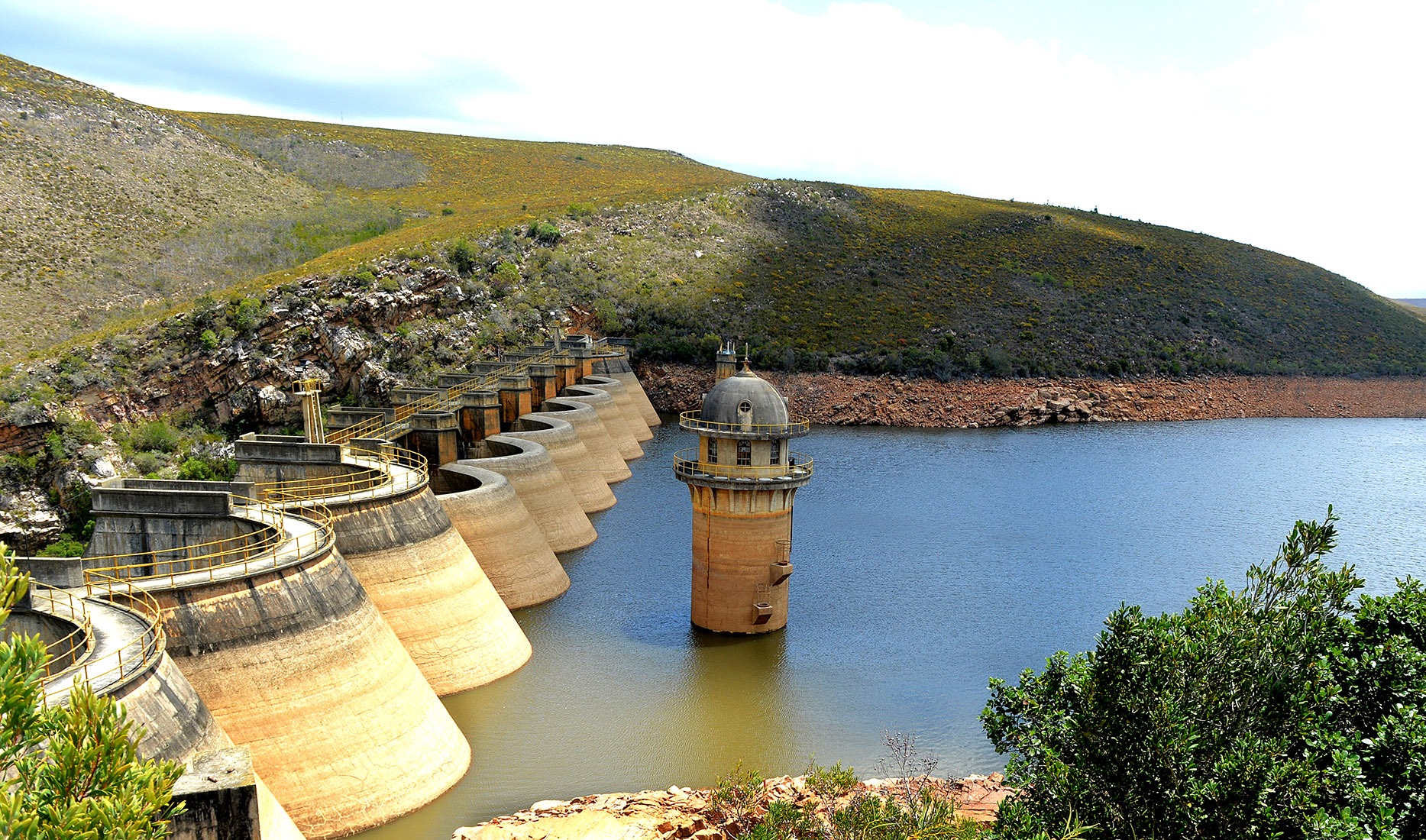
 One of Nelson Mandela Bay’s supply dams, the Churchill Dam, on 20 January 2025. (Photo: Deon Ferreira)
In a letter to an exasperated councillor whose ward has been suffering under extensive water outages for months, acting Nelson Mandela Bay city manager Lonwabo Ngoqo wrote that he was seeking to appoint an outside consultant to identify problems and solutions for water and electricity in the metro, as the situation had become “unbearable”.
Ngoqo’s letter comes within a week of a damning performance review of the municipality’s water management by the Department of Water and Sanitation (DWS).
/file/attachments/orphans/WhatsApp-Image-2026-01-18-at-1330_737822_228396.jpg "File photo: A water leak that was reported in Nelson Mandela Bay in November 2025 was fixed only on 6 January 2026. (Photo: Facebook)")
The department has promised that “enforcement will be prioritised” after the metro dismally failed compliance tests across the board.
The lamentable performance review for the metro highlighted a failure to comply with the prescribed Norms and Standards; indicated that urgent attention had to be paid to addressing water losses through leaks and called for stricter enforcement of municipal by-laws to eliminate illegal connections.
Severe challenges
The department also urged the metro to strengthen water conservation and demand management practices, particularly in the light of the severe water challenges experienced by the city.
The metro was also warned to “respond to all non-compliance correspondence and ensure transparent engagement with the regulating authority, given the deteriorating performance conditions”.
It was found to be extremely vulnerable in its financial asset management of water infrastructure, scoring only 35%, with officials’ failure to budget and prioritise maintenance cited as the root cause.
The latest three reasons provided by the metro this week for yet another extensive water outage were an electricity failure at its Elandsjacht Water Treatment Works, a pump failure at Nooitgedacht Water Treatment Works, and a severe pipe burst at Joe Slovo.
Gustav Rautenbach, ward 8 councillor for the Lorraine area, finally fired off a scathing letter to the acting city manager on Thursday. “Unfortunately, it is clear that the waterworks is unable to resolve ongoing water problems/outages. We need help,” he wrote.
Ngcoqo answered, “I am currently looking for service providers to give a report on water, sewerage and electricity to identify problems and give a solution. This situation is unbearable for the city.”
In its performance review of the metro, the Department of Water and Sanitation gave the metro 35% for asset management and 45% for operation and maintenance of assets.
The most shocking drop in the metro’s scores was noted for Operation and Maintenance of Assets, which deteriorated from 75 % to 45 %.
Slight improvements
While slight improvements were seen in some aspects of operations, the department’s review scored 74% for the capacity of technical staff (deteriorating from 80%) and a sharp drop in compliance, with wastewater safety dropping from 78% to 64%.
The metro’s scores for Infrastructure Asset Management improved from 65% to 70%, financial management from 50% to 75%, but financial management of assets (read prioritising funds for maintenance) remained at 35%.
Revenue collection fell by 10% to 60%.
The performance review further highlighted that the municipality was not supplying data for the quality of its five boreholes used for water, in violation of regulations. The document continued that failures in water quality were not being reported to the department.
But in general, most of the metro’s water was safe, according to the Department of Water and Sanitation assessment.
“DWS has to ask what the causes of failures were and what interventions were put in place. In most cases, this would be too late as the risk has occurred. Public health is compromised in this case,” the document says.
The performance review highlighted that water from most of the metro’s sources was considered safe and healthy except for those from the Elandsjacht Water Treatment Works and the Springs, especially for E.coli levels.
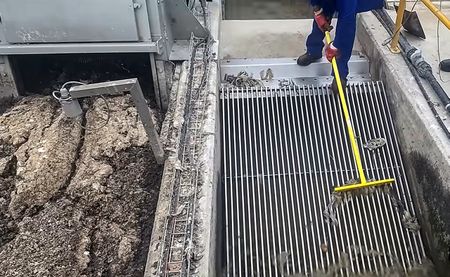
The dismal performance of the metro’s wastewater treatment works was also highlighted by the department.
“Nelson Mandela Bay experienced one of the largest regressions in the Eastern Cape, declining from 66% in 2021 to 36% in 2024,” the performance review finds.
Not one wastewater treatment works achieved Green Drop Certification, and the situation at Driftsands and Fishwater Flats was so critical that the department now regarded them as disqualified systems.
Cape Recife Waste Water Treatment Works (WWTW) had a “complete microbiological failure”, chemical failure, physical failure and was deemed non-functional and in a state of total collapse.
Despatch WWTW scored excellent marks across the board, but 0% for operations.
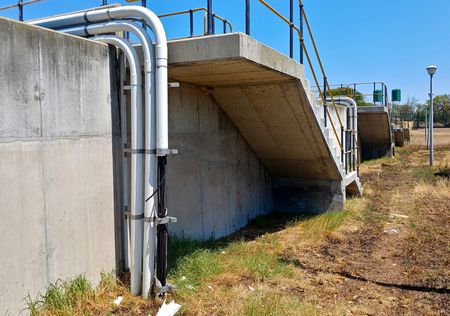
Driftsands WWTW was cited for complete microbiological, chemical, physical and operational failures and was marked as non-compliant in all respects.
Fishwater Flats WWTW was flagged for bad microbiological, chemical and physical compliance and scored 0% for operational compliance. Kelvin Jones WWTW scored 0% for operational compliance, but did score well for chemical compliance.
KwaNobuhle WWTW failed on chemical and physical compliance, even though it scored 99.9% for microbiological compliance.
While getting an excellent score for microbiological (99.9%) and chemical compliance, poor physical and operational compliance was flagged at Rocklands WWTW.
The DWS flagged the state of the city’s sewage system, citing high environmental risks; the potential deterioration of receiving water quality; an increased risk of pollution incidents; and a threat to downstream ecosystems and public health if non-compliance persisted. DM
Comments
Scroll down to load comments...