




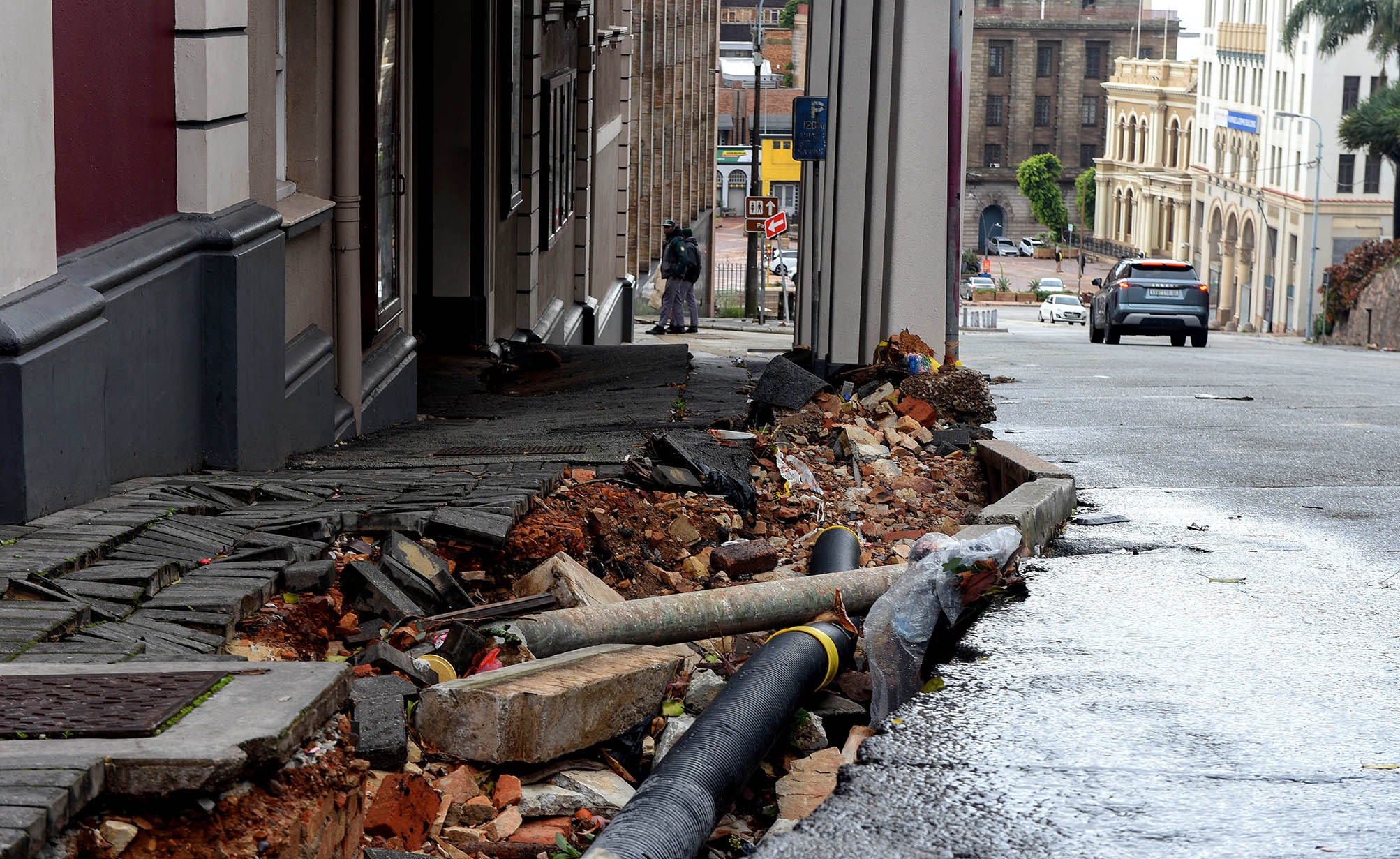
 The road and sidewalk outside the historic Opera House in Central Gqeberha were severely damaged by the early May 2026 flooding. (Photo: Deon Ferreira)
While Nelson Mandela Bay’s municipality urged residents to report water leaks “immediately” as part of its emergency response to one of the worst water crises the metro has seen in recent years, its own fault-reporting telephone and WhatsApp lines had been cut off — because the municipality hadn’t paid the bill.
The metro is grappling with critically low reservoir levels, chemical shortages at its treatment plants, more than 7,500 unrepaired leaks and a procurement process so dysfunctional that plumbers cannot be appointed because a bid adjudication committee has repeatedly failed to meet — even though promises were made.
The timing could not be worse. The metro is hosting a Springbok match against the Barbarians at Nelson Mandela Bay Stadium on Saturday, while MEC for Cooperative Governance and Traditional Affairs Zolile Williams hosts mayors, municipal managers and traditional leaders from across the Eastern Cape for a two-day Political Munimec Meeting — a gathering whose stated purpose is to strengthen service delivery and municipal governance.
Dozens of suburbs across the metro are affected, with several key reservoirs at critically low levels. The Rosedale Reservoir is empty, while Emerald Hill and Gelvandale sit at 2%, Heatherbank at 3% and Lovemore Heights at 4%. Chelsea and Fort Nottingham reservoirs are at 7%.
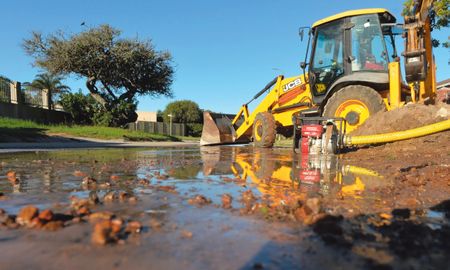
The crisis is not a result of water scarcity — the metro’s dams are full following the heavy flooding of early May. The problem apparently lies in the city’s ability to treat and distribute the water.
/file/attachments/orphans/Flooding3_478085.jpg "Infrastructure damage — a low-water bridge along the William Moffet Expressway collapsed in Nelson Mandela Bay in the early May 2026 flooding. (Photo: Deon Ferreira)")
The municipality highlighted several key factors they claim have caused major water disruption, including:
High turbidity in raw water sources: The severe flooding significantly increased the turbidity (mud and sediment content) of raw water entering the treatment works. Existing treatment infrastructure was not designed to process water with such extreme turbidity levels, resulting in treatment plants operating at reduced efficiency and producing less than half of their normal output at certain times;
Power supply interruptions: Critical water infrastructure, including the Nooitgedagt Water Treatment Works, Lorrie Water Treatment Works, Motherwell Booster Pump Station and Schoonie Pump Station, experienced intermittent power disruptions during May and June. These interruptions affected both water production and the ability to pump water to reservoirs across the metro;
Chemical supply challenges: The treatment of drinking water relies on a consistent supply of specialised chemicals. Delays in deliveries, logistical challenges, quality concerns and contractual issues have resulted in intermittent shortages, reducing production capacity at treatment facilities;
Excessive water consumption: Current daily water consumption in Nelson Mandela Bay is about 380 million litres a day, significantly exceeding the target demand of 280 million litres a day. This excessive demand places immense pressure on an already strained system and contributes to reservoir depletion; and
Reservoir levels critically low: The cumulative impact of these challenges has left many strategic reservoirs operating at critically low levels, with some reservoirs nearly empty. The water supply system is operating under severe strain, making it highly vulnerable to any operational interruption.
DA MPL and Bay mayoral candidate Retief Odendaal said the municipality was not being upfront about what the real issue was behind the water interruptions.
“We are not getting the information we should be getting. The only thing I can deduce from that is that the problem is quite embarrassing. I’ve come to learn that there are problems with chemicals, that could potentially be the reason. If it was just an electricity outage, they would issue a correspondence, but I also noted … a major pipe that was damaged by a contractor between Stanford and Chelsea roads exacerbated the situation.”
Odendaal said the issue at the Kabah reservoir that supplied Uitenhage was totally offline.
“However, it seems the biggest problem is with Nooitgedagt because we’re not getting sufficient supply to Uitenhage and western suburbs. It’s very frustrating for ward councillors because if they are getting information, they can estimate how long the outage will last, but there’s nothing coming from the administration. To top it off, residents can’t even phone the ward office because the lines are off.”
The concerning reservoir levels are:
Chelsea Reservoir – 7%;
Emerald Hill Reservoir – 2%;
Heatherbank Reservoir – 3%;
Lovemore Heights Reservoir – 4%;
Gelvandale Reservoir – 2%;
Greenbushes Reservoir – 13%;
Fort Nottingham Reservoir – 7%;
Fairview Reservoir – 11%; and
Rosedale Reservoir – 0%.
Politics head for infrastructure and engineering Buyelwa Mafaya said the recent floods were one of the most severe the city had experienced, judging from the infrastructure damage.
/file/attachments/orphans/Andisa-Kyran-WaterLeaks_215610.jpg "Politics head for infrastructure and engineering in the Nelson Mandela Bay Metro, Buyelwa Mafaya. (Photo: Facebook / Nelson Mandela Bay Municipality)")
“The floods brought high levels of turbidity and the water treatment plants are not built to treat so much of it. So we have to sift the soil through before we treat the water, but as we conduct the treatment, the water foams. This requires us to use a lot of chemicals, and that’s why we ran out.”
Mafaya said the chemicals were ordered on Monday and were expected to be delivered on Thursday.
She added water leaks were the city’s biggest headache, which required a permanent solution.
“The water leaks are something we can’t run away from. In the new financial year, we have included a budget to deal with the permanent solution for the leaks.”
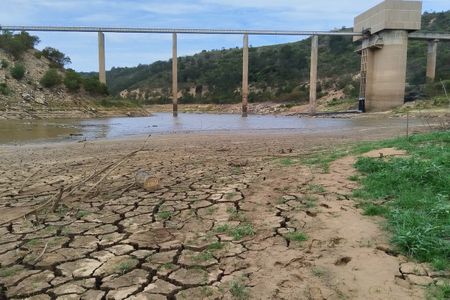
Mafaya said they had been trying to appoint plumbers to deal with the leaks and sewage spillages, but were stuck by the failure to convene the bid adjudication committee (BAC).
“We are waiting for the BAC to convene a meeting to appoint plumbers to deal with water leaks and sewerage problems. It’s a concern that the BAC has not been having meetings, so many projects are stuck because of this. But on Tuesday, the acting city manager promised to ensure the BAC sits as it has been clashing with council meetings; sometimes it did not meet the quorum.”
On the lapsed telephone service due to non-payment, Mafaya said the matter was concerning. It was important for residents to be able to report service delivery issues.
“However, the acting executive director for corporate services met with the budget and treasury team and has said that the outstanding amount to the service provider will be paid, and by Friday morning, the lines will be working.”
Angry residents
Frustration is mounting among residents who are demanding clearer communication from the municipality and proper maintenance and oversight of critical infrastructure.
Ed Richardson of the Richmond Hill Special Rates Area said residents from Richmond Hill and surrounds were increasingly frustrated by the municipality’s handling of the situation.
He said there was a growing sense among residents that the issue could have significant political consequences ahead of the next local government elections.
“People are just waiting for November. People are just angry. For those who do not have [water] tanks, we do not see water tankers. People just don’t have water. They have to go and buy water or just survive in buckets like everybody else. Obviously, it affects businesses, the restaurants here.
“So it’s a massive blow every time it happens. There are lots of small businesses, catering businesses and offices in the suburb. All of those have to now survive without water. People are really just pissed off,” Richardson said.
Kariega resident and activist Kayzel Forbes said water supply problems in areas including Rosedale, Kabah and several other affected neighbourhoods in Kariega had persisted for close to four months.
Forbes said many residents had been forced to buy water and were frustrated that the municipality’s limited fleet of water tankers often failed to reach all affected areas.
“It is very, very, very bad. The trucks are not coming out. Water is a basic need, a basic human right. These outages, which have been going on for almost four months, are really affecting the elderly, vulnerable and the poorest of the poor the most. People are now making use of private resources to get water,” Forbes said.
‘Poor communication’
“The communication between the municipality and the community is not great. People actually need to call the municipality and ask them to send out a water truck. There are a lot of problems – drivers are not being paid, and trucks are not being serviced,” she said.
/file/dailymaverick/wp-content/uploads/2022/06/MC-Waterleaks-Estelle.jpg "Democratic Alliance councillor Vernon Boggenpoel took a video of the damage caused when vandals stole a valve from a large pipe in Nelson Mandela Bay, Eastern Cape. (Screengrab: Supplied)")
Ward 12 councillor Vernon Boggenpoel – who has raised the water crisis with the city’s administration, demanding answers – says residents in his ward are increasingly frustrated.
“Most of my ward does not have water. The residents in my ward are completely unhappy. And [it is] completely understandable why they are unhappy because they are without water every second day … and sometimes for four or five days at a time. Thankfully, there are also water trucks being sent to service the area,” he said
Ward 6 councillor Gert Engelbrecht said residents in his ward were also “discouraged” by the ongoing water supply problems.
He said that while some low-lying areas, including Fairview and parts of Overbaakens, still received water – although the pressure was low – taps in higher-lying neighbourhoods such as Lovemore Heights were dry.
“People are extremely discouraged, and with that comes a great deal of pressure, which is understandable. These water interruptions feel like the last straw that broke the camel’s back, as residents are already having to contend with deteriorating road infrastructure and broken streetlights,” he said.
The continued outages, which, according to Engelbrecht, seemed to be a weekly occurrence in his ward, had also begun to take their toll on local business.
In Motherwell, ward 59 councillor Bulelani Matenjwa said there had been no reports of water outages or incidents of low water pressure in Motherwell. He said that the reservoir supplying the area was at about 31% capacity by early Thursday afternoon. DM
Comments
Scroll down to load comments...