



 UPL chairperson and CEO Jai Shroff (left) and President Cyril Ramaphosa framed against a backdrop of the gutted remains of the UPL chemical storage warehouse in Cornubia, Durban. (Photos: Jai Shroff / Instagram page and Tony Carnie)
Bygones can be bygones when there is promise of a lucrative investment, it seems, judging by the eThekwini (Durban) Municipality’s effusive news release hailing the “responsible corporate stewardship” of the Mumbai-based UPL agrochemicals corporation, which plans to develop a R17-billion biofuels refinery and processing facility in Durban.
The deal appears to have been sealed at President Cyril Ramaphosa’s Sixth South Africa Investment Conference in Sandton, Johannesburg, in April following meetings attended by Ramaphosa, senior trade officials and the UPL chairperson and CEO, Jai Shroff.
/file/attachments/orphans/tonyupl4trumpandshroffinmarch2020UPLGlobalInstagram_944123.jpg "US President Donald Trump and UPL chair Jai Shroff at a meeting in March 2020. (Photo: UPL Global / Instagram)")
According to city manager Musa Mbhele: “The leadership of eThekwini is humbled by the confidence that UPL has shown in our City and the province of KwaZulu-Natal by committing a further R17-billion investment, notwithstanding the significant losses suffered during the July 2021 unrest and the more than R700-million already invested in environmental rehabilitation. This level of commitment reflects confidence in our region’s future and is highly commendable.”
The municipality believed that “UPL’s continued investment in environmental restoration, sustainability and future industrial development sends a strong positive signal about responsible corporate citizenship, environmental stewardship and long-term investor confidence in eThekwini and KwaZulu-Natal.”
Environmental mess
Mbhele’s mention of UPL’s green “stewardship” credentials appears to refer to the costs incurred by the company in trying to clean up the environmental mess left behind in Durban in July 2021 when arsonists torched its new chemical storage warehouse at Cornubia.
/file/attachments/orphans/tonyUPL6UPLfacts1blackgreenmuckseepageSourceGroundTruthreporttoUPLAugust2022_801572.jpg "A pool of UPL chemical muck seeping from sediments in the Ohlange stream in August 2022. (Photo: GroundTruth report to UPL)")
The resulting inferno led to thousands of Durban residents choking on the fumes from several tonnes of farm chemicals (including several toxic pesticides), while nearly four tonnes of fish and other estuarine creatures were killed in the uMhlanga lagoon and estuary. Several northern beaches were closed for months as a precautionary measure to safeguard bathers.
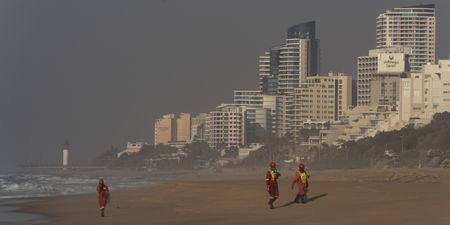
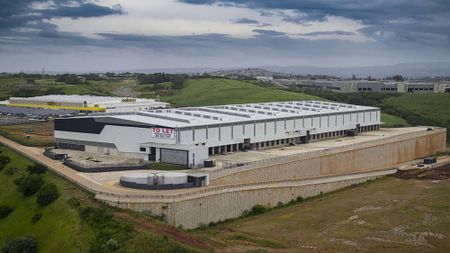
While UPL argued at the time that it was a victim of arson and that its “state-of-the-art” fire suppression systems were overwhelmed, it later emerged that UPL had converted a leased, general purpose warehouse to store large quantities of highly poisonous chemicals a short distance away from homes and schools in the neighbouring suburbs of Umhlanga, Prestondale and Blackburn Village.
/file/attachments/orphans/tonyUPL2imageSteveMcCurrachTheBateleursFlyingfortheEnvironment_707583.jpg "The remains of the UPL toxic chemical warehouse in Cornubia, Durban, after the 2012 arson attack. (Photo: Steve McCurrach / The Bateleurs Flying for the Environment )")
According to a provisional compliance report by the national Department of Forestry, Fisheries and the Environment, the company appeared to have flouted several environmental planning, health and safety regulations.
According to the report, UPL did not appear to have conducted a site-specific environmental impact assessment (EIA) report or a major hazardous installation assessment, which may have led to stricter safety measures to mitigate impacts in the event of an accident or disaster.
Following this report, the department’s Green Scorpions division laid several charges against the company and submitted a detailed docket to the National Prosecuting Authority (NPA) recommending several criminal charges against the company.
For reasons that have yet to be fully explained by the NPA, the docket appears to be gathering dust — although it came to light in August 2025 that UPL had written to the National Director of Public Prosecutions, requesting a “review” of the decision by the KwaZulu-Natal Director of Public Prosecutions to prosecute the company.
/file/attachments/orphans/tonyUPL3AnimageofthepollutedUmhlangalagooninJuly2021ImageSupplied_725672.jpg "Chemical pollution stains the Umhlanga lagoon in July 2021. (Photo: Supplied)")
Responding to queries from Daily Maverick on whether the latest investment offer from UPL could potentially influence the outcome of the prosecution process, Durban environmental law attorney Jeremy Ridl said he believed that there could be several evidentiary hurdles to be overcome for the NPA to prove a “complex case” — and in all likelihood, the NPA might opt to enter into a plea bargain deal with company rather than risking losing a case on technicalities.
“Where were all the regulatory authorities while a major [hazardous chemical] warehouse was being established in eThekwini when there should have been massive red flags flashing?”
But five years down the line, said Ridl, the prosecutors would have to ensure the attendance of a wide variety of government regulators and other witnesses at trial, and possibly subpoena other expert witnesses to testify on reports and records commissioned and paid for by the company.
Call for comprehensive update
Desmond D’Sa, co-ordinator of the South Durban Community Environmental Alliance, said he was not aware of the new UPL biofuel proposal, but the NPA needed to provide a comprehensive update on the reasons for the delay in taking the case to court.
“The [eThekwini] council and government do not seem to be playing their part in looking after the people and environment ... we simply do not know what is happening with this case,” he said.
/file/attachments/orphans/tonyUPL5CommunityleaderDesmondDsasurveystheremnantsoftheUPLchemicalwarehousepictonycarnie_687203.jpg "Community leader Desmond D'sa surveys the remnants of the UPL chemical warehouse. (Photo: Tony Carnie)")
UPL has not responded to several queries sent to senior company official Marcel Dreyer, its local legal representative, and the Resolve Communications PR agency, early on 9 July, including a request for clarity on the exact location and production volumes of the proposed UPL bioethanol refinery.
In its statement, eThekwini said the city leadership believed that UPL had made “significant progress in restoring, rehabilitating and stabilising the affected environment while reaffirming its long-term commitment to eThekwini Municipality through further strategic investment.
“As at the end of March 2026, UPL had invested approximately R707.9-million in environmental rehabilitation, ecological restoration, infrastructure reinstatement, specialist scientific investigations and ongoing environmental monitoring arising from the incident.
“This represents one of the most significant privately funded environmental rehabilitation programmes undertaken in the region in recent years and underscores the important role responsible corporate investment can play in environmental recovery and sustainable development.” DM
Apology and correction
Daily Maverick and the writer apologise to the NPA for failing to seek its response prior to publication of the article “Durban rolls out red carpet for UPL as Prosecutors dither over chemical inferno charges”, dated 9 July 2026 by Tony Carnie.
While Daily Maverick has requested and received comments from the NPA on the progress of this matter on two previous occasions, we neglected to do so in this instance.
The NPA has asked us to record its concern that:
- “The Headline suggests that the Prosecutors are dithering over the charges;
- “The article refers to the docket gathering dust;
- “The writer failed to verify the facts from the NPA and relied on incorrect inferential reasoning before going to print. These are as follows:
“The headline conflates two separate issues, that is the rolling out of the red carpet for UPL and the apparent dithering of the prosecution, creating an erroneous narrative from the outset.
“Although the August 2025 representations by UPL to the National Director of Public Prosecutions were referred to, the writer failed to confirm with the NPA as to the (latest) status of the matter.
“The writer included in the article a comment made by the coordinator of the South Durban Community Environmental Alliance. The comment constituted unverified information, yet it was nonetheless included in the article.
“The writer implies a nefarious connection between corporate influence and justice.
“In light of the above, we bring the following to your urgent attention:
- The Prosecution is not dithering with this case. As with any complex investigation, a process is followed in order to ensure that all necessary steps are properly undertaken. To this end, this matter was enrolled at the Durban Regional court on 2 March 2026. On this day, the company and three of its directors appeared in court on charges of contravening the National Environmental Management Act 107 of 1998, as well as contravening Section 5 (1) of the eThekwini Municipality Bylaw of 2020;
- The docket is not gathering dust – following the accused’s first appearance on 2 March 2026, they subsequently appeared in court again on 30 April 2026. The matter now stands adjourned to 30 September 2026 for a pre-trial conference;
- While Mr Carnie contacted the NPA in August 2025 requesting an update on the matter, he failed to contact the organisation again before finalising this article. Had he done so, he would have been advised that the matter was enrolled, thus addressing the concerns raised in the article;
- To imply that the NPA and/or justice is susceptible to corporate influence without reference to any evidence is, with respect, disingenuous.”


Comments
Scroll down to load comments...