




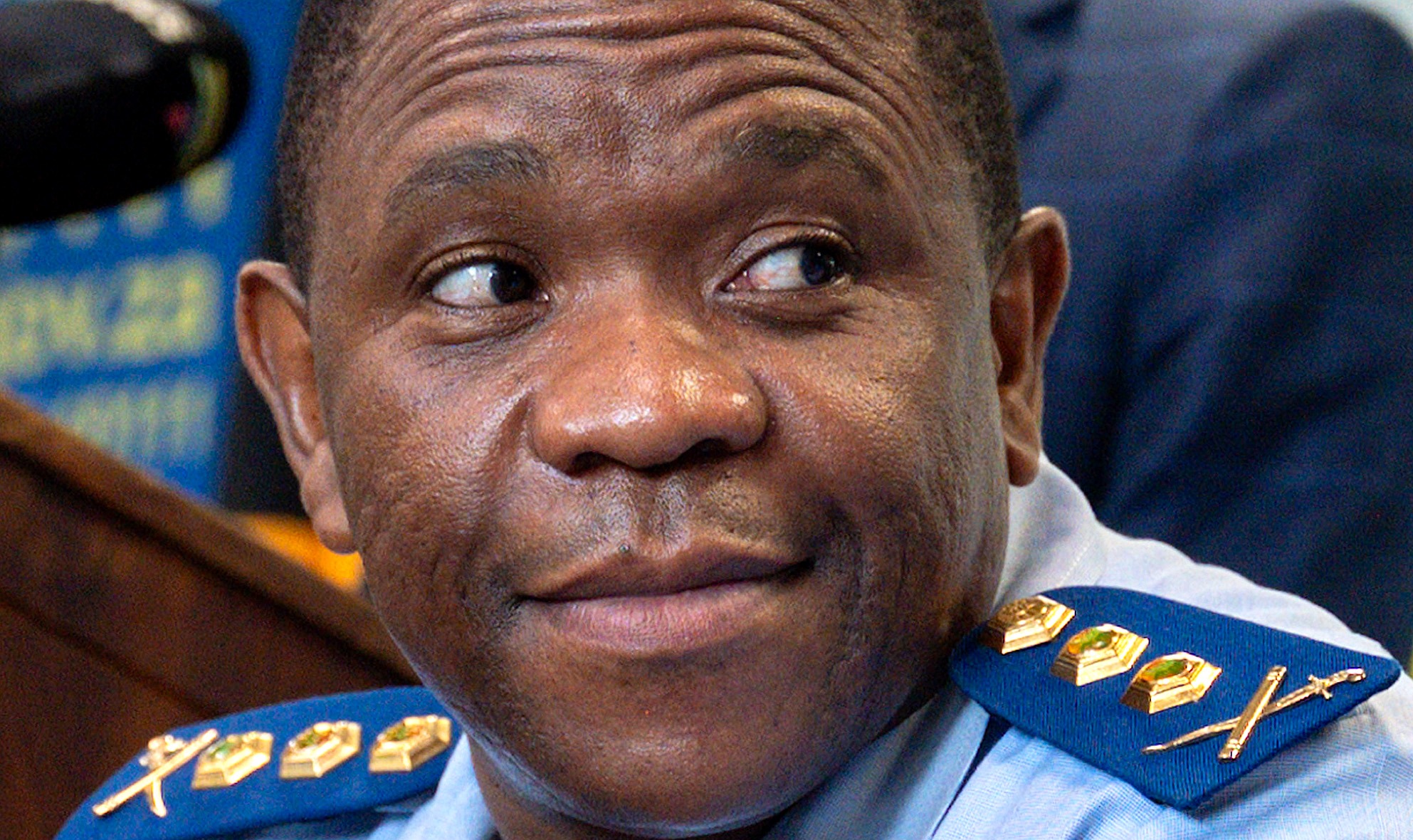
 LT General Nhlanhla Mkhwanazi, KZN Provincial Commissioner of the SAPS at the hand over of the KZN SAPS Forensic Science Laboratory to boost the fight against crime on April 17, 2026 in Durban, South Africa. The new facility consolidates various forensic units that were previously operating from multiple buildings, which faced a number of infrastructure and security challenges, such as flooding, which would damage critical evidence. (Photo: Gallo Images / Darren Stewart)..
It has been a year since KwaZulu-Natal Police Commissioner Nhlanhla Mkhwanazi sparked South Africa’s unprecedented law enforcement scandal by announcing that a drug cartel had infiltrated the criminal justice system, politics and private security.
Since 6 July 2025, several South African Police Service (SAPS) and other officers have been criminally charged and suspended, including this country’s highest-ranking cop, General Fannie Masemola.
There have been shootings, and a crossfire of countless accusations that show how fragmented South Africa’s law-enforcement structures are.
These accusations have emerged mainly from the two parallel hearings investigating Mkhwanazi’s initial allegations – the Madlanga Commission of Inquiry and Parliament’s ad hoc committee.
Daily Maverick has picked out 12 key themes or issues – some serious, some offbeat – that have surfaced in the 12 months since Mkhwanazi held the press conference and made the seismic accusations.
1. Divided opinion
Some back him, and some are against him.
Opinion remains divided on Mkhwanazi’s intentions behind his 6 July 2025 press conference.
Some figures, including colleagues, have publicly made it clear that they do not trust him, but Mkhwanazi remains in the police service.
He has not been suspended, as have others embroiled in this broader scandal sparked by Mkhwanazi’s accusations.
2. Acting up, but the SAPS must go on
Mkhwanazi’s allegations included that Vusimuzi “Cat” Matlala, then an organised crime suspect and now convicted for corruption, was financially backing now sidelined police minister Senzo Mchunu.
Mchunu denied this, but President Cyril Ramaphosa placed him on special leave. This is why South Africa has an acting police minister, Firoz Cachalia.
Matlala pleaded guilty in a case involving a R228-million policing tender controversially awarded to his company, Medicare 24 Tshwane District, in 2024.
/file/attachments/orphans/ED_6054201_995380.jpg "Lieutenant General Puleng Dimpane was appointed acting national police commissioner on 23 April 2026. (Photo: Gallo Images / Frennie Shivambu)")
The contract was subsequently cancelled because of allegations that due process had not been followed.
This led to the arrests of 12 senior police officers. Masemola was also criminally charged in the case to which Matlala recently pleaded guilty.
Ramaphosa placed Masemola on precautionary suspension in April 2026 as a result of the criminal charges he faces.
3. Procurement ‘corruption and abuse’
Lieutenant General Puleng Dimpane, who headed the police’s financial management services, was appointed to act in Masemola’s place.
Ramaphosa made it clear when appointing Dimpane in April: “A key area of attention for the Acting National Commissioner and the police leadership is to urgently address weaknesses in the procurement of goods and services […]
“Procurement has been identified as the source of corruption, abuse of office and instability within the police service.”
4. Idac, Crime Intelligence (and ‘no pillow talk’)
Mkhwanazi announced that he had been told there was a rogue element in the Investigating Directorate Against Corruption (Idac).
Idac carried out arrests last year, including of Crime Intelligence officers; one, Dumisani Khumalo, was the unit’s head at the time.
Mkhwanazi suggested that Khumalo was being targeted for ulterior purposes.
/file/dailymaverick/wp-content/uploads/2025/11/ED_585364.jpg "Investigating Directorate Against Corruption head Andrea Johnson testifies at Parliament’s ad hoc committee, tasked with investigating accusations of drug cartel infiltration of the criminal justice system, politics and private security. (Photo: Gallo Images / Brenton Geach)")
Responding to Mkhwanazi’s broader assertions, Idac head Andrea Johnson told Parliament that there was “no truth to the allegation” that Idac was involved in a “witch-hunt” against certain police officers.
Johnson’s husband works in the Crime Intelligence unit, which has also experienced turbulence and distrust among officers.
She told Parliament that she and her husband never exchanged information about their work.
Johnson said: “Pillow talk gets people killed.”
5. The sinister side: Shootings (real and questionable)
Crime Intelligence officer Feroz Khan, who faced an assortment of allegations, was shot in the abdomen on the evening of 28 June 2026 in Johannesburg, just days before he was set to testify before the Madlanga Commission.
His legal team, addressing theories that the shooting was staged, insisted this was not the case.
The Madlanga Commission was planning to ask Khan about issues that included his potential ties to North West businessman and ANC fixer Brown Mogotsi, who faces charges for allegedly staging his own attempted assassination in November last year.
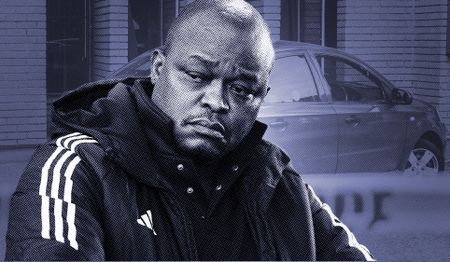
/file/attachments/orphans/735595059_992627460434675_92132116156855161_n_179172.jpg "Senior Crime Intelligence officer Feroz Khan was wounded in a shooting in Johannesburg in June 2026. (Photo: Madlanga Commission / SAPS / Facebook)")
A month later, Marius van der Merwe, who was a witness before the commission and who testified under the alias Witness D, was murdered in Brakpan.
Wiandre Pretorius was identified as a person of interest in Van Der Merwe’s killing – Pretorius took his own life earlier this year.
The Madlanga Commission had planned to ask Khan about his possible ties to Pretorius.
6. The Big Five
Dubbed the Big Five, this is the drug cartel that has allegedly infiltrated the state. Matlala and a fellow criminal accused, Katiso Molefe, have been accused of being members.
/file/attachments/orphans/ED_601859_257575.jpg "Vusimuzi ‘Cat’ Matlala appears in the Pretoria Magistrates’ Court on 25 March 2026 in a case linked to a policing contract that a business of his was awarded. (Photo: Gallo Images / Frennie Shivambu)")
The Big Five is said to be headquartered in Gauteng. It is believed to operate across the country and internationally.
It is still unclear who ultimately heads the Big Five and who supports its activities in other countries.
7. Private (in)security
This brings us back to Dumisani Khumalo.
He previously told Parliament that Big Five members targeted officials in the criminal justice system. Khumalo explained that, as a secondary step, members registered businesses.
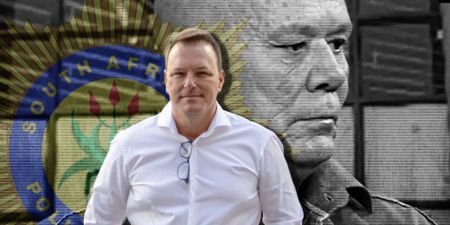
“In most cases, it’s private security companies that are the initial businesses for the members of the cartel that have just joined,” Khumalo told Parliament.
“There are lots of reasons for that, including access to firearms.”
This assertion is nothing new in South Africa. Similar suspicions surfaced from battles that erupted several years ago for the domination of nightclub security in the Western Cape.
8. Multimillion-rand cocaine theft
One of the matters that the Madlanga Commission has focused on was a R200-million cocaine consignment intercepted in Isipingo, KwaZulu-Natal in 2021.
The drug consignment was stored at the poorly secured Hawks building in Port Shepstone, from which it was stolen months later in what is widely considered to have been an inside job.
Mkhwanazi has referred to the stolen cocaine, saying that it apparently ended up in Johannesburg, where it was again looted.
He alleged that this looting had sparked “a majority of the murders” that ensued in Johannesburg – including, it has been suggested, that of Oupa John Sefoka, better known as DJ Sumbody, who was shot dead in November 2022.
9. Legal prowess (and the ‘snowball’)
South Africa has had the opportunity to see sharp legal minds in action – the commissioners and evidence leaders of the Madlanga Commission.
They meticulously comb through evidence, deftly unravel witness testimony and do not tolerate nonsense.
/file/attachments/orphans/ED_600689_835429.jpg "Justice Mbuyiseli Madlanga chairs the Madlanga Commission of Inquiry on 18 March 2026 in Pretoria. (Photo: Gallo Images / Frennie Shivambu)")
A standout moment?
When commission chair Justice Mbuyiseli Madlanga reacted to a witness, policeman Marumo Magane, who testified about another controversial cocaine saga that unfolded in Aeroton, Johannesburg, in 2021.
Magane was arrested over the R286-million interception, but the case was later withdrawn.
Read more: Feroz Khan called us ‘tsotsi police’ at R286m Joburg cocaine bust, cop tells commission
While testifying before the Madlanga Commission, he conceded he was “clueless” in terms of how he should have dealt with the interception scene.
Madlanga had hit back, saying that it was clear he would not have been able to follow crime scene management instructions because “there isn’t a snowball’s chance in hell that you could have complied with them because you knew nothing about them”.
10. Stranger Things… in Parliament
Parliament has also experienced its fair share of drama, heated debate and light moments at the ad hoc committee.
There was the matter involving deputy national commissioner of crime detection, Shadrack Sibiya, who was suspended last year because he was included in Mkhwanazi’s infiltration allegations.
While Sibiya testified before the ad hoc committee, a man could be seen seated behind him – Stuart Scharnick of Durban – in the area where those offering support (or protection) to the witnesses usually sat.
#MadlangaCommission
— MDN NEWS (@MDNnewss) November 4, 2025
General Dumisani Khumalo says a man who was sitting behind General Shadrack Sibiya during his appearance before Parliament’s ad hoc committee is Scharnick Stuart James, believed to be Sibiya’s bodyguard.
He owns the Toyota Hilux that was seen at Sibiya’s… pic.twitter.com/FvGqgmwEz4
Subsequent testimony in the parallel Madlanga Commission included that Scharnick was a convict and “hijacker.”
Scharnick hit back, saying while he had a conviction, for which he served a suspended sentence and paid a fine, the fuller Madlanga Commission allegations against him were misleading.
Then there are the three letters that caused quite a spectacle in Parliament – BBL.
This initialism stands for Brazilian butt lift, which refers to surgery to contour the buttocks.
Sibiya had claimed that Matlala paid for a fellow police officer’s BBL.
The officer referred to, Hilda Senthumule, who filled Sibiya’s position in an acting capacity after he was suspended, denied this and said she had paid for her own BBL.
She also stood up and twirled in Parliament to display the much-talked-about BBL. “It’s become a national asset, so it must be seen,” she told Parliament.
11. Killing cover-up claims, gems and the ‘ghosting’ girlfriend
Now-suspended Ekurhuleni Metro Police Department (EMPD) deputy chief Julius Mkhwanazi faces various accusations, including being involved in the alleged cover-up of two murders.
Before his own murder, Witness D – Van Der Merwe – had testified about one of these cases at the Madlanga Commission. This involved a crime suspect whose body he alleged was disposed of in 2022.
Allegations also implicate Julius Mkhwanazi in the 2023 theft of illicit precious stones.
Read more: Court hears of cover-ups and body disposals as Ekurhuleni officials apply for bail
His former girlfriend testified at the Madlanga Commission as Witness K, saying she had helped him financially “with groceries, paying for his legal fees for his disciplinary case at work and […] school fees for his children”.
When Witness K could no longer afford this, Julius Mkhwanazi told her to keep her “ear to the ground” for information involving money.
She recalled hearing about illegal precious stones (worth around R14.9-million) that Julius Mkhwanazi was interested in.
/file/attachments/orphans/ED_589303_982701.jpg "Suspended Ekurhuleni Metro Police Department acting chief Julius Mkhwanazi testifies at the Madlanga Commission of Inquiry on 3 December 2025. (Photo: Gallo Images / Frennie Shivambu)")
Witness K testified that he organised officers to go to a block of flats in Killarney, Johannesburg, where the stones were kept, to effectively steal them.
She said this ultimately saw her being paid R110,000, of which she gave R88,000 to Mkhwanazi and the other officers involved.
Julius Mkhwanazi denied wrongdoing, telling the Madlanga Commission that Witness K was behind this saga and that she did not contact him afterwards – he suggested she had ghosted him. (During previous proceedings a tissue infamously became stuck to his forehead, making international news.)
Arrests in the precious stones matter reportedly happened from Friday, 3 July 2026, into this weekend.
12. Scope and scale
It is now clear that Nhlanhla Mkhwanazi’s year-old press conference has not just sparked one scandal, but several, with their own offshoots.
Other critical issues have been highlighted – like that of Matlala associate and alleged drug manufacturer Jerry Boshoga, who was kidnapped in Gauteng in 2024. Boshoga is still missing.
There have also been accusations that refer to incidents that date back years, even decades.
The Madlanga Commission of Inquiry and Parliament’s ad hoc committee now face the task of producing reports on their hearings.
What is contained in those reports – especially their recommendations – may contribute to crafting the next chapter in South African policing. DM
Comments
Scroll down to load comments...