



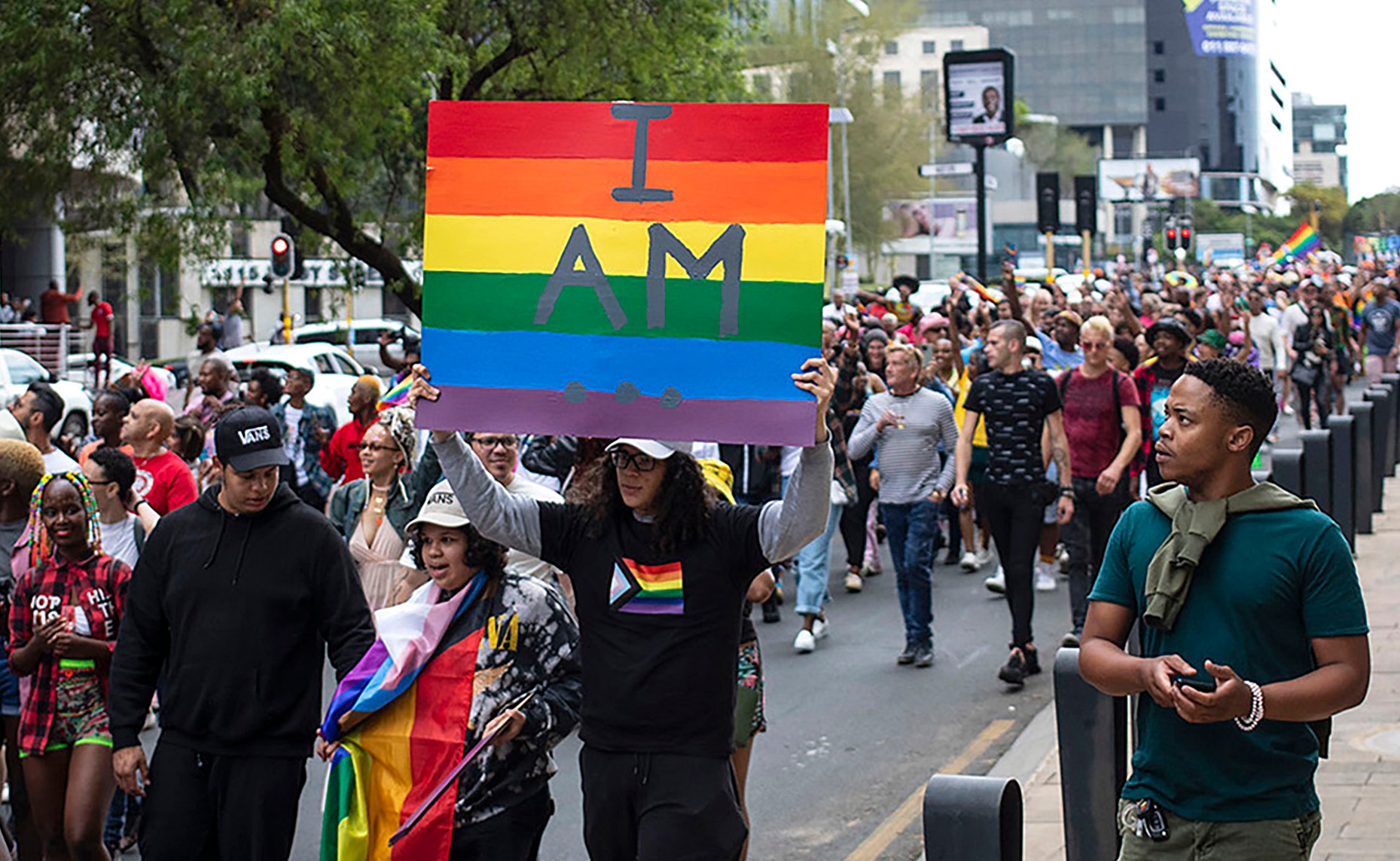
 Members of the LGBT community attend the annual Gay Pride march in Johannesburg, South Africa, 29 October 2022. (Photo: EPA-EFE / KIM LUDBROOK)
 In June 2026, the Johannesburg High Court, sitting as the Equality Court, found former media personality Ngizwe Mchunu guilty of hate speech, harassment and discrimination towards the LGBTI community. As observed by the South African Human Rights Commission, the judgment reinforces dignity and equality as foundational values of South Africa’s constitutional democracy. In important ways, it shows how much the country has progressed in protecting LGBTI people.
A new, nationally representative study suggests that these changes run much deeper than the courts alone, but permeate the very fabric of South Africa. The report, Admission Reserved, was published by the Other Foundation in partnership with the Human Science Research Council. It builds on Progressive Prudes, the Other Foundation’s landmark 2016 report, which provided the first in-depth, nationally representative analysis of public attitudes towards LGBTI people in South Africa.
Ten years later, Admission Reserved shows that there has been real progress. Based on data collected from 3,285 adults, the report finds that the proportion of South Africans who think that same-sex sexual relationships are “always wrong” dropped from 66% to 52% in the past decade. In addition, about 60% of South Africans now agree that gay and lesbian people deserve the same rights as everyone else, compared with 51% in 2015. Support stands at 57% for bisexual and transgender people, and 68% for intersex people.
However, significant challenges remain. The survey finds that about 6% of adults admit to having shouted at, insulted or mocked someone because they were lesbian, gay or bisexual, while 2.5% say they have physically harmed or harassed someone for the same reason. About 4% admit to insulting or mocking a transgender person, and 1.9% to physically harming or harassing one.
These percentages may appear small, but when applied to South Africa’s adult population, they suggest that about 2.85 million people have verbally abused someone for being lesbian, gay or bisexual, while 1.13 million have physically harmed or harassed someone for the same reason. An estimated 1.72 million adults have verbally abused a transgender person, while 870,000 have physically harmed or harassed one.
Despite these alarming figures, about half of South Africans say they do not think LGBTI people face violence or harassment in their communities, demonstrating high levels of invisibility. This makes public hate speech cases, such as Mchunu’s, all the more important.
Canary in the coal mine
The report states that while the door to equality and freedom, as reflected in South Africa’s progressive legal system, has been opened, admission is still too often reserved. Family and cultural acceptance, for instance, are among the areas of life where change has been hardest to achieve. About half of South Africans today say they would accept a LGBTI person in their culture and tradition, a slightly lower figure compared with 52% 10 years ago.
This small reversal needs to be understood against the background of a social and political context where organised, well-funded reactionary groups are more publicly active, often mobilising ideas of “tradition” and “family values” to reverse advances in human rights. In several countries in the continent, such as Senegal and Ghana, LGBTI people have been the main targets of this increasingly internationalised anti-rights backlash.
But there is nothing exceptional about sexual and gender minorities. Using the metaphor of the canary in the coal mine, South African writer Mark Gevisser has argued that how societies treat LGBTI people “is symptomatic of the dangers facing all people who are excluded in some way or another”. Nigerian human rights lawyer Ayo Sogunro similarly warns that this is part of a wider global pattern, in which regressive groups are attacking broad civic freedoms in the name of tradition, family or the nation. “By targeting a marginalised group first,” he explains, “authoritarian politicians and movements minimise public resistance and test the waters for wider restrictions.”
The others
In the past couple of months, anti-immigrant marches, alongside the intimidation of foreigners, have put the longstanding issue of immigration back in South Africa’s national agenda. In the many excellent op-eds and expert analysis on the issue, a significant gap remains: the ways in which anti-LGBTI and anti-immigrant politics form part of the same erosion of South Africa’s commitment to dignity, equality, and non-discrimination.
Admission Reserved teases out the often-invisible relationship between negative attitudes and harmful behaviour towards LGBTI people and immigrants. The data show that South Africans who admitted to having participated in violence against immigrants were more likely to report having harassed or harmed LGBTI people. Likewise, South Africans holding more regressive attitudes towards LGBTI people were also more likely to hold unwelcoming views towards immigrants. In other words, anti-LGBTI behaviour can form part of a broader pattern of hostility towards people seen as “the other”.
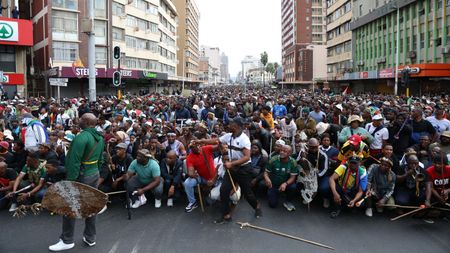
Nowhere is this more evident than in the fearmongering rhetoric of Ngizwe Mchunu himself: as a public figure, he is widely known for both his anti-LGBTI and anti-immigrant stance, including hateful remarks towards LGBTI people and his recent involvement in spreading fear around the so-called 30 June deadline for foreigners to “go home”.
Figures like Mchunu, Admission Reserved shows, are not representative of the majority of South Africans. The report finds that only about 7% of South Africans remain firmly opposed to LGBTI inclusion in all areas of life, from family inclusion to same-sex marriage. Unsurprisingly, these uncompromising hardliners are also the least open to immigration, with 55% saying that they want no immigrants in South Africa.
Hate is transferable. If LGBTI people or immigrants are driven out of public life, but the deep social anxieties fuelling hatred remain unresolved, another target will be found. LGBTI people have long known the dangers of scapegoating. In a country still marked by high levels of inequality, the danger is that, by directing public anger and resentment towards “the other”, anti-rights groups are making South Africa less free, less democratic and less human for everyone. DM
Caio de Araújo is the research officer at the Other Foundation, an African trust that advances equality and freedom in southern Africa with a particular focus on sexual orientation and gender identity. He is also an associate researcher at the Wits Centre for Diversity Studies, University of the Witwatersrand.
Comments
Scroll down to load comments...