




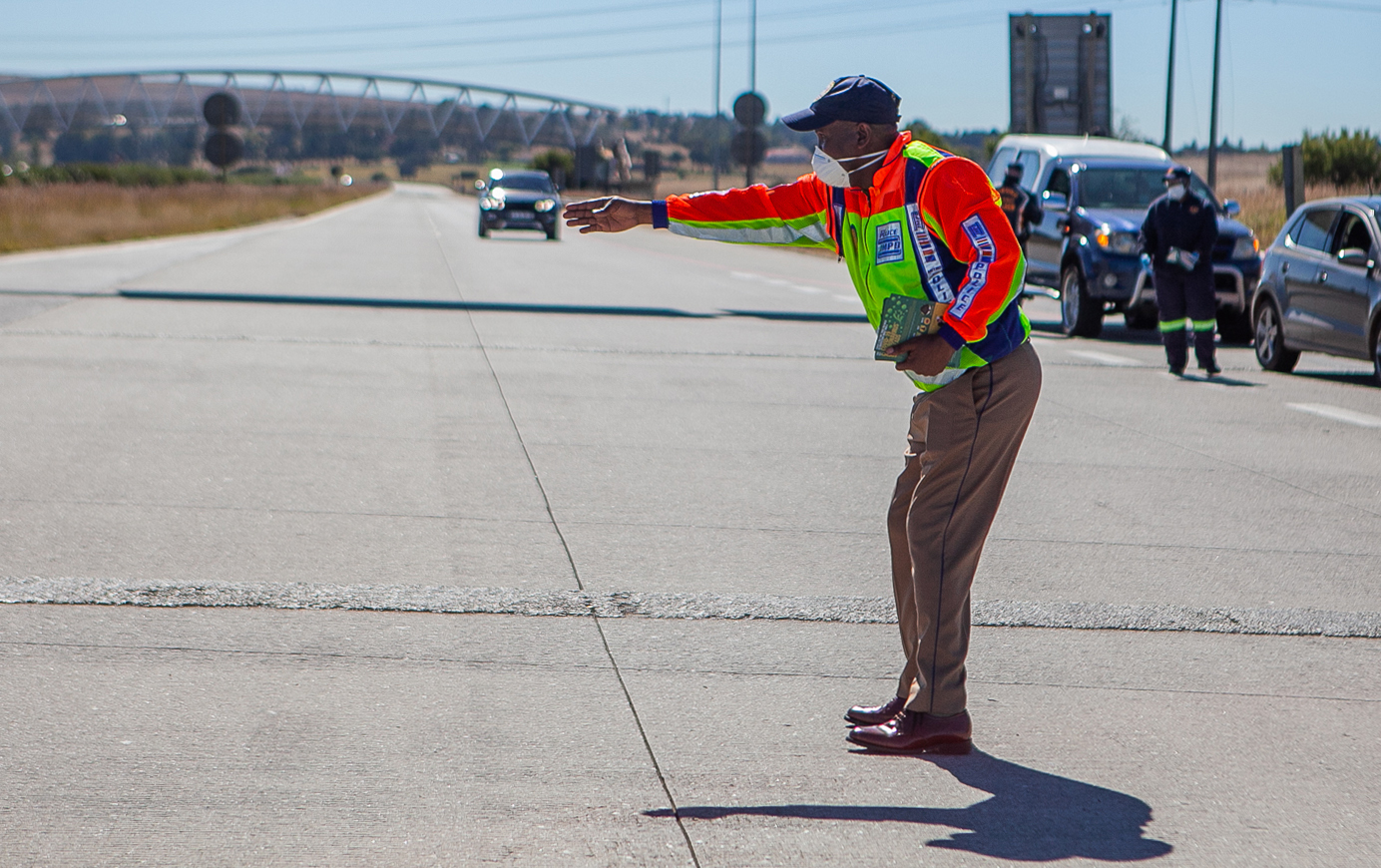
 The roll-out of the controversial Aarto traffic demerit system in 62 municipalities proceeds despite Salga’s legal challenge over financial and operational concerns. (Photo: Gallo Images/Sharon Seretlo)
On Tuesday, the South African Local Government Association failed in its urgent interdict to stop the roll-out of Phase 2 of the Administrative Adjudication of Road Traffic Offences Act (Aarto), arguing that the municipalities included in Phase 2 cannot afford to implement the system.
But Salga chairperson of the Public Transport and Roads Working Group, Sebang Mothabi, said that their case had been dismissed for not being urgent, pointing out that its merits would be argued at a later stage.
He said there were serious concerns about the funding model underpinning the roll-out, saying most municipalities on the list already operated under financial stress. Salga is expected to argue before the court that the systems needed to implement the legislation will cost municipalities more than the money generated from fines.
Motabi also accused the Department of Transport of failing to provide meaningful consultation or practical solutions for the implementation of the system. He said Salgo had declared an intergovernmental dispute on the matter.
The municipalities affected by the 1 July implementation exclude the Western Cape, which has successfully applied for an exemption. A proposed demerit points system will also be implemented at a later stage. At this stage, unpaid fines can lead to the blocking of vehicle or drivers’ licence renewals.
Addressing the National Council of Provinces in June, Minister of Transport Barbara Creecy said the department had been allocated R163-million in the present financial year to support the national implementation of Aarto. She said 16,000 traffic officials had already been trained, and that most provinces were ready for the implementation of Phase 2, as more than 80% of issuing authorities had received the necessary equipment.
But at the same hearing, Deon de Vos, the mayor of the Sarah Baartman District Municipality, speaking on behalf of Salga, said municipalities continued to express concern over certain aspects of the Aarto.
They held a view that some of the new demerit system’s requirements might potentially conflict with the Municipal Finance Management Act, Municipal Supply Chain Management Regulations and constitutional principles governing local government procurement autonomy.
De Vos raised the issue that local government carried “substantial law enforcement responsibilities” without corresponding financial compensation under the current Aarto revenue model.
Salga has called for a review of the Aarto regulations affecting municipal procurement processes and finances.
‘On schedule’
The Road Traffic Infringement Authority (RTIA) says the implementation of Phase 2 of the Aarto is continuing as scheduled.
The Road Traffic Infringement Agency (RTIA) and the South African Post Office (Sapo), both cited as respondents in Salga’s application, stated in court papers that there was a delay on Salga’s side in bringing the application, as the implementation date for Phase 2 had already been announced in November, and as a result, it was not urgent. They ultimately successfully opposed the application on this point.
But the legal teams for the RTIA and the Sapo also argued that Salga lacked the authority to represent municipalities, as it would need council resolutions from all affected municipalities stating that Salga could speak on their behalf in court.
Lawyers from the RTIA further argued that they were fully prepared for the Phase 2 roll-out and that 75% of the 62 fine-issuing authorities were equipped at 283 sites and had received the necessary training.
Monde Mkalipi, spokesperson for the Road Traffic Infringement Agency, said they hadn’t closed the door on further engagements with municipalities. Creecy had established a war room at the Department of Transport to iron out these difficulties.
He said municipal traffic officials who were part of the Phase 2 roll-out should be using new fine books from today.
Most municipalities in the Phase 2 roll-out were ready to implement the new system, said Mkalipi.
“We are closing some of the gaps. It might not happen overnight,” he said. The system, including financial models, had been piloted in Johannesburg and Tshwane, but if there were new areas of concern, they are not closing the doors on further discussion.
“These can be ironed out,” Mkalipi said. “It is good that they are raising these concerns. We are open to discussions. Our mission at the end of the day is for Aarto to bring about a behaviour change in our motorists”. DM
Comments
Scroll down to load comments...