




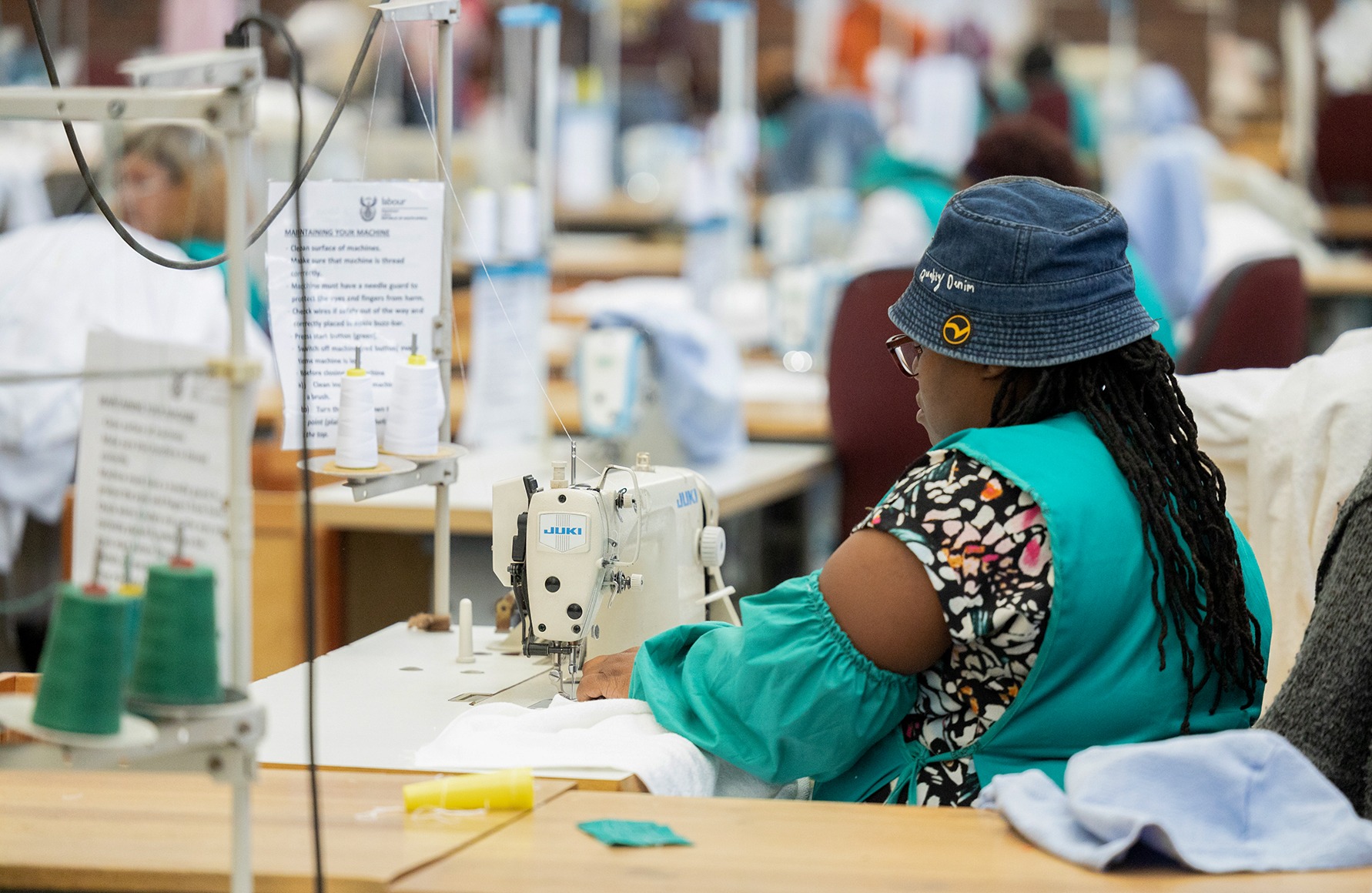
 The SA manufacturing sector is experiencing a demand drop despite a significant decline in raw material prices. (Photo: Misha Jordaan / Gallo Images)
 If you waded through the latest Absa Purchasing Managers’ Index (PMI) on Wednesday morning, you may have read an interesting tale of counterintuitive market behaviours, looming supply chain risks and the strategic threats and opportunities facing domestic manufacturers.
The first contradiction is that the June 2026 PMI registered a decline from 50.8 to 47.3, indicating that the manufacturing sector remains under persistent pressure despite Brent crude oil prices dropping significantly in the last week (because of the memorandum of understanding between the US and Iran). That price drop pulled the purchasing price index down sharply by 13.5 points to 71.3.

But this easing of price pressure did not equal an uptick in buying. Instead, it triggered a massive decline in demand, with some respondents indicating that clients were now postponing purchases in anticipation of lower prices.
There is method to this economic model madness, though. Yes, oil prices have calmed, but supply chains (read: the ships that deliver stuff) have not got back on schedule at the same rate. Oh, and front-loaded orders have been fulfilled, so some of the buyers are good for now.
Changing the waiting game
There is, according to the economists, a crisis looming. If local manufacturers and their clients all rush to replenish depleted inventories simultaneously once they believe prices have bottomed out, they will collide with this stubbornly slow supply chain, potentially triggering acute raw material shortages.
While all this plays out, South African manufacturers are facing an existential threat from the hyper-competitive Chinese industrial engine.
Overcapacity within China’s domestic market has forced Chinese companies to become exceptionally lean, and they are now aggressively expanding internationally.
According to Gavin Rabbolini, senior analyst at PSG Asset Management, global CEOs are sounding the alarm over Chinese firms leveraging a “disruptive combination of hyper-speed and structural cost advantage”.
Richard van Moltke, general manager at Actom Static Power, agreed that this dynamic is hitting Mzansi hard, especially in sectors where there was no true local advantage to begin with:
“Local manufacturers cannot compete with ultra‑low‑cost PV [photovoltaic] modules from China, nor with the growing influx of cut‑price batteries. The result is a volatile environment in which domestic producers are undercut before they can scale.”
He says that this wait-and-see approach is eroding the renewable energy sector’s ability to build sustainable capacity or retain specialised talent without predictable demand.
“A further constraint is the stop‑start flow of orders on large renewable projects. Without a steady ‘heartbeat’ of demand, manufacturers cannot operate or plan efficiently. Irregular bursts of work leave factories idling, skills underutilised, and margins eroded.”
Wings of hope
Despite domestic bottlenecks, broader African trade routes are demonstrating robust growth, providing an expanding export market for locally manufactured goods.
According to Iata’s May 2026 Air Cargo Market Analysis, Africa recorded the strongest percentage increase among major regions, with carrier cargo tonne-kilometres rising by 13.3%.
Africa registered the fastest international growth rate at a strangely similar 13.3%, which shows growing integration and demand for cross-border goods across the continent.
This may be great news for clothing and textiles, but it doesn’t, however, solve the problem for goods that are ill-suited to air transport, which is most of the equipment in our grid expansion and energy transition projects.
There is also another problem where the emerging chokepoints in local manufacturing will stimulate the import of fully finished equipment. But imported technologies often fail to account for the unique operational hazards of the African continent. Van Moltke says that this grants South African manufacturers a distinct opportunity to differentiate themselves through superior contextual engineering.

It’s a nice idea, but to survive the influx of hypercompetitive Asian imports, South African manufacturers must shift away from trying to compete on commoditised components (like raw battery cells) and instead focus on capturing the 55-60% local value-add by designing highly durable, reliable and contextually appropriate systems for the rapidly growing African market.
Our continental relations may have a role to play in pulling our factories out of the hole they’re currently in. Which seems like a good place to list the other finding in the PMI…
While easing global tensions improved expectations for business conditions six months ahead, immediate local disruptions dampened this optimism. The 30 June protests were flagged by some respondents as a key concern that probably dragged down the sentiment towards our local product. DM