




 GSMA head of greater China Sihan Bo Chen and GSMA CEO John Hoffman are accompanied by robots at the opening of MWC Shanghai, where 5G officially broke away from the idea of net neutrality. (Photo: Supplied)
There are no hard net neutrality laws in South Africa that guarantee a certain level of internet quality of service for customers who can afford to connect. This is important when companies such as China Mobile and India’s Airtel are already conducting trials where customers can pay for what is effectively a private slice of mobile data.
These trials are demonstrating the next evolution of 5G mobile data connections, which move away from simply connecting consumer smartphones to coordinating vast, intelligent physical systems.
Speaking at the Mobile World Congress (MWC) Shanghai opening keynotes, Vivek Badrinath, director-general of the GSMA, contextualised this transition: “The next wave is about supporting intelligent physical systems operating at scale in the real world. 5G allows [us] to introduce AI-enhanced capabilities that enable networks to sense, to predict and to optimise in real time”.
He is saying that the long-promised idea of network operators slicing 5G bandwidth into separate sections, each tailored to specific quality of service (QoS) requirements such as ultra-low latency or guaranteed bandwidth, is finally ready. This means that customers can privatise portions of the public 5G network for their exclusive use.
Exclusivity
To be fair to Huawei, South Africa wouldn’t have the ubiquitous access to 5G mobile broadband if the Chinese tech giant didn’t democratise the technology with its new radio (NR) – the techies call it mid-band 5G, as opposed to faster millimetre wave (mmWave) 5G used in the US – retrofit of existing LTE networks.
What became immediately clear at MWC Shanghai is that Huawei has managed to close the gap on mmWave 5G by leveraging the upper 6 GHz spectrum combined with advanced hardware and software. A Huawei representative on the showcase floor explained that “the peak rate of the upper 6 GHz can reach out to like 11Gbps,” delivering capacity speeds historically reserved for mmWave.
Wait, what’s with the bands?
This is a gross oversimplification, but the 5G spectrum (read: literal microwaves sending data across the air) is generally divided into sub-6 GHz (mid-band) and mmWave (high-band).
Historically, mmWave offered massive data capacities and ultra-low latency, but suffered from severe physical limitations – its signals cannot easily penetrate obstacles like concrete walls or foliage, requiring immensely dense and expensive infrastructure.
Huawei – and ZTE – managed to fit additional radio transmitters on to the existing LTE (4G) network towers to modify the LTE wave to sub-6GHz for 5G NR, which made it cheaper for emerging economies to deploy 5G.
This is impressive because the Chinese company has closed the technological gap imposed by US sanctions. But the consequence is now one of the most consumer-hostile moves we have seen in mobile networking.
In April this year, more than 300 humanoid robots competed alongside 12,000 human runners in the landmark humanoid robot half-marathon held in Beijing, China.
A Huawei spokesperson boasted about how the robots could operate flawlessly without network congestion: “All the robots were using their dedicated slice. Okay? So, no other users were affected [by] the experience”. He was referring to the watching crowd not suffering any network slowdowns.
And without skipping a beat, he broke into a tech demo explanation showing a hot tourist destination in Shanghai where influencers could then scan a QR code and pay a premium for guaranteed network quality.
Private connection
By allowing customers to purchase guaranteed, priority network performance, network slicing fundamentally challenges the concept of net neutrality – the mostly European (and a little American) principle that all internet traffic must be treated equally without discrimination or fast lanes.
Telecom operators are actively turning this capability into a pay-for-play consumer market. For instance, Bharti Airtel recently launched India’s first commercial consumer 5G slicing service, “Priority Postpaid”, which reserves a dedicated virtual network slice for customers willing to pay for premium postpaid (contract) plans, ensuring they bypass network congestion while prepaid users are left on the standard network.
Digital rights organisations argue that this breaks from the spirit of net neutrality to create a two-tier internet.
/file/attachments/2994/MWCS26_587074.jpg "The Huawei stand dominated the MWC Shanghai show floor. (Photo: Supplied)")
Network operators, who sunk massive capital expenditure into building out the networks, defend the practice by claiming network slices are content-neutral because they do not prioritise one specific app, such as YouTube, over another; instead differentiating purely by user class.
However, this is merely a semantic loophole; reserving network capacity for paying customers effectively creates a fast lane that degrades the general internet experience for non-paying users, disproportionately affecting lower-income demographics.
Organisations such as epicenter.works have warned regulators that this is a form of regulatory arbitrage that undermines equal access protections under the guise of technological innovation.
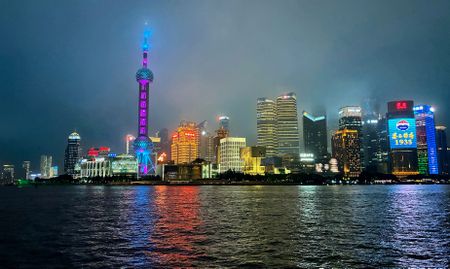
Shanghai is billed as a glimpse of the future of cities – but a future where the internet is not equal for all is a dystopian reality. DM
Daily Maverick was a guest of Huawei South Africa’s enterprise business at MWC Shanghai with all flights and accommodation costs covered by the technology company.
Comments
Scroll down to load comments...